For some, another perspective changes how we attempt to solve the problem.
Uncategorized
Enduring Value

What is the value of a painting purchased directly from an artist? Does it appreciate or depreciate over time? Does a thousand dollars spent, divided over time, mean 10 years from the date of purchase, the painting is worth $100 per year? Does the painting’s value increase to us if the artist’s portfolio expands and the market rewards them with a higher sales price on future works? Does the price matter once purchased? Do we recall the purchase price after time recedes? If the art piece represents a significant moment or place, how does our perception change? What if the artist’s personal conduct deviates from what we thought was a shared belief?
Assigning value to customized pieces is challenging. How much is our time worth? Or our creativity? Or our presence? How might we calibrate enduring value versus real-time market value?
LEGO vs. Marble

It is easier to build out of LEGOs than marble– Jimmy Carr
How might we use the most suitable materials for the intended duration of our project? Quick assembly and adaptability might be preferred when iterating. If we hope to leave a legacy for future generations, we might require a material that endures.
Mature Metrics

Our metrics may change as the organization matures. The number of days in business might be useful as the enterprise launches but becomes muted after a few years. The number of customers enrolled might change to the number of people on the waiting list. Total work accomplished might transition to workflow by category. As we scale and/or refine our approach we get better data and more options to generate metrics. Netflix is no longer going to share the total number of subscribers. They are going to focus on subscriber milestones.
What measurements need evolution in your enterprise? Which ones continue to provide value?
Care Committee

My father served on the vestry of an Episcopal church. He was commuting to the city for work and knew he had limited time outside of weekends to serve on the church committees so he joined the Cemetary Committee. Much to his surprise, he received frequent calls (landline days) regarding landscaping or other issues around the graves. My Dad’s perception was that general upkeep was the goal. To the relatives of the deceased, there was much to be done, most importantly attention to the details that honor the legacy of their loved one. My father’s initial view was the committee was a passive assignment. To the family members, it was an active site to observe memories.
How might we align our intentions with the intentions of those that we serve?
Schedule
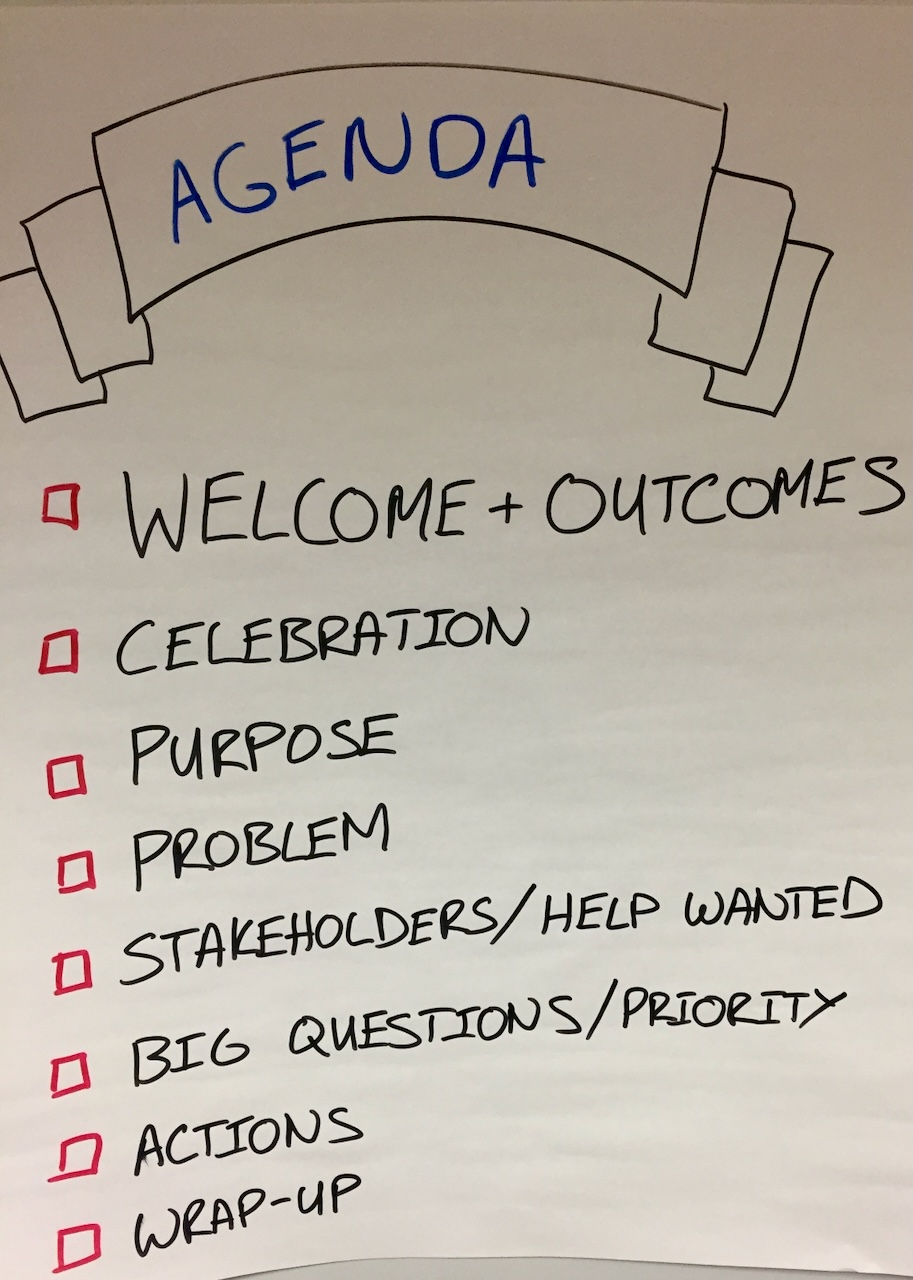
If we are on the space shuttle’s return flight to Earth from the International Space Station, being on time for departure is paramount. Staying on schedule for a meeting agenda is a choice. If meeting participants are involved in a transformative conversation but time suggests a shift to another topic, making the transition is a decision. How might we use a human-centered mindset to determine when the shift is appropriate? Otherwise, we are elevating the agenda’s significance to the same as a space shuttle launch?
Standardized Tests or Essays

Have you worked on a project where the answer is known and the goal is to complete the project in the right order? Have you engaged in solving an interesting problem that has various possible answers? Seth Godin’s Akimbo podcast provides context for the interesting problem paradigm.
Some of us excel on the bubble sheet test, while others thrive with the essay option. Knowing the medium we are being asked to engage with may help us accept or decline the invitation to join the expedition.
Half-Full or Half-Empty

Icebreaker exercise: Ask participants if they are half-full or half-empty about a specific prompt. For example, half-full or half-empty about buying candy from a vending machine on your hotel floor at 11 PM? You can prompt meeting attendees to sort into five groups by physically moving to a location: Empty, half-empty, half-full, full, or no opinion. Ask ten to twelve questions and the people in the room are almost certain to find themselves mixing and matching with other participants.
First Edition

What object would you prioritize securing through the deployment of your resources? Said differently, what first edition/experience would you activate your network to possess? First-night tickets at a concert? Original work from a legendary artist? The front most position in line to interview an icon? A historical document with the signature of a hero? Secure the newest piece of technology before anyone else?
What does your selection say about your priorities?
Disembark

Do the people who benefit from your services know where to disembark? At the upper terminal of a ski lift, signs provide clarity on when to return to downhill ski mode. In an academic setting, final exams and/or graduation define the transition. But if you are an arts organization, is there a point of disembarkation? How about an environmental conservation group. What if we build the most sustainable residential structure and place all our property in a conservation easement? Do we uncouple from a land trust’s work?
The embarkation and disembarkation phases run the gamut from ‘obvious’ to ‘it is complicated.’ If uncertain, ta leading strategy is to remain in communication. I support causes in other regions because they are committed to sustained dialogue. I withdrew my engagement with an enterprise next door because they ghosted me.
 What-if-concepts