Social Sector Advent Calendar

Million dollar advent calendar -really, checkout the article!  Reading this story makes me wonder what a social sector enterprise wishes for in its advent calendar?  Some possible ideas:

  1. A budget based on conservative revenue expectations and reliable expenses.
  2. An engaged board with diverse perspectives but united by a common purpose.
  3. Donors who provided unrestricted funding to support general operations.
  4. Volunteers who felt appreciated an engaged in their area of expertise.
  5. Local media that solicited stories from the enterprise on a regular basis.
  6. A gala event that was fun, focused on mission, raised funds and awareness, and attendees asked for next year’s date.
  7. Energized staff who thrived on the personal joy and professional benefit of working in the social sector.
  8. Being touted by Beth Kanter (social media guru) as an example of an organization that used Facebook and Twitter most effectively.
  9. Having all the board and staff friend/follow the cause.
  10. An Executive Director who supported the board with well-designed questions/resources and was inspired by their debate and dialogue.
  11. Paperless Annual Reports, board packets, sustainable/green policies and events.
  12. Local government or officials who could move mountains when needed.
  13. A benefactor who encouraged the cause to envision a brighter future and might just seed the funding for the right projects.
  14. Celebrations that came frequently enough to recharge and shine the spotlight on the entire team.
  15. More laughter than tears.
  16. A waiting list of possible nominees for the board, volunteers for the events, and numerous applications for each staff opening.
  17. A strategic plan that inspires and stretches the organization.
  18. A reserve fund or endowment that generated reasonable principal.
  19. An HR consultant.
  20. A website designer, who actually answered emails and identified issues before the clients.
  21. A database.
  22. Being selected by Oprah for her “Favorite Things” episode.

Just a few wishes for the social sector advent calendar.  What would you add?

Klout

Interested in the impact of your social media presence?  How likely are your online actions going to encourage followers/friends to take measurable action?  Klout measures your influence using the Klout Score as defined here.  The basic metric runs 1 to 100 with 100 representing the top end of the scale.  Some sample Klout Scores:

Dalai Lama- 91
President Obama- 89
New York Times- 87
Twitter- 82
Lance Armstrong- 80
Facebook- 77
Oprah- 73
Southwest Airlines- 73 
Congressman Joe Wilson- 58 (down from 79)

Checkout your Klout Score.

The Best Governance Handbook

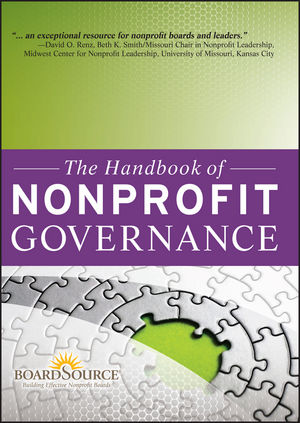
BoardSource released, The Handbook of Nonprofit Governance recently.  It covers a wide range of topics from computing available cash to establishing internal controls.  Establishing Executive Director compensation to creating a dashboard.  This text boook has become my new hands on reference resource.  It is one of the definitive resources for getting answers to many of the governance questions that routinely arise in the social sector.  If you want the closest thing to the numerous resources that comes with a membership to BoardSource but have not committed to joining then this book would be my recommendation.


Leading Practices

Last week’s BoardSource Leadership Forum presented some updates on nonprofit governance that I found insightful:

  • Nomination Committees are no longer recommended as a separate committee of the board.  Governance Committees are the preferred model for handling board nominations, self-assessment, board engagement, and training among other responsibilities.

  • Board terms that run 1-year, 2-year, and 3-year for a total of six years of service are being recommended in place of the classic two 3-year terms.  An initial one-year commitment encourages the candidate to engage quicker and for the organization to empower the board member with meaningful work.  A short initial term provides sufficient assessment for both the board candidate and organization.  

  • Bylaws are recommended to be less restrictive and provide appropriate latitude.  Many committee structures and guidelines are being incorporated in Board Policies, thereby freeing the bylaws of potentially cumbersome organizational definitions.  An example is to provide an organization with greater range in the number of board members, remove arcane attendance requirements, embrace technology, and reduce the stringent meeting requirements (the third Tuesday of the month at 4 PM).

  • Executive Committees are recommended to meet as needed and not on a regular basis.  With an always-on and always-connected world there are few circumstances where immediate action is required without being able to assemble or poll the entire board.  Executive Committees continue to be a great resource to Executive Directors to provide a safe sounding-board and to float initiatives.


Express Train

Woman sitting next to me on the Hudson River line last night found herself watching her train stop race by as we headed directly into the heart of New York City. As the conductor walked by to check tickets he told her that our train had changed from a local to an express at the last station. She was going to have to ride into the city and then head outbound to get to her destination.

It was a reminder that one of the reasons we to hold public unveilings of our strategic plans is to share with our supports and advocates where the organization has decided to become an express or local. A car full of passengers thinking the train is going to do one thing only to watch it do another can create a lot of distractions. Update your fan base often, keep them aware of your progress and intended destination. Perhaps we can aim to run on-time like the Swiss railroads and standout as remarkable.

I Was Going to Call

Yesterday’s post reminded me of another situation where a promise to follow-up goes unfilled.  Last year I received a series of letters from a university asking me to consider the project that they were implementing and that I should expect a telephone call from a dean at the college the following week.  Two of these letter found me at my home address.  I read them and awaited the call.  Nothing happened.  Finally a third letter came asking for a donation.  I figured that the project was: 

A. Not that important since the dean never called
B. My gift was going to be too small to have an impact
C. This was not the university’s top priority
D. The money had already been secured and therefore they did not need to contact me

 This experience was a firm reminder that your institutional word and promises have a tremendous impact on your organization’s outcomes.  


What organizations have made promises and then exceeded your expectations?  How?  Which causes have you stopped doing business with because they never delivered?  How much effort separates the first group from the second?

Best First Step?

I received a copy of the following letter today:

Thank you for your time in reviewing this letter.  The intent of this communication is to determine if your foundation goal and the special project goals of the ____ (organization) are complimentary.

The letter goes on to list ten funding opportunities.  I felt a bit like a trout sitting on the bottom of a stream watching a fly with the price tag still attached floating on the surface.  If you cannot customize the presentation in any meaningful way then the most likely catches will be the uninitiated or unmotivated.  Direct mail in the social sector is shown to get 2-3% return rate.  Since this letter was addressed to “Foundation Administrator” I project that very few individuals will feel a personal connection.

How could this invitation be improved?  Would a personal salutation help?  Had the letter noted previous grants made by the foundation that aligned with this organization’s funding opportunities would it resonate more?  Would a follow-up call to expand on the communication be compelling?  What would attract your interest?

Headlines from BoardSource Leadership Forum

I arrived home from the BoardSource Leadership Forum last night, by the far the best nonprofit conference I attend each year.  Many new ideas, trends and conversations which I will share in the coming weeks.  Beth Kanter, the social media guru shared a great presentation that reminded all of us that a social media policy is now a leading practice.  Maya Enista from Mobilize.org was a compelling spokesperson for the Millennials.  She reminded us to give full status to our younger board members, “I would not want to be somebody’s boyfriend a quarter of the time so why would I want to serve as a junior board member with limited rights?”  R Todd Johnson from Jones Day is on the leading edge of the movement which is designing new entities.  L3C Corporations, B Corps, Benefit Corporations and a Flexible Benefit Corporation model being implemented in California are all beginning to take form in the space between the social and corporate sectors.  Lastly, BoardSource just released its Governance Index. Highlights of the index show that the average size of a board is 16, 70% of the organization’s surveyed have term limits, and the average tenure of a board member is 7.2 years.  Of course, BoardSource would immediately say, “if you have seen one board, you have seen one board.”

What is the Score

How do you measure your cause’s success?  As an endurance athlete I occasionally enter a race and gain immediate feedback on my level of fitness.  What is the equivalent for the social sector?  Is it dollars raises at a gala?  Number of members? Total program attendees?  Size of your annual budget?  Ratio of funds raised to operational costs?  Your annual report versus another organization?  The number of mentions in the paper or on the internet?  How many people are clambering to join your board?  How many members of the community will recommend your cause?

I am not sure what the appropriate fitness test is but I imagine we all have an idea.

Help Wanted

I am posting a help wanted sign.  Not specifically for a person but a system. In order to further my consulting enterprise’s purpose of empowering causes that inspire, I am seeking a better platform for selecting strategic priorities.  I have been fortunate enough to assemble a team of powerful planning methods but I am still browsing from the buffet of taking inspired talk and capturing the ideas into strategic initiatives.

My help wanted sign reads: Seeking innovative system to consistently transform generative and inspired conversations into strategic initiatives that can form the backbone of a strategic plan.  Must be reliable, energetic, willing to travel, network with other systems, and memorable.

Who should I interview?