Human Centered

AI

I prompted my photo app’s virtual assistant to identify images that contained artwork from my albums. Along with photos of traditional art from museums, it also produced some random pictures, including car tires that I had taken for an online ‘for sale’ post. I would not have selected the car tires as artwork if I had done this task manually.

AI is adept at compiling lists of information rapidly. It has yet to navigate the process of determining the validity of its response. For example, I received a special event announcement via email. There were several typos and a reference to a non-existent calendar date. This error-filled invitation was quickly followed by an apology email stating that the AI-generated draft had been sent before the professional team had started editing.

If we want something quick and are willing to accept inaccuracies, AI may be a good starting point. If we want a piece that will resonate, human oversight is probably required.

When Does Craft Matter?

Do you care if you receive a donor letter written by AI? How about a school report card remarking on your student’s progress generated by a large language model (LLM)? What if it is a piece of original artwork painted by a bot? What is your threshold for accepting human craftsmanship versus artificial fabrication?

We are navigating a changing landscape. Software programs and apps assess the likelihood of AI or human authorship and provide an estimation in percentages. What do you feel is essential that maintains a human touch, and what can be leveraged to an LLM platform?

How might we discuss our AI thresholds before we find ourselves simply adopting them out of convenience?

For demonstration purposes, below is Chtgpt’s rewrite of the above blog post. It is laid out with more structure, employs more sophisticated language, and is academic in nature. As a reader, which do you prefer?

Navigating the Evolving Relationship Between Human and Artificial Creations

In today’s evolving landscape, the distinction between creations authored by humans and those generated by artificial intelligence (AI) is increasingly nuanced. Software programs and applications now possess the capability to assess the probability of AI versus human authorship, often providing confidence estimates in percentages. This advancement prompts us to consider what elements of creation require a distinctly human touch and where leveraging large language model (LLM) platforms can be beneficial.

Maintaining a Human Touch

Certain aspects of creation are deeply intertwined with human experience and creativity. Artistic expression, emotional resonance in writing, and the intuitive judgment involved in decision-making are domains where human involvement traditionally adds unique value. The ability to convey complex emotions through art, capture the subtleties of human experience in literature, or make nuanced ethical decisions are areas where the human touch remains irreplaceable.

Leveraging LLM Platforms

On the other hand, LLM platforms offer unprecedented capabilities in generating content that is coherent, informative, and contextually relevant. They excel in tasks such as data analysis, content creation for routine reports, and even generating original artworks based on learned patterns and styles. These platforms can efficiently handle repetitive tasks, freeing up human creativity for higher-order thinking and innovation.

Establishing AI Thresholds

As we integrate AI into various aspects of creation and decision-making, it becomes crucial to establish clear thresholds for its application. Rather than adopting AI solutions purely out of convenience, careful consideration should be given to where AI enhances efficiency without compromising the integrity of human-centric values like creativity, empathy, and ethical judgment.

Initiating the Conversation

To navigate this transition thoughtfully, organizations and individuals must engage in open dialogues about AI thresholds. This involves defining criteria for when AI is appropriate, ensuring transparency in its implementation, and continuously evaluating its impact on the quality and authenticity of our creations. By proactively discussing these thresholds, we can harness the benefits of AI while preserving and celebrating what makes human craftsmanship and creativity uniquely valuable.

In conclusion, as we navigate the intersection of AI and human creativity, maintaining a balance between leveraging LLM platforms for efficiency and preserving the irreplaceable human touch is paramount. By establishing clear AI thresholds and fostering open conversations, we can shape a future where technology complements, rather than replaces, human ingenuity and expression.

The Human Effect

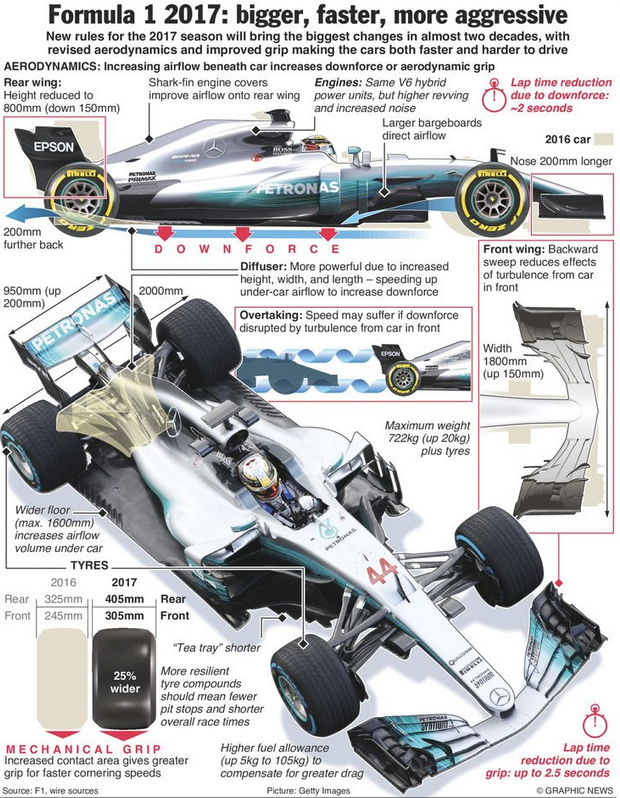
Prioritizing a human-centered approach fundamentally transformed the fan base of F-1. Profiling drivers and their individual journeys provided an access point that previously was not easily accessible. The choice to pivot from the cars and technology to the driver unlocked a new level of engagement and storytelling.

When Will the Inconvenience End?

The aircraft tray table broke. Perhaps the forces of daily passenger use overcame the lifetime capabilities of the mechanism. A post-it note confirms the tray table is inoperable. We can overcome the inconvenience but might it feel better if there was clarity on how and when broken becomes operational. If the post-it note stated the tray table would be fixed tonight, this week, within a month, might we feel that our suffering was temporary, which is a more fathomable and digestible period?

How might we acknowledge the broken elements of our cause and share our plan to return the disrupted piece into service? We may still receive complaints, but a definitive answer on how we are moving forward is better than ‘we know.’

How long would you allow your bedroom smoke detector to continue sounding a low battery alarm? If it is evident and annoying, we tend to remedy the situation quickly. If we run a large hotel and the bedside clock is alarming in an unoccupied room, housekeeping might turn it off the next day. There is a scale to inconveniences, but we might want to understand the perspective of the people who interact with the problem. Almost every airline challenge ranks above the broken tray table. However, if it remains unfixed for a week, sixty passengers are disappointed. Continue for a month, and two-hundred forty passengers are without the tray table amenity. Fix it the first overnight, and the inconvenience stops at eight.

Why Human-Centered Strategies?

It is convenient to believe that the money our cause raises, the facilities we build, the programs we nurture, and the brand we build are the core of our cause’s work. However, none of these elements can tell our story. They are the results of our work. The people who inhabit these space, donate resources, attend the programs, and ride for the brand are the story-tellers. They represent the conduit through which our narrative transfers from one individual to the next.

The bib I wore during a nordic ski race and the medal that might come with an age-group award are just ordiments. They alone do not have much depth, possibly props in my story. I can hold them-up to talk about the fierce cold and headwinds that faced the race participants. I can point to them and describe the pack of skiers who worked together to battle the elements. I can hang them on the wall and they remind me of an adventure, but they do not tell the story.

Our travel photos capture a moment in time but are exponentially more powerful when they support the story. Was our Eiffel Tower photo taken during a romantic walk, evening run, from a train crossing the Seine, or just a screenshot? The photo might be memorable but the story provides a greater dimension.

We must get comfortable elevating our stories. Unless we can compete on scale and overwhelm our fans with endless offerings, our narratives will be our strongest point of engagement. If we agree to amplify our stories, then how might we generate human-centered strategies to support our community? How might we be remarkable for the behaviors and experiences we curate?

The World’s Largest, Fastest, Greatest…..

The world’s largest iceberg just formed. It is remarkable for its size (larger than the Spanish island of Mallorca). The moment it separated from the ice shelf in Antarctica, the countdown timer begins on its title defense. It will be overtaken by a bigger iceberg, divided into multiple smaller icebergs, or eventually melt. Its fate as the former largest iceberg is inevitable. 

When we try to retain a title as largest, biggest, fastest, best-funded, etc., we hang our competitive advantage on a flimsy flag pole. It might stand tall and be covered in spotlights, but our flag looks out of place, antiquated, and even irrelevant once it is surpassed. That is why some companies invest in achieving the title of ‘best place to work.’ It reflects their organizational culture and values. The best place to work is more challenging to create but sustainable when the community believes in its collective strength; it is not a finish line but an enduring journey.

Is your enterprise trying to win by metrics or invest in human experiences? The number of large retailers that were once ubiquitous and now obsolete might provide a narrative about the staying power of those who scale first.  Then there are those remarkable causes that continue to deliver on a promise that is not easy to measure but is profoundly evident in every interaction.

I

Marking the Way Out

Do we mark the way to the exit for those looking to move on, or do we let them stumble around until they find it without acknowledgement? It is easy to place our energy in marking the entrance but if those who entering encounter a tired and exhausted group of individuals looking for the depart, then neither group is being served. Even the airlines post a member of the flight crew at the plane door to wish us a good onward journey. What if our exit was as remarkable as our first impressions of the cause?

The Bigger Conversation

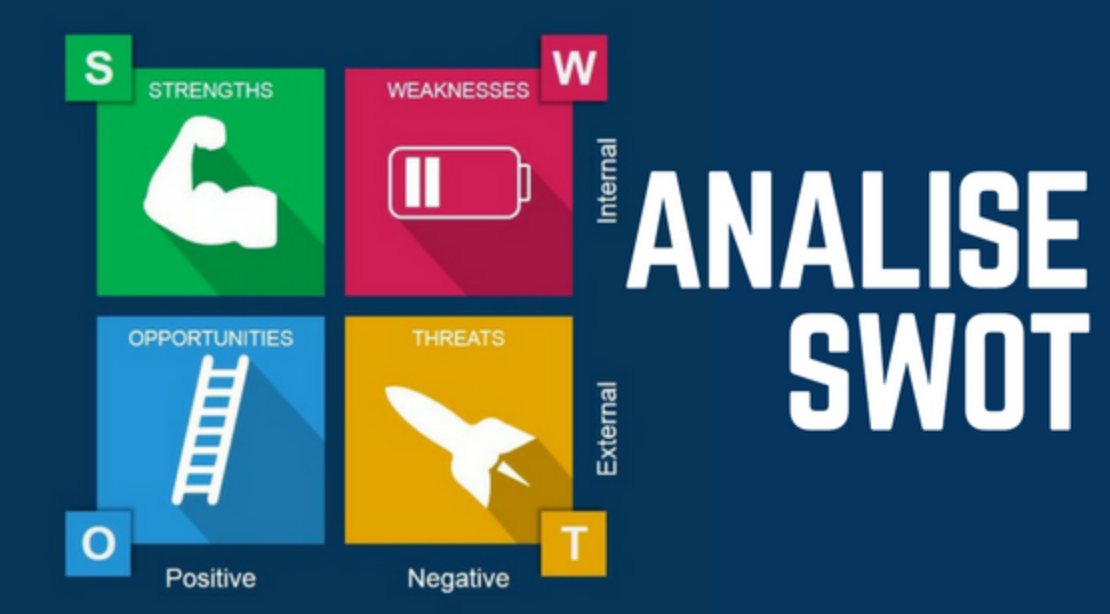
SWOT analysis is a fundamental activity during many retreats.  They are visually pleasing and quick to focus conversations.  It is easy to understand why they endured.  Today I read a new process for facilitating a SWOT.  The mindset is compelling.

Screen Shot 2019-08-23 at 9.26.20 AM

Performed in isolation, the SWOT offers a myopic view of the world.  It is our self-evaluation.  We may believe we are memorable conference presenters because of our witty narratives but do we really know?  Unless people walk out of the room during our presentation, or there is a sudden rush of new audience members, it is hard to assess how we are trending. 

SWOT is an instrument.  An opportunity to facilitate conversations.  The greatest gift is getting to the human element.  What are the behaviors and interactions we are fostering?  We may have the most beautiful facilities, the best thank you gifts and a polished social media presence, but if our values are misaligned with our actions, then it is hard for anyone to build trust or take action on our behalf. 

If we use the SWOT to discuss the relationships we are building with those who need what we have to offer, there is an opportunity for a robust conversation.  If we use the SWOT to establish an arbitrary ranking, it may miss the highest return on investment, a discussion about how we can be of service.