Innovative Concepts
Resources for BSU Leadership Class
Problem solving + Problem Finding = Well Designed Life
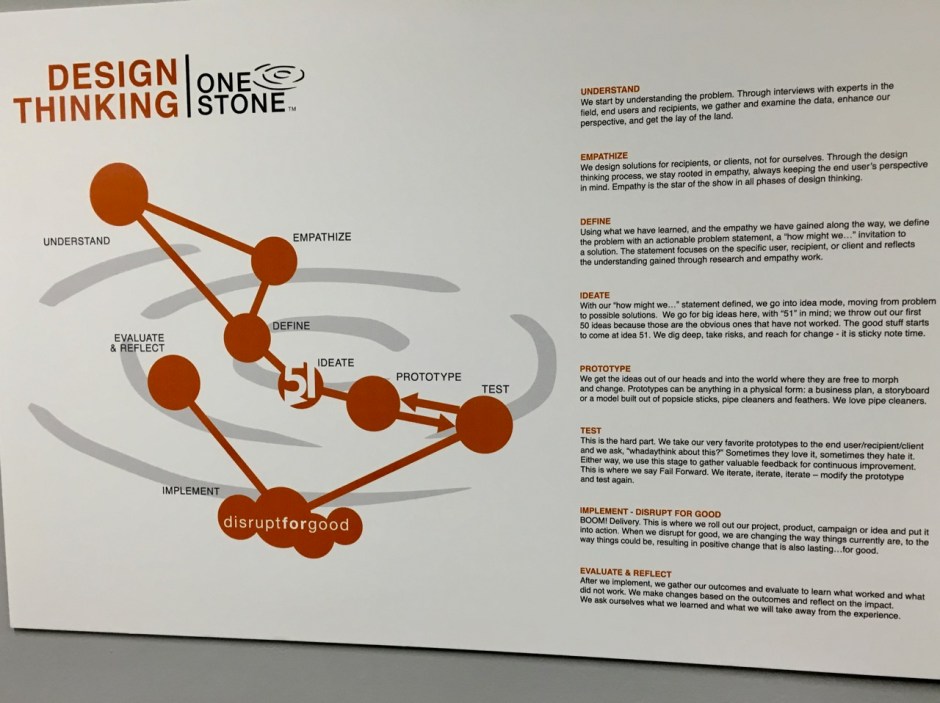
Characteristics of Servant Leadership
- See the future.
- Engage and develop others.
- Reinvent continuously.
- Value results and relationships.
- Embody the values.
- Hunger for wisdom.
- Expect the best.
- Accept responsibility.
- Respond with courage.
- Think of others first.
Deciding on the work that matters
- What do you want to do?
- Who do you want to change?
- How much risk do you want to take?
- How much work is required?
- Does the work matter?
- Is it even possible?
Goal Setting
- Choose a goal that matters, not just an easy win.
- Focus on the process, not the outcome.
- Frame your goals positively.
- Prepare for failure (in a good way).
Resources and visuals for Simon Sinek’s Golden Circle
Thank you for the opportunity to share ideas. Your questions and stories were tremendous. Please follow-up with questions.
Yellowstone Stories
 If you were one of the first through the area now named Yellowstone National Park, it must have been remarkable and fearful. Unknown geological events and formations appeared. Geysers spouted hot fluid from the ground. Hissing, bubbling, screeching sounds erupted from unknown sources. Water falls bigger than anticipated broke forth from a forest plateau. The Native Americans and mountain men had to make sense of the region. The assigned names, made-up stories, and sacrificed their safety interacting with these natural wonders. We recount their stories today as part of our travels through Yellowstone.
 Today, one can travel through the park without getting out of their vehicle and still see amazing sights, no sacrifice required.
Which raises the key question. Do you believe in the journey you have embarked upon? If your adventure still has blank spots on the map that you are trying to fill in, then you craft the stories that go along with the exploration.

If you are just along for the ride, then sit back and enjoy the tour. But you trade the right to create stories for privilege of being entertained by those who have gone before.

Prototype
 A collapsable bike helmet constructed from recycled paper and plastic employing a honeycomb design. Obvious, right? Now that we mention it, of course it exists. Except the EcoHelmet didn’t until 2016. Nothing in the design and materials is a breakthrough of science or technology. The barrier was our way of thinking. Our inability to think about the application of these materials in a new way.
Those working in the social sector are addressing problems that are so large and complex that they cannot easily monetize. Our environment is ripe for prototypes of all kind. If we fail, it is expected. If there is an easy solution it would have been employed already. Each program, hire, budget, donation is a protoype. It is a micro-effort to do the work that matters. We need to remind ourselves that we are in the design thinking arena. We each present a vision to put ourselves out of business because we solved a problem. Perhaps we should be protoyping everyday, and wary of iteration.
Two Groups
Seth Godin suggests that we can define super fans by identifying people who would miss us if our cause ceased to exist. Said differently, who would contact us until they got answers when no one showed-up. I believe there is a footnote to defining the super fans tribe. There are those who would sincerely miss us and the remarkable services we provide. A sub-group exists. Individuals who believe we owe them something so they might continue to advance their own cause. The super transactional tribe. Those who confuse business, discounts, frequent flyer status for loyalty. The people who interact with our cause because they get something that has less to do with achieving the mission than it does with inflating their standing.
These two groups run on parallel tracks when an organization is in growth mode. It is hard to distinguish super fans from super transactors. When the organizational lifecycle plateaus or a dips the interest of the two micro-tribes reveals itself. Super fans inquire what fuel we need to continue the journey. Super transactors fight to for the perks and benefits that came with their exchange of money for service.
Super fans and super transactors are powerful allies and critical to an enterprises success. Understanding their motives is essential if we choose to embrace and reward them. If we can only cultivate one tribe, super fans will endure longer than super transactors.
Simon Sinek’s Golden Circle
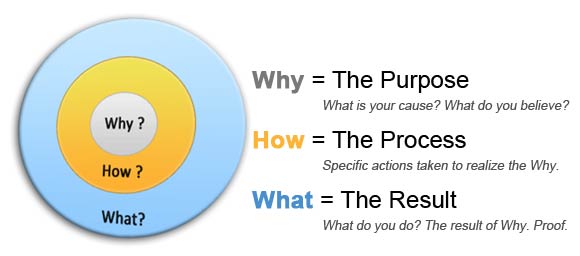
For my Friends at Serve Idaho. Thank you for the opportunity to share the journey.
Start With Why Presentation Slides
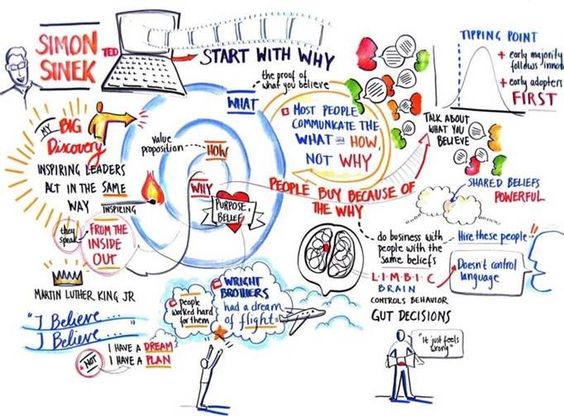
Hello!?

How do we encourage people to join our cause? Do we make it easy and convenient? Are we relying on the post card inserts found in magazines? When was the last time you filled out a subscription card (perhaps seventh grade and sent it to a friend’s address)? When was the last time a prospective new member submitted a letter saying they were interested in joining? When we opt in, we are giving permission to celebrate our action. As an organization we have the opportunity to strike up the welcome band and amplify our values.

When I purchase a guide, conference ticket, or enroll in a course designed by Chris Guillebeau, I receive an email like this:
Thank you so much. We are so excited that you are joining us at World Domination Summit. Everyone in the office is giving high-fives and cheering right now. We are rushing to the mailroom to send out your materials. Our day could not be better and we hope yours is equally remarkable…
How we great people, new to us or part of the the founding membership, matters. When I board a legacy airline I expect a fake ‘hello’ and move on quickly. We have entered into a transaction for service. When I engage with a cause that shares my belief, I offer my talents. How the insiders at the organization respond determines the depth and duration of the interaction.
Delayed Curiosity
 How does a single point of view carry the day in a conversation amongst intelligent, articulate people? How does a way of thinking rise to the top and sweep away doubt and unaswered questions? Too often we forego a culture of inquiry to adopt consensus. It feels good to be on the same page at the end of a meeting. Tension and stress are relieved. However, we may be missing the greater opportunity to broaden our understanding of the place we occupy. To consider multiple routes to the same destination.
This morning I read that the Good Design Award for 2016 was being presented to the Keio University Graduate School of Media and Governance. Their innovation? A new world map that better represented the land masses of earth. Since 1569 humanity has accepted the Mercator projection as the best two-dimensional representation of our planet. Other models exist, but change has been rejected. We are working with flawed data, and yet we hold tight to what we know. Reimagining representations of our globe on paper is not radical technology, but conventional wisdom persisted for centuries.
What have we accepted that would benefit from desging thinking? What is our Mercator projection?
Creating the Opening
The responsibility of leadership is not to come up with all the ideas. The responsibility of leadership is to create an environment in which great ideas can thrive. -Simon Sinek
If there is trust, our best ideas come forward. We share both our most passionate thoughts and those that sit precariously not fully formed teetering on the edge. Best ideas originate when the aperture opens and we see more. Creating this way of thinking requires consideration and preparation. When it happens we are transformed into thinking about the future instead of glancing backwards into the past.
What Game Do You Play?

Are you playing a finite game or an infinite game? Are you working towards an arbitrary ranking or seeking joy from advancement? If we play the finite game, we work to beat others, however if we play the infinite game, we focus on doing better work. If we choose to be in the game, we also choose which game we play. Very different cultures emerge depending on our focus. The game we play defines our relationships, work, world view, and politics.
Simon Sinek illustrates the power of the game in a remarkable talk. His message, we have a choice and that choice defines us and our work.
(Thank you Patricia for encouraging me to watch Simon’s talk)
 What-if-concepts