Meetings

Changing Topography

The power of generative conversation is similar to playing in a sandbox. We can build, alter, and discard ideas without worrying about the constraints of reality. Like the Topography Sandbox, we can quickly alter the terrain and consider new possibilities. How might we make room for generative conversation in our next meeting?

How Does the Group Benefit When You Arrive?

When you show up, does the room get smarter, more insightful, diverse, empathetic, energized, or committed? What trait or characteristic do you lend that adds value? It is a question to ponder when being asked to serve. Do we have something remarkable and or unique to offer? We might be the only ones without an advanced degree, but we have experiences that elude academics. We might be the only ones who have trekked this route previously, even if it was at night and we failed to reach the destination. For all the board and team matrices that attempt to map our attributes on spreadsheets, it is often the unquantifiable that is our greatest asset.

I have traveled far to attend board meetings where my presence contributed little until a key inflection point. I offered a three-sentence reflection that I believe helped us make a better decision. For 99% of the meeting, I was not essential, there were other voices to cover the same perspective I was thinking. However, when the moment came for a critical insight that I was uniquely positioned to articulate, I was willing to contribute. The room was better for the presence of each attendee.

Meeting?

Why do we gather, and when should we assemble? According to a Harvard Business Review article, there is a flow chart to review before calling a meeting. Dan Martell proposes the 1-3-1 method of decision-making for a one-on-one meeting. Simon Sinek has an online course dedicated to meetings. Seth Godin breaks down different types of meetings.

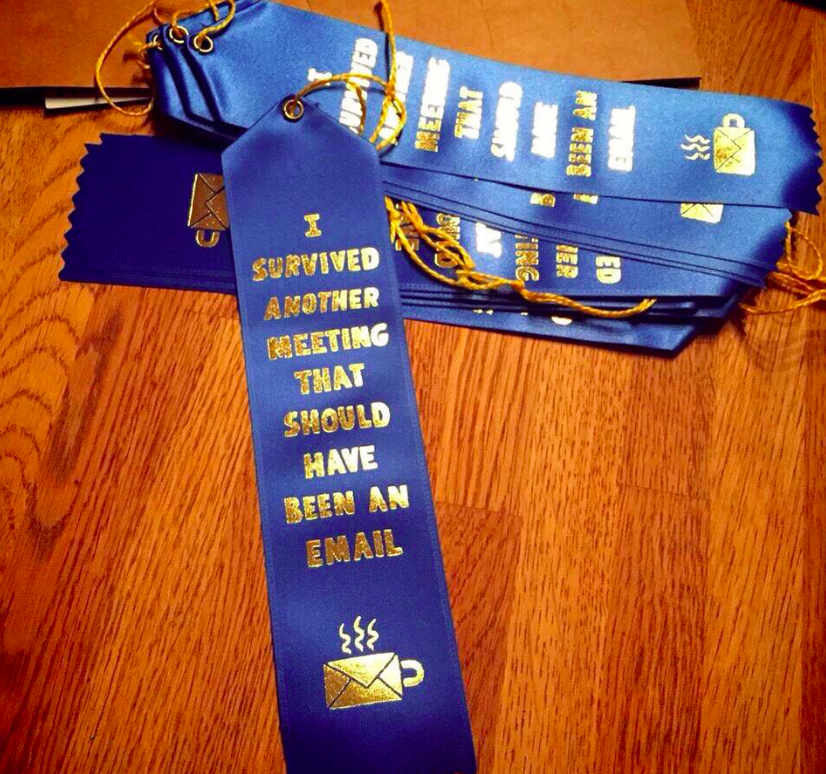
I rarely get excited to schedule a meeting. However, when it has a purpose that intersects with my purpose and is facilitated to elevate our best ideas and insights, I can leave feeling better about the organization than when I arrived. Leading a meeting is a skill. Anyone can call a meeting, but few can conduct a great session.

How might we ensure the best person on our team is leading our meetings, even when they may not have the title (or seniority)?

Despite Appearance, It is Not the Same Meeting

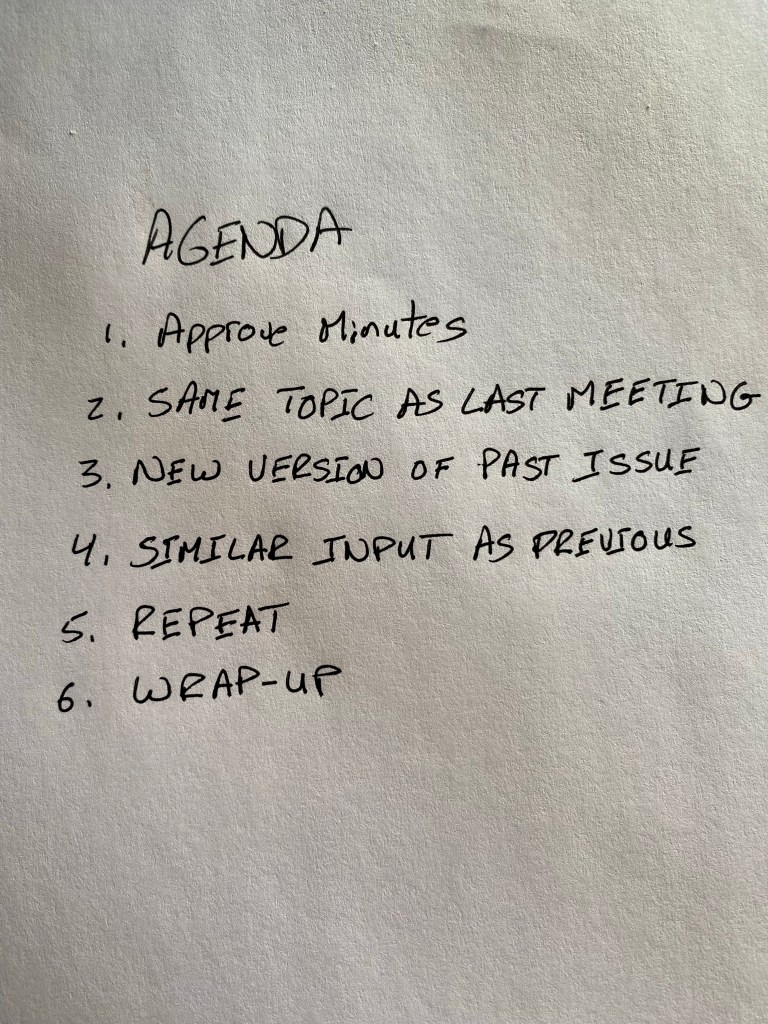
Even if the agenda looks the same, the meeting is different. Each participant has encountered new information and experiences between gatherings. The world changed. New members joined our efforts and others departed. Our services and contributions have had an impact, positive and negative. We are not looking at the same conditions.

Imagine watching a firework show. At first glance, each burst of light and corresponding boom appear to be the relative similar. Then we notice the different colors, shapes, alternating lengths of illumination, height, and pattern changes. Even the launch angle and sequencing of the shells remains variable. No two firework shows are the same.

How might we embrace that we are never looking at the same thing despite initial appearances and patterns? Even if we meet in the same location, with the usual group, on a repetitive day of the month, and rely on practiced parliamentary procedures, we are not assembling for a duplicate meeting. Our greatest fault is thinking we are convening for repetition when everything is new.

Being Heard

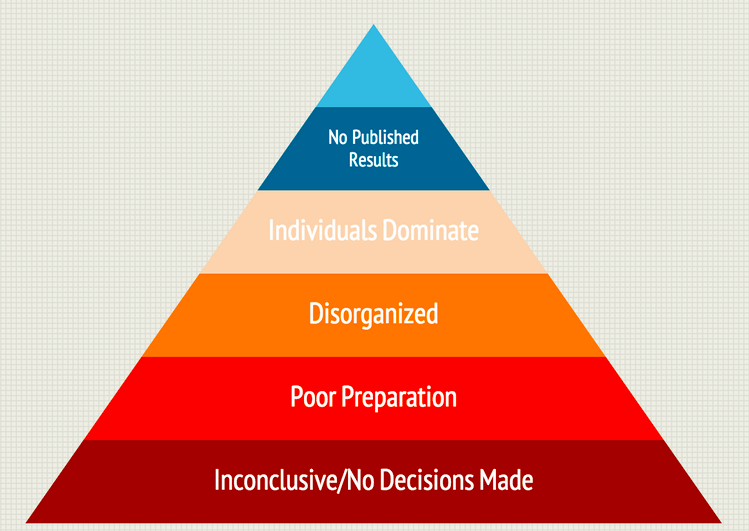
Screen Shot 2015-03-04 at 6.43.44 PMIn my opinion, experiences that are better in-person include: interviews and hiring, selecting strategy, confirming purpose, finalizing agreements, welcoming new members, reunions, first time adventures, significant milestones, and hearing first person narratives.  Experiences I defer to a virtual realm include: policy and procedures, non life altering results, recommendations, directions, registration, compliance, processing, and being managed.

‘Is the honor in being asked or is the honor attending the meeting?’  This is a mantra I use as a guide to determine the importance of a face-to-face interactions.  We get a rush when invited to the next meeting.  We feel important and want to be heard.  How could the organization survive without our unique and wise input?  However, a balance exists between being in attendance versus perfecting our remarkable craftsmanship.  Sometimes not interrupting the tribe’s work is the wisest decision we can make.
A Lesson from One Club

IMG_5903Golfer Bubba Watson recently played a round using one golf club, foregoing the 13 other clubs allowed in his bag during competition. He said the experience helped him develop his skills and also changed the routine.  What are ways to break-up the routine of meetings within organization.  Here are some ideas:

  • Off-site meetings (new location, travel related, even a different room)
  • Invite guest speaker
  • Meet with another board (partnering organization, similar size different sector, mentoring organization)
  • Active experience (river rafting, hike, bowling, scavenger hunt)
  • Attend conference
  • Hire facilitator
  • Webinar or online class
  • Group read- read the same book/article/packet in advance
  • Generative thinking agenda
  • Scenarios from a hat (hat tip to Whose Line is it Anyway)- select random scenarios for brainstorming sessions
  • Listening tour
  • Online poll (for board, membership, community)
  • Show and Tell- bring one idea from another enterprise that may benefit organization/operations
  • Speed Networking- one-on-one sessions for board and staff members to get to know each other
  • Change seating arrangement (new layout, standing only, bean bags, etc)
  • Invite past board members back for update and advice
  • Start meeting with a mini-TED Talk from one board/staff member
  • Spark- reflect on how organizations best ideas were generated
  • Graphic facilitation- illustrate the organization’s current status and future potential graphically