Did the towns of Cooke City and Gardiner, Montana develop contingency plans in advance that include catastrophic disruption and historic infrastructure failures? The 2022 summer appears to be headed in a very different than anticipated. How do they find their way forward from the flooding and storm damage that has made travel into the towns and Yellowstone National Park uncertain? How do we plan with certainty if we cannot predict the future? Perhaps we need greater flexibility if the journey we seek is worthy of wayfinding.
Do you have a master plan for your facility/campus? How flexible or rigid are the considerations and assumptions that guided the plan’s creation? Do you share your vision for the future with your fans, or is it kept under lock and key? How might we remain curious about the factors influencing future needs?
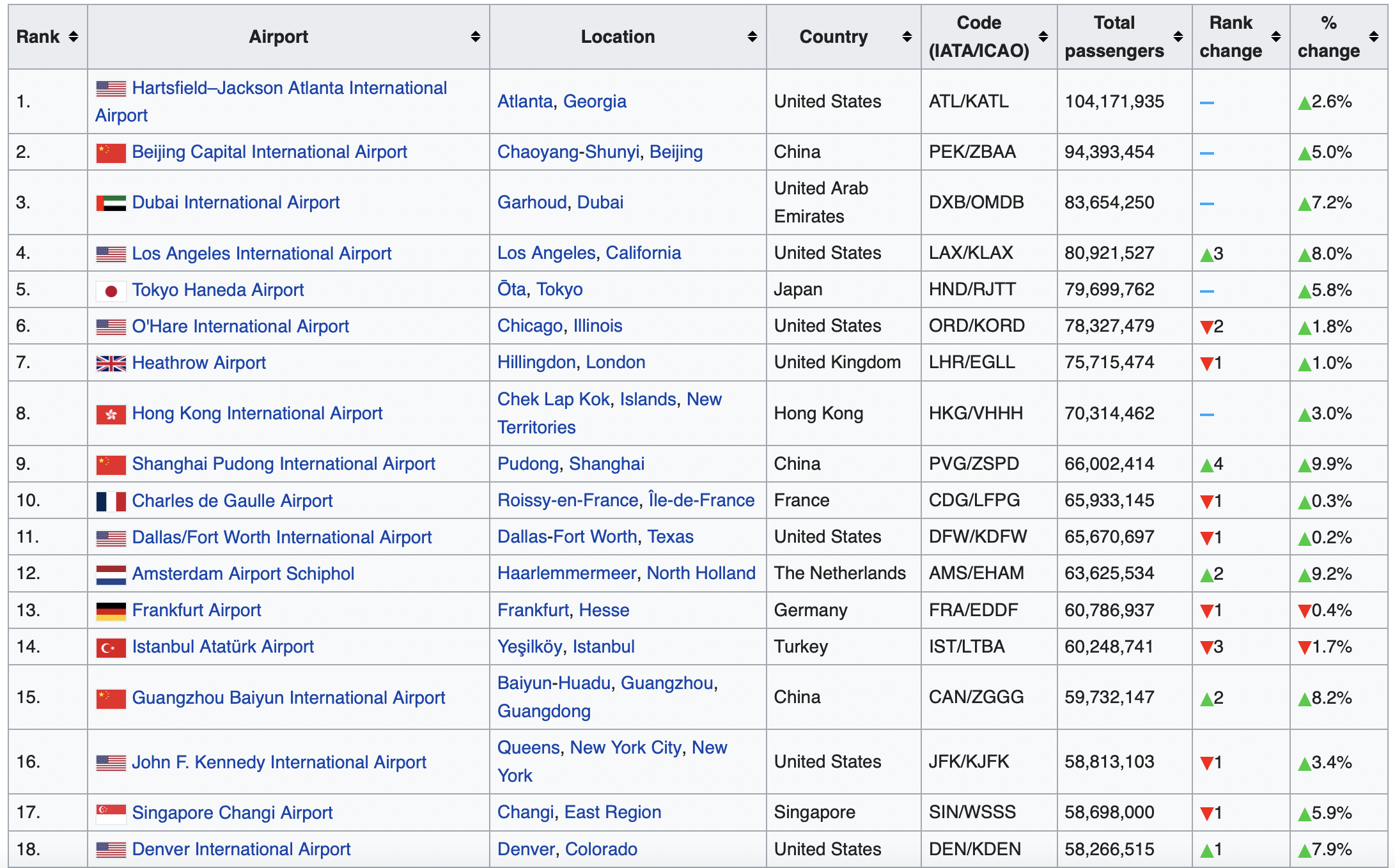
Consider Denver International Airport’s jump up the list of busiest airports by passenger traffic, moving from 18th in 2016 to 3rd busiest airport in 2021. Interestingly, the number of total passengers in Denver between 2016 and 2021 is similar compared to other airports; the growth is not correlated due to the pandemic. Denver has a master plan that includes 12 runways and two additional terminals. By building further away from the city, there is room for growth.
Next time is more than a delay; it might even be a lifetime. Next time is a strategic decision to focus on something else. Next time is passing the last exit on the interstate before the toll booth. There is a high cost to delaying what could be done now. Next time is more than another day; it is a cascade of actions that requires planning and re-routing before returning to the opportunity.
How might we consider what cannot wait for next time? What are the screening statements that allow us to evaluate opportunities in real-time? How might we have the courage to take the path we need to explore today? In his poem, The Road not Taken, Robert Frost presents, “Yet knowing how ways lead on to ways, I doubted if I should ever come back.”
Next time is a worthy rationalization for amusement ride choices, but postponing until next time can be a paradigm shift for the decisions that matters.
We pitch it to avoid the even ground that exists between our current location and the intended landing zone. We are hopeful that the momentum we embed into the projectile is sufficient to reach the goal. We place it when we intend to be more exact and/or the value of the object meets a threshold to be considered less replaceable.
Horseshoes are easy to pitch and it is a required part of the rules of the game. The consequences of an errant throw is usually minimal and the reward for a ringer are virtual points. Placing a Rodin sculpture requires a level of expertise. We would be held in contempt if we pitched a world class sculpture over the wall and left it randomly in a sculpture garden. We invest in the professionals who have appreciation, experience, tools, time, and financial security to successfully install a piece.
Which considerations should we address before deciding if our intended strategy is a pitch or place?
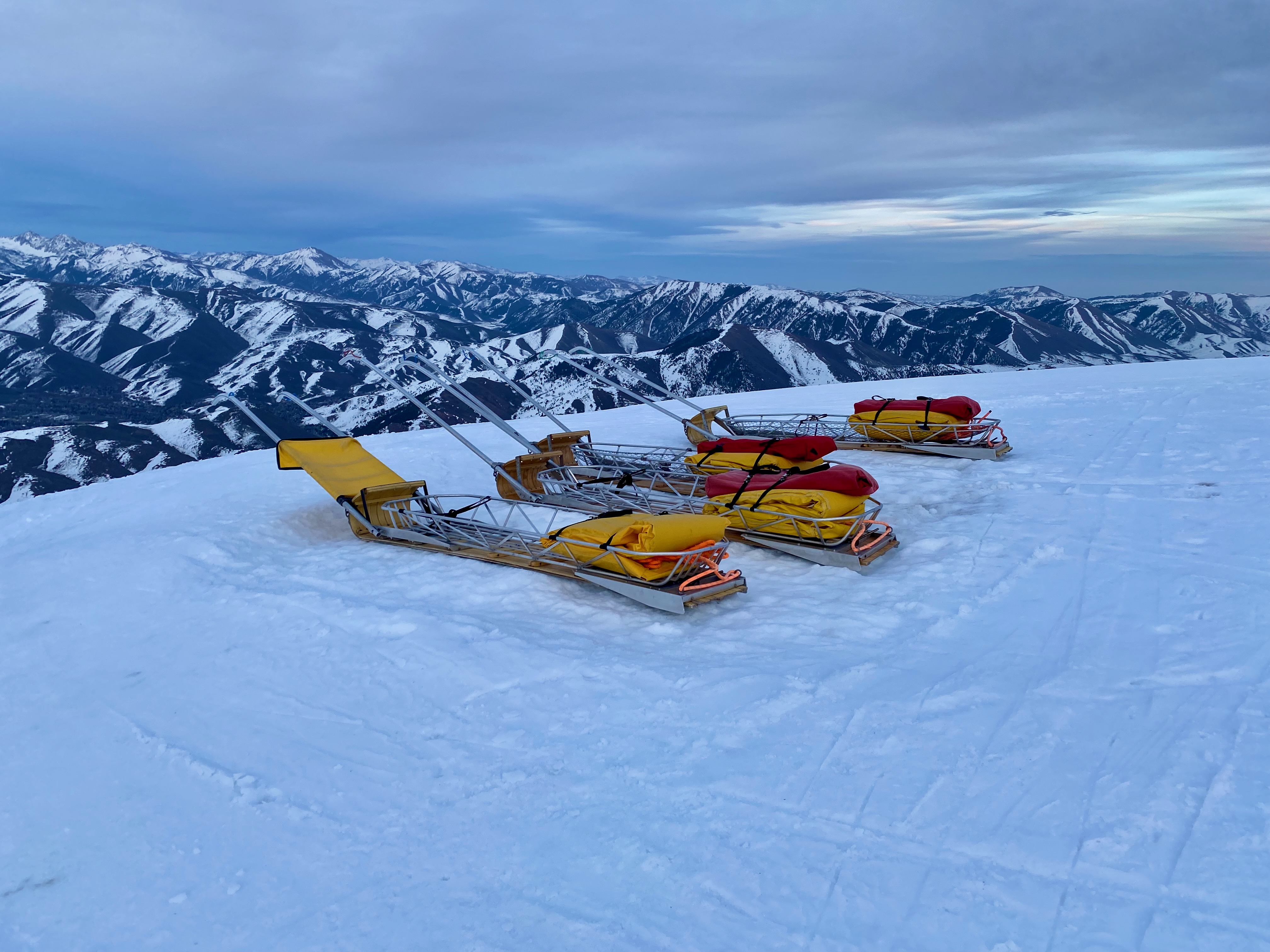
It is leading practice to position ski patrol toboggans at the top of the ski mountain. Much better than in a base area shed. We can respond quickly to an emergency with a well placed asset.
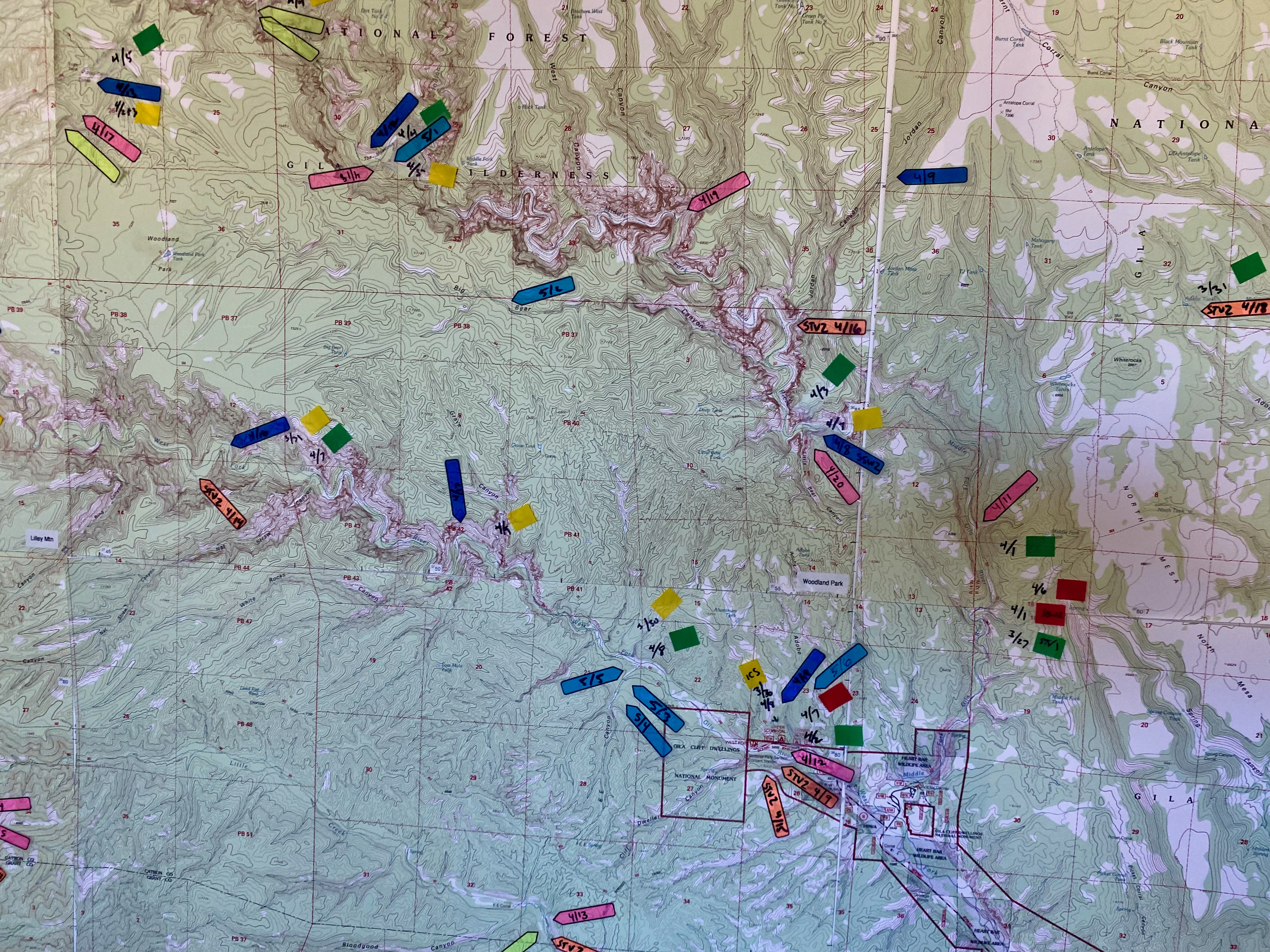
How might we consider which of resources need to be pre-positioned in an accessible location? If we run an outdoor education program with student groups in the field, it might be helpful to have a primary source map that captures scheduled routes and camping locations. If an emergency call comes to the base, we can reduce the friction just getting oriented.
Which resources have you pre-positioned? Which ones do you employ on regular basis? Which are cached for an unexpected event?
BoardSource recommends the following basic resources for most nonprofit organizations. The Nonprofit Center of Northeast Florida has links to emergency planning resources. And Seth Godin blogged about the cost of emergencies.
Why do we schedule organizational retreats? Why must we gather in a different location to think differently? Why do we hire facilitators to guide the process? Why do we assemble differently?
Why did we go on field trips during our school years? Why was a field trip a remarkable moment during our academic journey?
We need space to assume a different mindset as we rarely plan effectively when we are in routine. If we seek to engage secondary and peripheral ideas and considerations, we must be willing to get lost in the wilderness. If we have our Magnetic North compass (articulation of purpose, vision, mission, and values), we will find our way and add dimension and depth to the space we occupy.
How might we intentionally make space to get lost so we might engage our wayfinding skills? We do not retreat to predict the future (anyone have world pandemic written into their strategic plan) but rather to prepare for the terrain that might lay ahead?
Where you show-up matters. Selling flight insurance by the airport baggage claim, renting audio guides at the museum exit, or giving away the free gift before the timeshare pitch might not allow us to engage those seeking our services.
When we navigate using the constellations and stars in the night sky, we rely on light generated in the past. A few stars might not exist in real-time, their fate unknown to us since it may take hundreds of light years for current illuminations to reach us. So, we proceed confident the past will secure our coordinates.
When we plan, we review. We take what we know now and attempt to rationalize and transpose it onto the blank canvass that is the future. We make broad assumptions and overlay current conditions. If we want a tropical vacation in 2023, we believe that historical weather patterns will hold and we can rely on Hawaii to meet certain atmospheric parameters.
There is no fault in this approach, it has served us faithfully in many examples. Mondays have a familiar routine compared to Saturday and we can account for trends. Except when the past does not equal the future.
Where do we turn in these moments that break the blockchain? We navigate from our values and training. Our values are behaviors that are foundational and we will not sacrifice except under extreme duress and our training is what we practice (intentionally or not) on a regular basis.
Fire departments hold drills to reinforce training and values. Laddering a building is not the most complicated task. However, footing a ladder on uneven snowy ground in thick smoke, while flames roll out of a second story window, and rumors of entrapped occupants circulate; that is when the stars are obscure and we cannot easily consult the plan. We adapt, get creative, deploy our resources to maximize our talents, and rely on our training and values.
Many fire departments share a motto that is paraphrased as follows: we take reasonable risks to save property, we take a lot of risks to save a life. Values matter and they are often most visible when the conditions are extreme.
When we plan, do not forget to confirm the values of the people on the expedition. If everything goes as predicted the plan may succeed as scripted. However, when the conditions change to challenging, our values will override the plan and new options and decisions must be considered.
How might we make time during our planning to confirm our values? It might be the best planning decision we make.
When we are afforded elevation it provides is with perspective. Height changes the horizon line. We are fascinated with drone footage that give a bird’s eye view. How might we elevate to help inform our decision-making?
What planning documents would you co-sign? Said differently, are you willing to lend your name and reputation to the plan that guide the cause that you support? Are you aligned with the enterprise’s vision for the future? Otherwise, it might be a compelling scale model but not worth the effort to build in real-time.







 What-if-concepts