Planning

Competitive Advantage

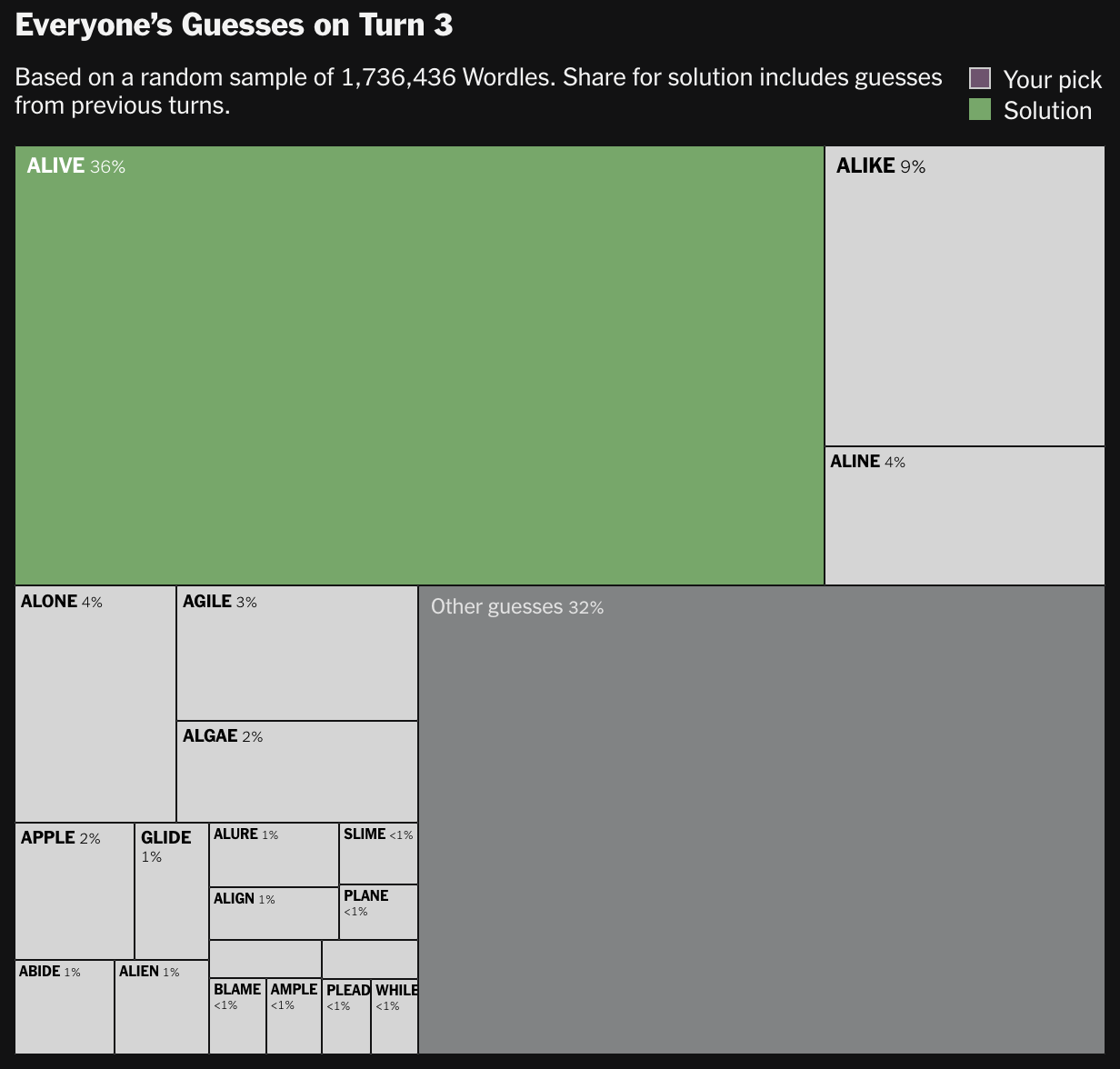
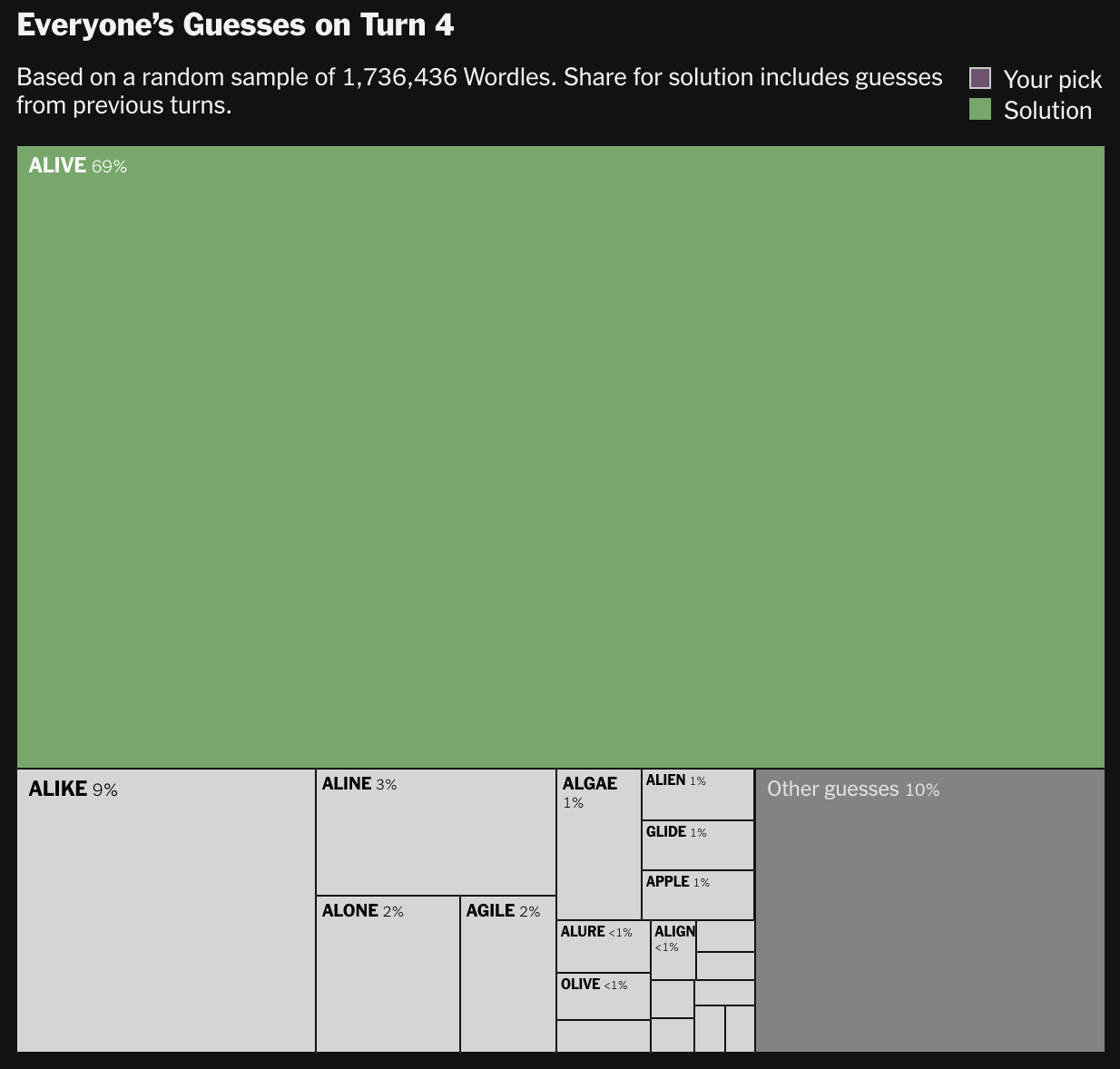
After solving the New York Times Wordle, you can review your results using the WordleBot. The WordleBot breaksdown our guesses versus a large sampling of other players. On most days, a consistent completion rate develops. Typically, ten percent solve the puzzle by their second try. A third are successful by the third attempt. Two-thirds are correct by attempt number four, and ninety-plus percent complete the puzzle on attempts five and six. Occasionally, the wordle aligns with the starting word many players employ, and the success rate is elevated, or the word includes a unique letter, and the results skew towards a lower success rate. 

Competitive advantage in the Wordle world starts when we solve the puzzle by the second guess to be an outlier or the third guess to be in front of the majority. How does this apply to our work? At some interval of time, we will encounter a new technology, trend, or way of thinking. We have a choice, to actively engage the new or passively await the market to sort out the viability of the thing and then adopt when the majority move.Or, be a laggard and await the moment our old platform is no longer supported with updates.

What is the process your team employs to evaluate new opportunities? Who are your organization’s scouts that bring these initiatives to the group for reflection? How does your mindset influence the decisions you make in regard to proceeding, waiting, or ignoring?

*** Tomorrow’s post continues the discussion

Adopt or Adapt

One is offense, the other is defense. One requires the spark of curiousity, the other is associated with fear, or at least hassle.

Seth Godin

Seth Godin crafted an enduring blog post defining the difference between adopting and adapting.  A strategic decisions we need to discuss is if we are a group of people looking to adopt or adapt? The two mindsets will fundamentally change how we proceed. How might we plan for our future using strategies that reflect our posture?

Feedback Folly

When it comes to obtaining customer input, executives often think a multiple-choice survey will be the most cost-effective option. They have their place, of course, such as if you want to know the percentage of people who liked or disliked something. But these instruments are shallow and derivative at best, and at their worst they can be annoying and counterproductive. So don’t let them become an excuse for not talking to the customer.

Graham Kenny is CEO of Strategic Factors and author of the book Strategy Discovery.

Net Promoter surveys, pre-retreat questionnaires, automated phone calls, and ring the bell if you received good service; each is a tactical way of generating feedback. On balance, they hinder strategic insights from conversations with clients (those receiving your services). A fundamental case for performing focus group sessions or design-thinking workshops is the ability of one real-time participant to build on the idea of another attendee. This process of idea generation does not translate to the opening list of feedback tools. If you run a single proprietor business and the store is only open when you are present, then you have the chance to engage every customer in some type of generative question about why they chose to do business with you. As the number of team members interacting with customers expands, these conversations are harder to generate, and the ideas are rarely collected in a single repository and reviewed. Therefore, it is convenient (for the business) to send out surveys and seek quantitative feedback. This is the detour from human-centered design. If you were asked to select the ‘type of person,’ you are based on one of six choices that applied to all humanity; how accurate of a representation would the data reveal.

What if we prioritized gathering feedback that focused on genuine interactions with our clients? Where possible, gather a cross-section and create an opportunity for generative feedback (free pizza and beverages are well received). This is a key activity that highlights an organization that embraces a culture of curiosity and invests in a remarkable strategic planning process.

How might we select genuine input that does not populate into a dashboard report? How might we gain more clarity about our super fans and why they trust the work that we have deemed essential?

Dashboards

What information do we need to be tracking? How much data do we need, and at what frequency? How do we balance doing the work with being reflective of the metrics? Do we need a snapshot or a deep dive into the numbers? 

Quarterly reports, guidebooks, heads-up displays, and forecasts are helpful if we know how to apply them to the terrain we encounter. Otherwise, it is easy to steer the enterprise onto an abandoned dead-end road. Many of us have made ‘great time’ during our travels while headed in the wrong direction.

Payout or Annuity

Do you take the payout or defer it for another day? Do you elect the over-scheduled board member or wait until they can focus on your cause? Do you ask the donor for a campaign gift even when they suggest they can do something more significant in a few years? Do you launch the new program with numerous gaps or continue assembling a more complete team before activating? Do you grab headlines with a sensational claim or send a press release after you have completed a remarkable level of service?

Each scenario above is too vague to answer definitively but represents generative questions. They are worth pondering; each serves as a proxy for the real-time decisions we need to make. Trying out a new tactic during a training session offers immediate feedback and is more effective than waiting for a competition. If we delay until the race to deploy a new strategy, our results are often hampered by our lack of preparation. Train today so our capabilities are evident, and we are prepared when the spotlight focuses on our enterprise.

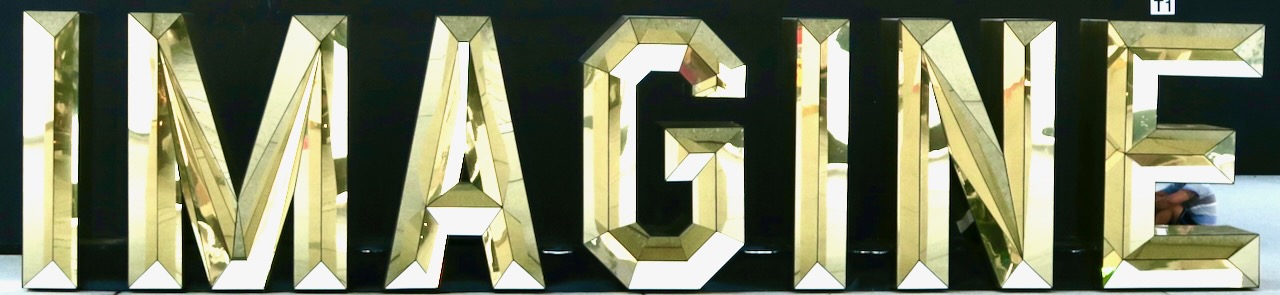
Does Imagining Happen?

When do you and your team spend time imagining? Is it scheduled or happen organically? What is the mindset when it takes place? Is there a location where it seems most productive?


An organization with a headquarters building containing an open lounge with extraordinary mountain views overlooking an iconic river insisted we meet in the conference room, sequestered in the interior of the building. When I inquired about the location of the blue sky thinking session, the response was that all meetings take place in the conference room. The venue selection hindered the opportunity for generative thinking before the gathering commenced.


How might we embrace a culture of sense-making without starting from a place of tradition and hierarchy?

Direction vs Destination

What destination have you selected? What direction are you currently headed? Sometimes, we must head opposite our destination, but we are still on course. During the New Year’s resolution phase of the calendar, it can feel that we have planned poorly; however, do not confuse destination and direction. If the journey is a priority, we deploy our wayfinding skills to keep moving, even when the best route suggests we revisit paths already traveled.