relationship

Branding

How does your cause construct its brand? Does it start by employing SEO, identifying a target audience, establishing a voice, agreeing upon a style guide, and investing in research? Or, does it tell an authentic story? We can build trust with people and their values, and we can establish a meaningful relationship. We might think we have a connection with a brand, but it is similar to a conversation with AI, all the right sentiments, but no depth or dimension.

United Airlines, Marriott, National Car Rental, Specialized Bikes, and Garmin have all added value to my adventures, but none of them has developed anything beyond a transactional relationship. They provide a service and offer loyalty reward benefits, but there is little to sustain our interaction. For comparison, I support social sector causes and am familiar with the individuals who work for these organizations. The blend of the organization’s vision and the team’s role of serving builds the brand.

When we attempt to advance our brand over people, our relationship with them transitions, diluting our connection with those we serve.

Gaming the System

Checked in for a two-leg flight. Baggage fees for two bags total $100. Upgrading to First Class was $80 (total for both legs), which included two free checked bags. I suspect the pricing is generated by an algorithm (AI). There is limited demand for First Class, so the upgrade price remained low. Baggage fees are fixed and increase based on the number of checked bags.

What inconsistent messages does your enterprise communicate? Is it transactional (airline baggage fees), or is it subtle? Does your organization’s value proposition humor your members or create confusion in your community? Sometimes, our quirks are what give us depth and dimension. Other times, it keeps individuals from investing fully in our cause.

Memory

Researchers asked people to draw different corporate logos from memory. The results are fascinating and provide insight into what we recollect. What if you were asked to draw your organization’s logo? How about writing down the mission statement? Can you list the three biggest expenses and revenue categories? What is the name of the summer intern at the nonprofit you engage with the most? What was the name of the last author you saw speak in person?

Like the image posted above, we all have some degree of memory and can respond to the prompts. Our fidelity to the actual answers might be marginal. As an interesting corollary, ask respondents for the three most important things about your enterprise. Is there a contrast between the basic components and their responses? It might be illuminating.

Disembark

Do the people who benefit from your services know where to disembark? At the upper terminal of a ski lift, signs provide clarity on when to return to downhill ski mode. In an academic setting, final exams and/or graduation define the transition. But if you are an arts organization, is there a point of disembarkation? How about an environmental conservation group. What if we build the most sustainable residential structure and place all our property in a conservation easement? Do we uncouple from a land trust’s work?

The embarkation and disembarkation phases run the gamut from ‘obvious’ to ‘it is complicated.’ If uncertain, ta leading strategy is to remain in communication. I support causes in other regions because they are committed to sustained dialogue. I withdrew my engagement with an enterprise next door because they ghosted me.

Taglines

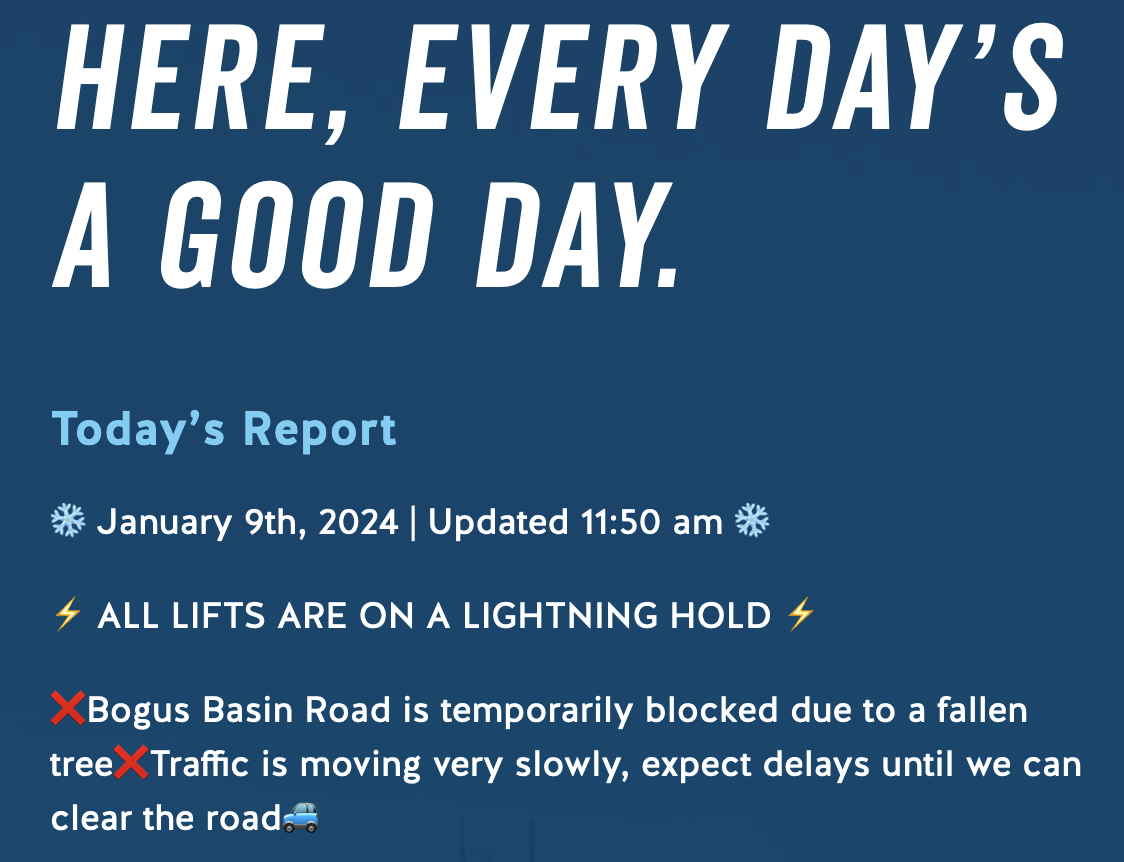
Taglines are a fantastic way of articulating the essence of our cause, except when they are not. I notice taglines more often when experiencing a disruption or disappointment than when things are in a state of delight. United Airlines champions, ‘flying the friendly skies.’ But that does not feel on point when we are requested to deboard a suddenly canceled flight, and there is no customer service agent to assist with rebooking options. Disneyland promotes being the ‘happiest place on earth,’ but a disconnect is palpable when a favorite rides break down, a cast member snaps at us, and waiting for the most popular attractions edges towards triple-digits.

We want to present our best selves, and taglines are aspirational. They set an expectation and a standard. What gives them depth and meaning is how we cover the range of emotions our clients will encounter, from extraordinary moments of joy to unintentional disruption. If we show up and embody the spirit of the values embedded in the tagline, our fans are likely to deepen their relationship with us. If we say, ‘Get over it,’ then we have broken the relationship, and it becomes transactional.

*** Sometimes, we must intentionally break our tagline in order to maintain the circle of safety. That is how we further trust and those who show up know we care.