This moment is the youngest you will ever be, at least in the chronology of conventional time as we define it. What activities and areas of focus are deserving of your current youth? If you map our attention over a day, did we invest it in activities and interactions that maximized our youthful capabilities? We cannot bank it for tomorrow, so how are we spending our youthful resources today?
Resources
Certainty
Are you more or less likely to trust a directional sign if it appears rickety and patched together? Is it safer to take guidance from a signal that appears in an original state versus one in a liminal state?
What opportunities do we miss when we forsake the uncertain? What risks do we avoid by staying on the main path? What resources are we willing to expend in search of something new?
Lagom
Lagom is a Swedish word that translates to “just about the right amount.” What is Lagom for your work? What level of services, resources, engagement, impact, and awareness fit that mindset? So often, the social sector exists in a deficit mindset, driven to scale and expand. If we were to calibrate our work, where would just about the right amount appear on the scale?
Staging


I noticed multiple lawnmowers staged on lower yards around our neighborhood. Due to the slope’s grade and the proximity of stairs, it is more convenient for homeowners to place a second push lawnmower at the low point of their property and use it for a limited area that is difficult to reach.
How might we stage our resources so we can act when needed, even if it means dedicating an item with a greater range than the deployment area? How might we identify where staging might be more effective than repetitive load-in/load-out scenarios?
Hoarding or Preparing?
What is the inflection point between hoarding and securing additional resources? In the social sector, this tension plays out when an organization with a significant endowment requests funding for distinct initiatives. For example, a summer camp requiring deferred maintenance of its facilities may be questioned about the criteria for deploying the endowment for the upkeep and maintenance of the facility versus seeking new contributions.
How might we be prepared to communicate with our supporters when we are building up caches to provide fuel for our journey and when we are stocking a storage room for a pandemic we hope never occurs? Knowing how we intend to deploy resources may differentiate a donor’s perception between contribution and aggressive panhandling.
Wave for Less Resources
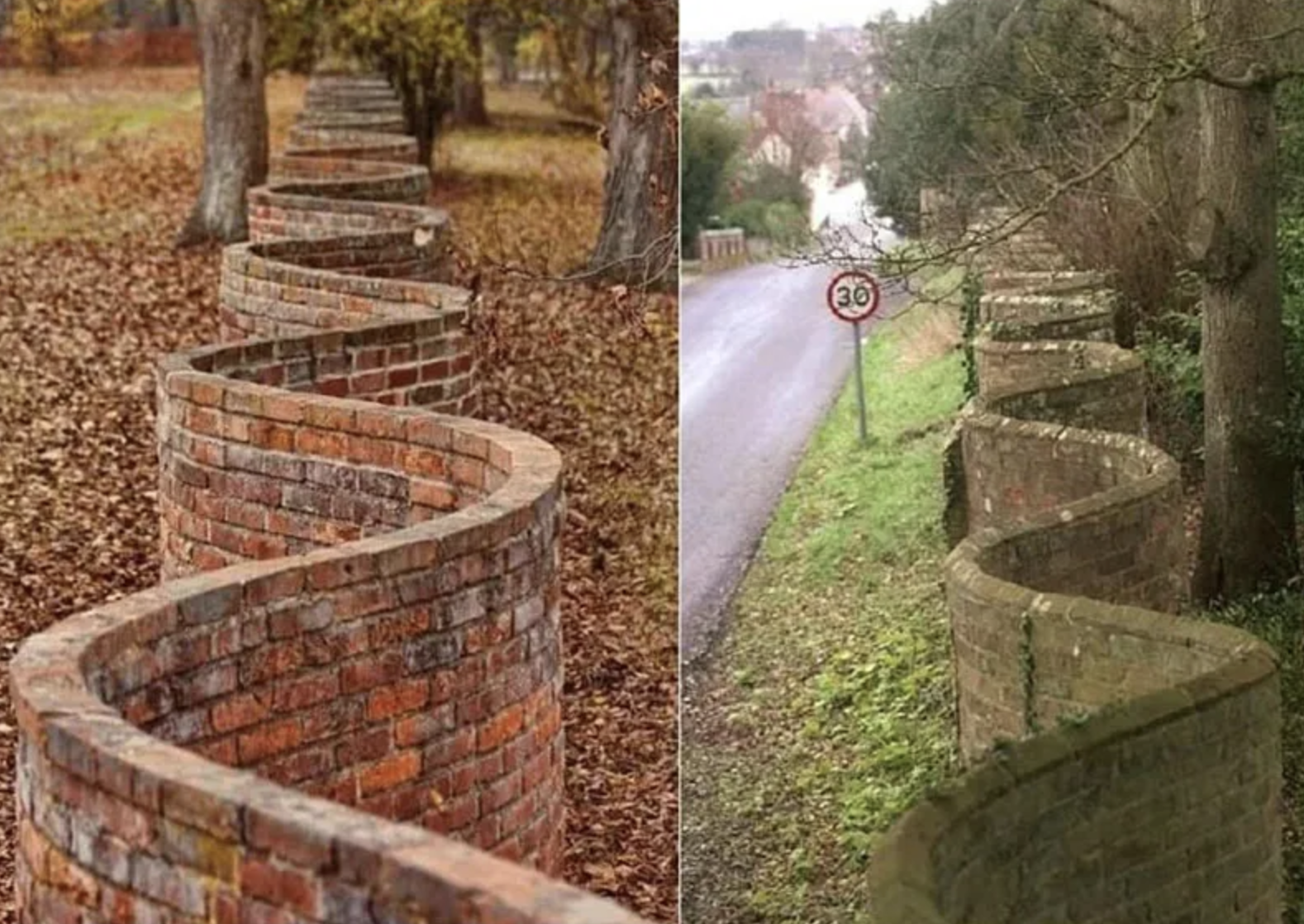
A brick wall built in the shape of a wave (arch) can support itself with a single layer of bricks. A straight wall needs two or more layers of bricks to remain structurally sound. The wave technique was superior for employing fewer bricks to build a wall that connected the same points as a straight-line brick wall.
How might we deploy our resources to maximize our intended impact? A straight line is easy to visualize but may not be our best use of resources.
Stacks of Firewood and Philanthropy
When I see a well-stocked wood pile, it makes a statement. Somebody decided there was a future need, and their future journey required additional resources. They cut, split, stacked, and secured sufficient reserves to assist their planned itinerary. I am optimistic about their future.
When I see an under-resourced group, I wonder what decisions were made? Was it a lack of knowledge, a sense of assurance that rescue is certain if needed, a lack of planning, or circumstances?
I feel that end-of-the-year philanthropy is a mixed effort to add fuel to the journey. Some resources may be used as a buffer for challenging times, some may be burned immediately to keep the doors open, and some accumulate without a plan.
What if we prioritized our contributions to those causes that asked directly or those that we have invested in with our time, talent, and touch? What if we did not always show up out of habit and tradition with a cord of firewood each winter? Would it change relationships and the course of the social sector?
How do you respond to the end-of-year appeals? How do you evaluate the level of need for these causes?
Who Would You Call?
Open or Closed?

In attempt to appear frugal and lean with our resources, we quickly fill a liminal space. Our fans and interested parties cannot tell if we are open for business and functioning with remarkable impact, or if we have shuttered our services as a victims of thriving inspiration blocked by insufficient fuel for the journey. How might we balance stewardship with responsible investment in the people and tools that matter? How might we work effectively without appearing to putting our own needs before those we serve?
Pre-Waxing Skis

If we have more than one pair of race skis, we might wax days in advance for a ski race by preparing for a variety of weather and snow conditions. If we posses only one pair of skis, it is safest to wait until closer to the race before finalizing our wax choice. More is not better if we have the relevant information to make an informed choice. Where we make errors in preparation is thinking we have all possible outcomes covered.
How might we avoid the false sense of certainty we gain by having an abundance of resources? How might we understand that we operate in a thin band of conditions before we have to adapt and attempt new approaches and techniques? How might we remember that if we look up at earth’s atmosphere, it looks abundant and expansive. However, look at it from a cross-section and is appears razor thin? How might we embrace the miracle that is choice and opportunity?