Work that Matters

Cover or Compose

Are you covering a song or composing an original? If we cover songs, do they have the same depth and dimension as a song of our own creation? Listening to musicians converse, there are distinctive memories about the moment a rift or refrain reveals itself. Those in the room, when an idea is founded, possess a connection that is formidable to transfer to those who join us along the journey.

My friend Kate Schutt has been composing new songs for years. Through her music, she shares the most defining moments of her life. Listening to her newest release is a joy because I heard her tell the stories behind the lyrics. I may not have been in the room for the song’s genesis, but Kate has been generous in her ability to provide the audience with context. If it was not for her willingness to do the work that matters, we could just be entertained by the most notable songs to cover.

Drip Line

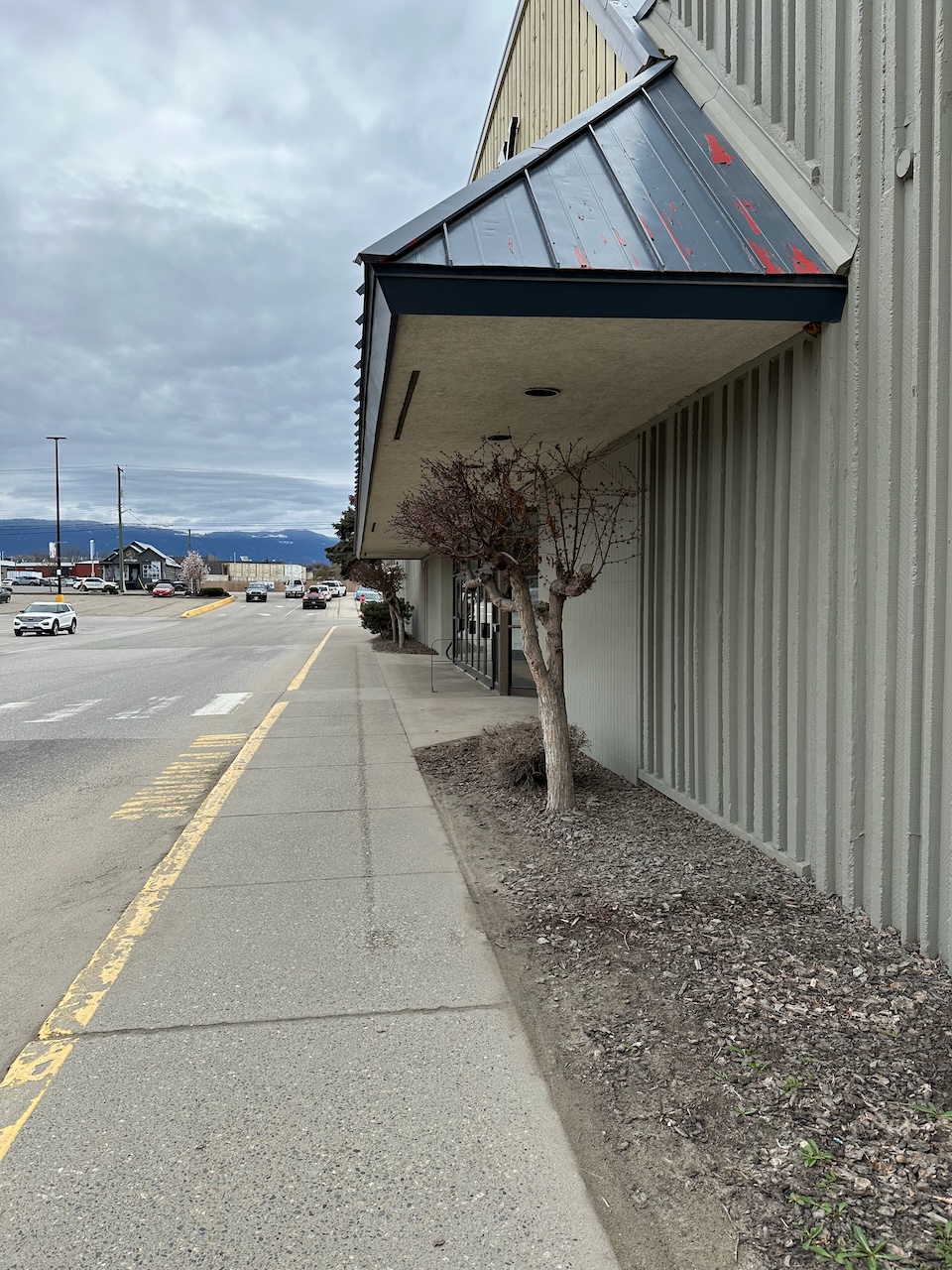
We tend to make an impact when we commit to repeated actions. Take a drip line from an overhang; the constant recurrence of water droplets falling onto cement leaves a dent. It is convenient to believe that we are doing the work that matters, but our actions may be inconsistent or applied to the surface that does not benefit from our emphasis.

How might we ensure our work has the planned results?

What Are You Building

What are you building? Do you have plans, or is it more of an organic growth situation? How do you keep your fans apprised of your progress? When do you bring them into the conversation, at the inception of the idea, the grand opening, or somewhere in between?

How might our building project enhance our relationship with the community? How might we position and activate it so that the neighbors embrace the noise and disruption since they understand the impact of the final product?

Why Nobody Picked Me

Larry uses random chance to decide which of two friends to visit every day for a month. Each friend lives an eight-minute subway ride away, but they live in opposite directions from the closest station to Larry. Trains to each friend’s neighborhood arrive at Larry’s station every ten minutes, so he walks to the platform and boards the first train to arrive. After committing to this experiment every day for a month, he recognizes that he has seen his friend Henri 85% of the time and his other friend Cole only 15% of the time. He traveled to the starting station at spontaneous times and boards whichever train arrived first. Why does he end up visiting Henri so much more frequently?

The transit schedule is such that the train to Henri’s neighborhood arrives one minute before the train to Cole’s neighborhood; therefore, it is likely that the next train is headed towards Henri since there is only a single-minute period every ten minutes when the next train departs and heads in Cole’s direction. More specifically, trains to Henri’s arrive at 08,:18,:28, etc, versus Cole’s train at 09,:19,:29, etc.

We wonder why we are not selected more often to do the work that matters. Sometimes, we live in the shadow of the more dominant enterprise. Other times, we do not retain the network reach of another cause. Sometimes, we offer the same service, but the schedule works against us. Understanding how and where we are uniquely positioned to act is part of assessing our competitive advantage. When you have an emergency and call 911, dispatch tries to assess the nature of your call before sending emergency services. Launching the Confined Space Rescue Team with ropes and flexible stretchers does not solve a working structure fire. Dispatching the Swift Water Rescue Team clad in neoprene and flippers does not work well for a winter avalanche rescue. Knowing when to launch our services and to whom is vital to serving with impact.

Unfinished Business

My board term is concluding, and there is an opportunity for contemplation. What was completed, what was learned, what was overlooked, and what was left unfinished? Surprisingly, the unfinished business has my attention. Did we keep the organization in flight and positioned to fulfill its mission, or did we lose track of the navigation and propulsion resources?

There will be unfinished business; the question is, is it the work that matters or a list of emergency repairs?

Idyllic and Purpose

If you were asked to represent your cause’s utopian state and frame the representation, what image comes to mind? For some enterprises, it is an iconic headquarters building; others aspire to a level of impact, another group may highlight the people committed to the cause, and some might capture a signature program. Perhaps ask yourself if you can see yourself in the image. If we see a confluence point, we are doing the work that matters. If we cannot see ourselves in the projection of the future, our attempt to be of service may be misaligned.

The Middle = Results

The take-off and landing of an over-sea flight might get the most attention, but the cruise portion of the journey is where the distance is covered. The middle portion of our journeys is often overlooked, but it can have the biggest impact. A tailwind might push a commercial airliner to exceed 800 mph. A headwind and diversion for weather can create extended delays.

How might we recognize when we are in the middle portion of our journey? This is an opportunity to do the work that matters.

How Do We Know Where We Rank?

Without awards, how would we know where we rank? How do you measure progress? Do you wait for the annual award show to allow for recognition or disappointment? What if you only have your personal results to use as a measurement? What if you only get a data report once a year? How long does an award sustain your efforts? Are you still talking about an elementary school spelling bee victory, a middle school track and field win, a high school team victory, a college academic achievement, a workplace honor from an accrediting agency, or the nod of appreciation from a co-worker? Awards have a shelf-life unless they are extremely rare (Noble Prize, Olympic Gold medal, World Championship). Awards might be waypoints to acknowledge and re-energize our efforts, but they cannot nourish or sustain us unless high school is the highlight of our lives.

Wayfinding the Letter Search

Wayfinding parallels solving the New York Times Letter Boxed game. There is no perfect solution; sometimes, we rely on patterns we encounter in other parts of our journey. We are endeavoring to stay in the game, relying on what we can achieve now, even if it is a three-letter word, to reach the next attempt. Solve the puzzle in one remarkable turn; you are a genius. Complete the game in five guesses, and you are a player. If it takes six or more turns, you are still in the game and acquired knowledge that will serve you well in the next chapter. Even when we backtrack and undo a previous guess, we still navigate toward a waypoint that moves us closer to delivering the work that matters.