Author: whatifconcepts

Empowering those that inspire so they can excel at the work that matters.

Getting Noticed

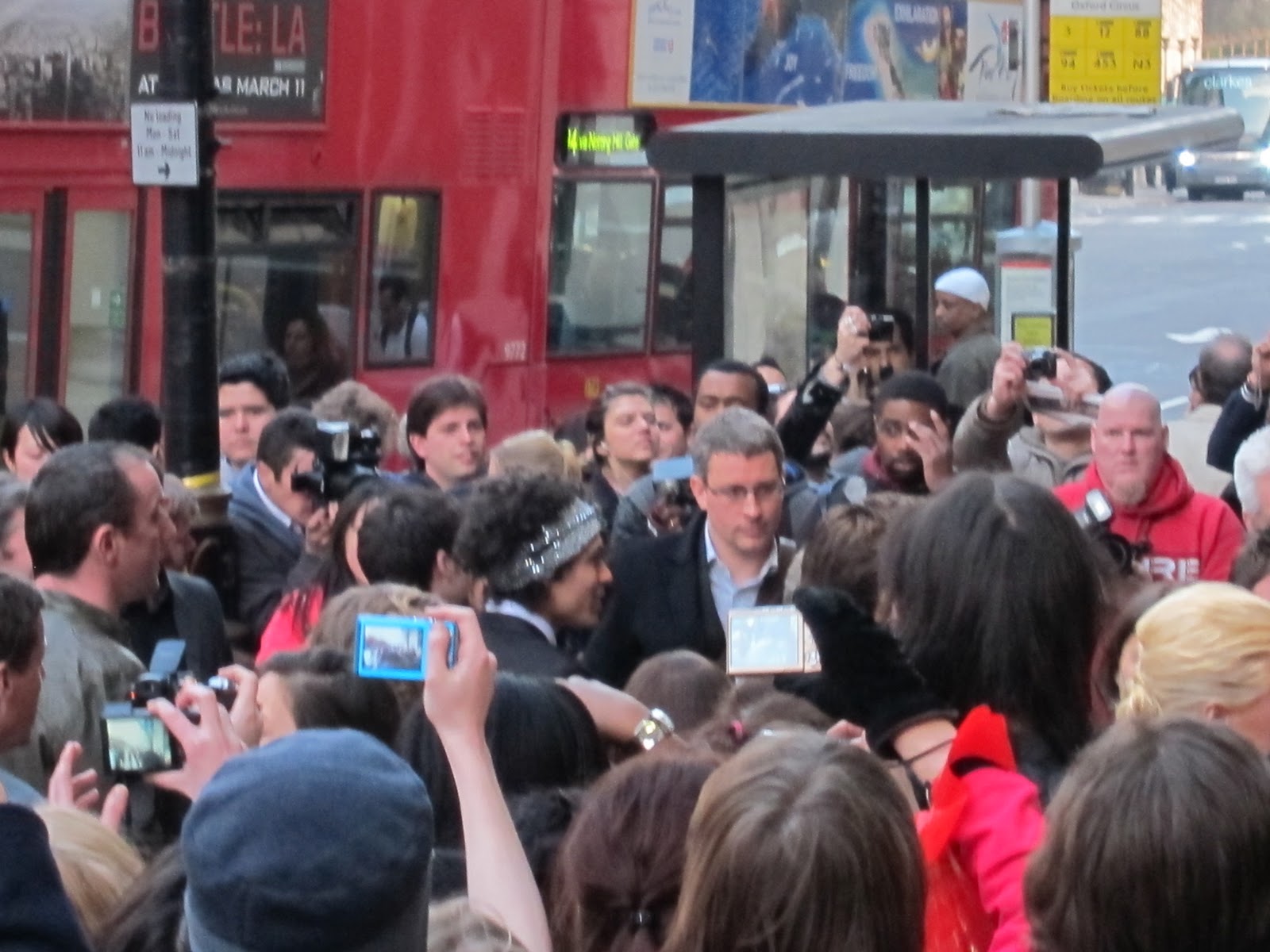
I had no idea who the celebrity is in this picture when I took it.  Why then did I feel the need to take a random photograph of a crowd of people taking pictures of somebody?  I encountered a mob of people screaming with delight and yelling a name I did not recognize.  People around me rushed forward.  Paparazzi clicked away.  So I took some photos and figured that I might decode who I had almost met.  The funny thing is that my daughter grabbed a piece of paper and a pen and headed into the crowd to get an autograph.  She had no idea who she was seeking either.

Why do we respond in this manner?  Was it the energy of the crowd?  The thought that somebody famous was just beyond reach?  Curiosity?  The presence of paparazzi?

We later learned that the actors and actresses of the film “Killing Bono” were arriving for the movie’s premiere.  I am not sure if it is coming to the US but they certainly created a stir if you happened to be on Regent Street in London.

How does your enterprise get noticed?  Who does it attract?

Service and Curtains


International travel is always an adventure.  Magical moments mixed with ones that make you wonder why you paid for the adventure.  Traveling to and from one’s destinations comes with its own special mindset.  Many times we all just hope that nothing remarkable happens.  The trip to the airport goes smoothly, security screening is predictable, the flight takes-off on time, you survive the in-air experience, land safely, and reach your chosen destination.  Put your head down and keep out of the way is the mentality on the day.

What ones notices on an international flight is that the curtains that separates First, Business, and Economy classes seemingly carry a spell worthy of a Harry Potter movie.  The same flight attendant who cheerfully fluffed the pillow of a First Class passenger, grabbed a water bottle to refill drinks in Business Class, can then walk the aisle of Economy ignoring pleas for special requests.  Mathematically it makes sense, six First Class passenger, forty seated in Business Class, and two-hundred packed together in Economy.  It is difficult to offer special attention to everyone so it is easy to draw a line of distinction at Business Class.  The experience of sitting on one side or the other of the curtain can be remarkably different.

Is there a service break (a curtain between airline classes) in your enterprise?  Does everyone receive the same experience?  Do you divide customers and patrons based on a specific criteria?  Have you sat in all the sections to understand their perceptions?  What spell gets cast on your team when working with you biggest fan versus the most transactional members?

Are You Remarkable?

Do you standout?  Are you remarkable?  Can you be distinguished from others?  How would your community describe your enterprise?  Are you lumped in as part of the flock, pack, herd, sector?  Are you best of breed or an average representation of others in your class?  Sometimes we believe we are different but we do not take the time to look around and see the environment around us.  If you are a dime-a-dozen then how do you intend to be demonstrate value?  Why would anyone outside of your most loyal fan base be drawn towards your enterprise?  Hold on to those who treasurer your uniqueness and welcome those who are interested in joining your crusade, that alone will make you remarkable.

Creating Value

What seems like thousands of sunflower seeds spread across an remarkably open exhibition space are actually hand crafted replicas of sunflower seeds.  Ai Weiwei’s exhibition at the Tate Modern in London accomplishes a number of objectives.  It overwhelms the senses to take in the landscape he has created.  It is difficult to comprehend the idea of hand-crafting 100,000,000 sunflower seeds.  The project employed numerous individuals in the Chinese city of Jingdezhe, giving purpose to these crafts people.  Remarkably the exhbition created a market.  Of the individuals who were standing near us when we took-in the exhibit, many wondered aloud if replicas of the original sunflower seeds were for sale at the museum’s gift shop.  No replicas existed but I imagine small bags of the artistic sunflower seeds would have been a massive seller, giving even more work to the trades people who produced them.  Sold elsewhere without the context of the exhibit, the sunflower seeds would have been considered trinkets competing for shelf-space with other tourist gifts.  But once placed in the Tate’s Turbine Hall and given meaning, the value of the seeds increased significantly.
Are you producing context for what you hope others will value? 
 

What would your fans do for your cause?  How committed are they?  How do they voice their approval?  What steps do they take if they are displeased?  You can learn a lot about the level of commitment of your advocates from how they react to your victories and defeats.

Behavior by Price


Ever pour out a $250 bottle of wine because you cannot finish it?  How about a $8 bottle?  We might find a way to preserve the expensive wine and yet the less expensive vintage we are willing to give a sip to the flowers as we clean-up a picnic.  

I was just in a Primark Store on Oxford Street in London last night and there were clothes and hangers strewn all over the place.  Every rack and display screamed discount pricing.  It looked like a gang of young boys had been asked to do the clean-up before being allowed to play video games.  Employees using large dust brooms collected all the hangers on the floor and piled them in the middle of the floor.  People would pull items off the rack and if it did not fit they made a limited attempt to put it back or just dropped it.  Lines were everywhere.  Next door was a high-end boutique that was the model of organization and the prices reflected the order. 

The prices and values you attach to our services and programs often determine the way they are valued by our customers.

Not A Moment of Thought

This morning, I have been watching two Mallard drakes chase each other around the wetland area near our house.  One duck is clearly obsesed with chasing another one from the pond, forcing his nemesis into the deep reeds.  All the while, the two hens are being courted by a third duck that just arrived.  Had the dominate drake payed attention to the hens he had claimed then perhaps he may have not been usurped by a stealthy opportunist.

Typically, as a company grows larger it spends more money on market research and analysis of its competitors.  Numbers are sliced every conceivable way.  The more effort that is put into market research, the less innovation takes place and suddenly everyone is at a square dance responding to the same caller.  The real trick is to maintain the entrepreneurial spirit and chemistry.  If you dedicate yourself and your cause to fixing the problem that ultimately energized you to launch your enterprise, you are on track.

Are you giving your competitors a moment of thought and chasing them around the pond?  Are you staying focused on your purpose or distracted by those in your peripheral vision? 

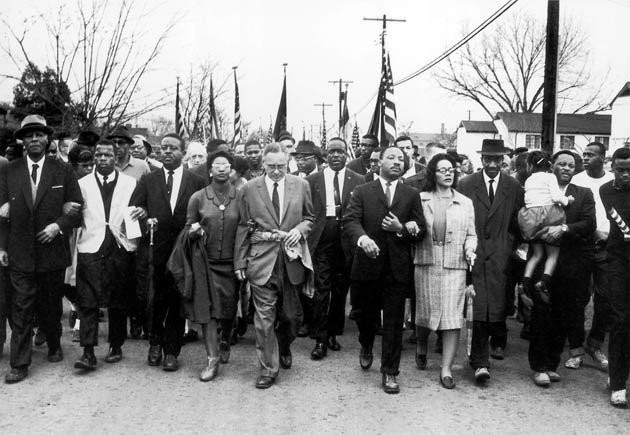
Martin Luther King did not march from Selma to Montgomery with five friends.  If he had it would have not received nearly the same level of media attention and probably would not be part of the civil rights narrative.  Instead, Martin Luther King accepted everyone who believed that there was problem and a better future existed.  Have you considered the question, “who is volunteering to join your cause?”  You may not know everyone who has enrolled.  Some may be friends of friends and far beyond your network.  Word of mouth is a difficult metric to track but a powerful point of engagement.  As Simon Sinek says, “a leader is only a leader when people are willing to follow them.  Structuring people’s role is about managing, not leading.”  Have you collected a following that has a desire to help others?

Manipulation vs Trust

Here is an example of a campaign that is less transactional that some of the ones I noted in my Its About Trust post last week.  If you want a vote you still needs to be a Facebook fan of Crate & Barrel (the hook still exists which leading practices says is manipulative) but Crate & Barrel is committed to giving the money regardless of the number of fans and votes.  In an ideal world, Crate & Barrel would open the voting to everyone and trust that those that appreciated their generosity would become fans.  If Zappos is willing to trust that customers will not abuse the free return shipping policy (which could be a significant cost) then why not allow everyone who believes in the causes you are supporting to vote.  Some of these voters will become fans based on their own motivation and the retention rate of these fans (the stickiness of their relationship) will be quantifiable higher than those who opted in just for one purpose.

Manipulation works until you lose your leverage.  Trust works far longer and the rewards are much higher.