Author: whatifconcepts

Empowering those that inspire so they can excel at the work that matters.

Fragments from the Road

Unless a person joins you on the trail, it is tough to recreate all we experience en route. We cannot easily replicate the moments of doubt, the dirt and grimness pressing into our skin, the awe of an unexpected vista, the frustration of missing a trail junction, and the exuberance of a tailwind and friendly grade. Our photos, videos, and narratives might capture a snapshot but do not augment reality. The most compelling way we gain a comprehension of the terrain is if we join the expedition. Thru-hikers embed themselves and accumulate experiences that add exponential depth and dimension.

The highest likelihood of supporting somebody’s understanding of the work that matters is to join the adventure and walk a section of the trail.

Any Stick or That Stick?

Are you seeking any stick on the trail or a specific stick? Sometimes, any stick will do. Trying to start a campfire, kindling and branches of different sizes are welcome. If you need a walking stick, the optimal length and width narrow the potential inventory. Looking for something long enough to rescue a friend who has fallen through the ice, we might try anything we can grab. For an artistic door handle to serve as the finishing piece on a custom-made door, the criteria increase exponentially.

When any stick will do, there is a limited need for evaluation (snake or stick?). When higher-order decision-making is desired, consider drafting a strategy screen (a key step in David La Piana’s The Nonprofit Strategy Revolution framework). Developing filtering statements that guide future decision-making is best done in advance instead of under the pressure of a deadline. If we replace sticks for initiatives, what follows is a potential start to a strategy screen (customization of this template is encouraged):

  1. Is the initiative aligned with our Magnetic North (Purpose, Vision, Mission, and Values)?
  2. Is the opportunity consistent with the strategies outlined in our strategic plan?
  3. Does the initiative benefit our customers? Does it help us be of greater service?
  4. Does the opportunity leverage the trust we built with our supporters and community?
  5. Is our cause committed to doing the work that matters to launch the project?
  6. Does the opportunity enhance our connection to the community we serve?
  7. Are we replicating or duplicating a similar initiative curated by one of our partners?
  8. Do we have the resources to manage the opportunity (staff, fiscal, facility, expertise, etc.)?
  9. What is the evaluation of the risk management exposure?
  10. What is the length of the commitment?
  11. What is the geographic service area the initiative covers?
  12. If the initiative launches successfully, can we sustain the project?
  13. How might we unwind the endeavor if necessary?

A side benefit of the strategy screen is that if you represent an organization that is on the receiving end of frequent requests to launch and partner new programs, share the strategy screen with the individual proposing the project. Explain that these are the criteria that the decision-makers (staff, board, membership, etc.) will use to make an initial evaluation of the initiative. It makes the decision-making process more transparent, and the advocate may have insights on answering specific strategy screen questions. 

Lastly, I recommend using the strategy screen like a street light, applying green, yellow, and red coding as you answer the screening questions. All green does not mean proceed, nor does a single red light mean the initiative fails. The screen represents a guide to support your cause’s best decision-making and enrich a culture of curiosity.

Shuffle

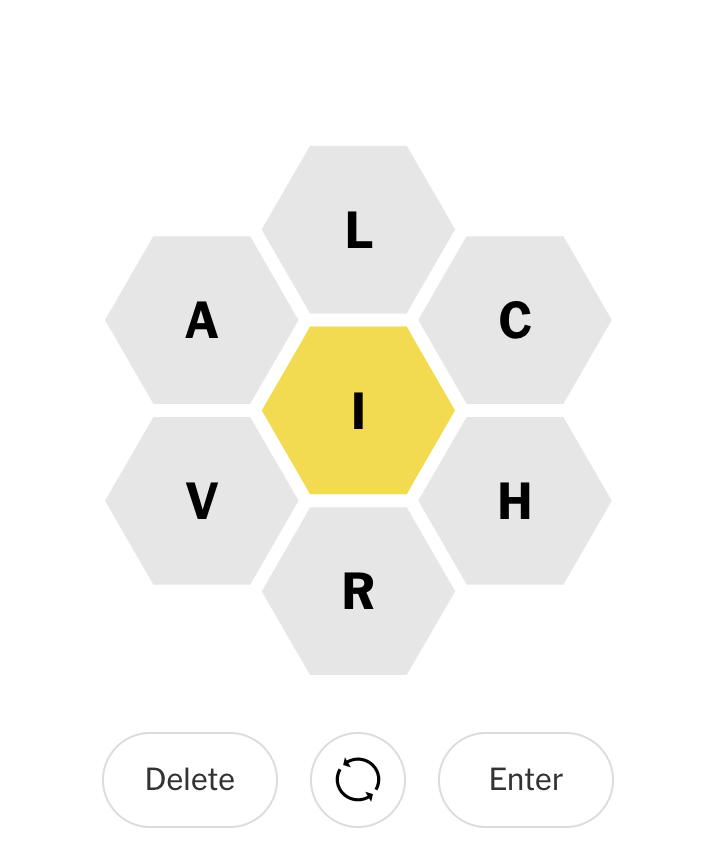
The shuffle button is the most influential option when playing the New York Times Spelling Bee game online. Click on the shuffle button, and the letters rearrange themselves, potentially presenting patterns that lead to solutions that a player missed in the previous configuration. A few shuffles during the game and new word choices pop up.

When we engage in high-level decision-making, what is our shuffle button? How do we rearrange the inputs so we do not choose the first solution that appears viable? A few options:

Edward de Bono Six Thinking Hats

Yes, And

Golden Triangle, Balancing Triangle, Cognitive Triangle, Double Diamond, The Future Triangle

OOC/EMR

CARVER

Degrees of Seriousness

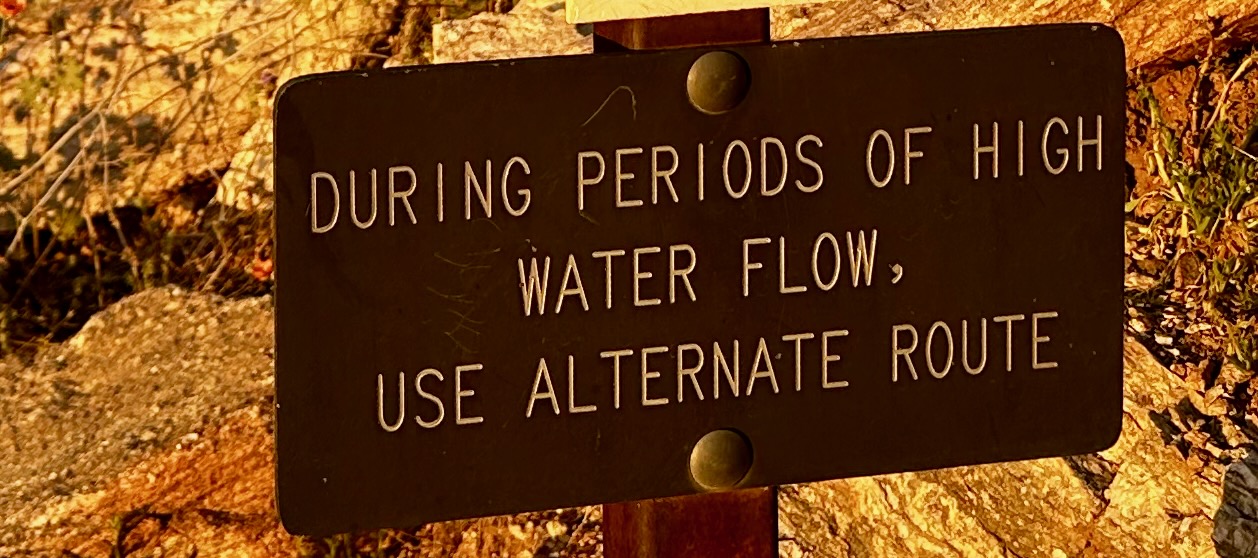
If the hazard is extreme, we might expect multiple signs, ropes, prosecution threats, and a skull and crossbones warning of death. If the potential risk is minimal, we might anticipate a yellow sign reminding us to pay attention. Placement, colors, symbols, and words escalate or minimize the level of caution we are attempting to communicate.

How does your enterprise communicate a call to action? Is there a scale that ranges from summer camp registrations starting in a week to the state legislature hearing a bill that will cut off a majority of your cause’s funding? If you do not have a readily accessible scale, the message might be lost in a time of high need.

Setting Limits

The British Cycling Time Trials group advised cycling promoters to no longer hold time trial events on roads with a speed limit of 20 MPH or lower. This decision is due to safety concerns and is intended to reduce cyclists moving at a speed greater than motorized forms of transportation.

When do governors and limits make sense? Does directing a cyclist to a higher-traffic road with a 50 MPH speed limit from an infrequently traveled rural road with a 20 MPH speed limit so the offset of speed is in favor of motorized vehicles make the most sense? We might place limits to establish norms and expectations. Which of our manufactured rules make sense, and which are easier to defend in a debate so we carry on even when the consequences are misaligned?

I know of a board that had a compulsory attendance rule for meetings. Board members were marked absent even when they traveled on behalf of the organization to events such as a national conference. The rationale was that it was easier to mark the individuals absent in the minutes than to note the board members were on assignment. There were two options in the minute template, ‘present’ or ‘absent,’ but nobody dared to address the unintended consequences and redesign the template.

How Does the Group Benefit When You Arrive?

When you show up, does the room get smarter, more insightful, diverse, empathetic, energized, or committed? What trait or characteristic do you lend that adds value? It is a question to ponder when being asked to serve. Do we have something remarkable and or unique to offer? We might be the only ones without an advanced degree, but we have experiences that elude academics. We might be the only ones who have trekked this route previously, even if it was at night and we failed to reach the destination. For all the board and team matrices that attempt to map our attributes on spreadsheets, it is often the unquantifiable that is our greatest asset.

I have traveled far to attend board meetings where my presence contributed little until a key inflection point. I offered a three-sentence reflection that I believe helped us make a better decision. For 99% of the meeting, I was not essential, there were other voices to cover the same perspective I was thinking. However, when the moment came for a critical insight that I was uniquely positioned to articulate, I was willing to contribute. The room was better for the presence of each attendee.

Intermission

How do you use intermissions? Is it a chance to discuss what you just experienced?  Is it an option to break out of your current mindset and adopt a new one (check your phone, get a drink/snack, smoke break)? Is it a moment to find the restroom? Is it a chance to prepare for what comes next? Or is it a possibility to sneak out of the event?

Do you prefer structured or unstructured intermissions (request to complete a task versus free time)? Intermissions are liminal events in our lives. They connect two scheduled events with something partially unstructured. Sometimes, we are desperate for intermission, and on other occasions, we hope for no intermission.

What does an intermission tell you about the experience we are curating?

How Using the Phrase:’ _(#)_ out of 100,’ Might Update Our Beliefs

How might we employ Bayes’ Therom, tested and written about by Kahneman and Tversky, to provide more reliable goals and outcomes when planning? Simply deploying the visual representation of the theory might quickly confirm or recant our hypothesis and assumptions.

Actual social sector scenarios I encountered where this deliberation framework might resonate:

A performing arts group evaluates how much of the community seeks opera and, of that subset, how many are drawn to celebrated performances versus those seeking unknown operas.

A land conservation group trying to draw attention to its efforts to preserve and manage riparian ecosystems in a region. How many community members are influenced by the river, and of that group, how many are willing to risk their social capital to act on behalf of river preservation?

An education institution launching a new foreign language program trending at other peer schools. How many students are interested in any foreign language and are ready to commit (or start) to a new foreign language program? How many students commit three years of study to their foreign language studies?

Projection vs. Reality

What content we project to our audience versus what we experience behind the scenes are often strikingly distinct realities. Some of us focus on the dip between the two existences. Others see the possibility to invest in creating the magic that makes our stories richer and more robust.

Which mindset is your default? How does it impact your approach?