Resource page for Idaho Nonprofit Center’s Nonprofit State Conference presentation on “How to Adopt the Three Mindsets of Governance as Leadership in the Boardroom.”

After reading the above article, you know that somewhere early in the design phase, someone made an error. A small mistake in the context of all the engineering required to build a submarine. However, the fact that nobody caught the error means that the final design and fabrication created a very expensive anchor that will now rest on the ocean floor if not fixed.
If we embrace the assumptions that everything that was completed before our part of the project was accurate and correct, then we are in for a few surprises. Nobody intentionally hands us the error-strewn project. Our willing to revisit the work we inherited often gives us a greater appreciation for the depth of thought but also the embedded faults.
We are better for the proof-readers, editors, curious minds, and insightful questions. A culture of curiosity builds on that which went before and hopefully identified the moment we made a wrong-turn or fateful decision.
Sometimes we must step back before going forward. Sometimes we should descend before ascending. Sometimes our immediate direction of travel is not our final heading.
Real-time assessment of our performance needs context. There are moments when we are traveling below parameters, but for a good reason. If we manage by the numbers, we miss the opportunity to understand our surroundings and seize the opportunity. Wayfinding is our greatest asset, why not embrace it?
SWOT analysis is a fundamental activity during many retreats. They are visually pleasing and quick to focus conversations. It is easy to understand why they endured. Today I read a new process for facilitating a SWOT. The mindset is compelling.
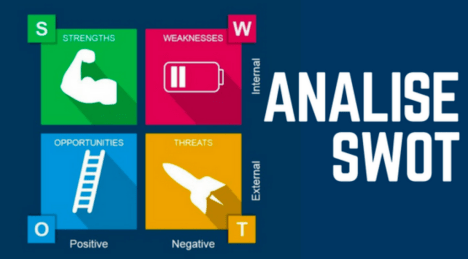
Performed in isolation, the SWOT offers a myopic view of the world. It is our self-evaluation. We may believe we are memorable conference presenters because of our witty narratives but do we really know? Unless people walk out of the room during our presentation, or there is a sudden rush of new audience members, it is hard to assess how we are trending.
SWOT is an instrument. An opportunity to facilitate conversations. The greatest gift is getting to the human element. What are the behaviors and interactions we are fostering? We may have the most beautiful facilities, the best thank you gifts and a polished social media presence, but if our values are misaligned with our actions, then it is hard for anyone to build trust or take action on our behalf.
If we use the SWOT to discuss the relationships we are building with those who need what we have to offer, there is an opportunity for a robust conversation. If we use the SWOT to establish an arbitrary ranking, it may miss the highest return on investment, a discussion about how we can be of service.
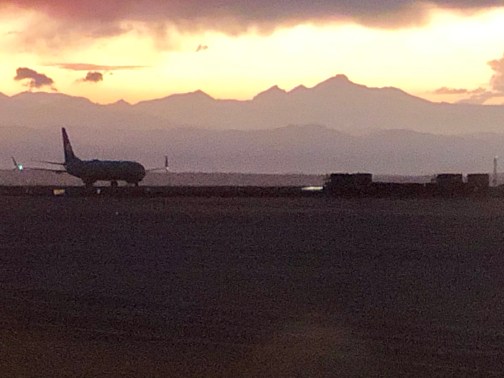
Behind the storm is a sunset. An opportunity to orient to the horizon that guides us towards what is important.
“You cannot stay on the summit forever; you have to come down again. So why bother in the first place? Just this: What is above knows what is below, but what is below does not know what is above. One climbs, one sees. One descends, one sees no longer, but one has seen. There is an art of conducting oneself in the lower regions by the memory of what one saw higher up. When one can no longer see, one can at least still know.” – Rene Daumal
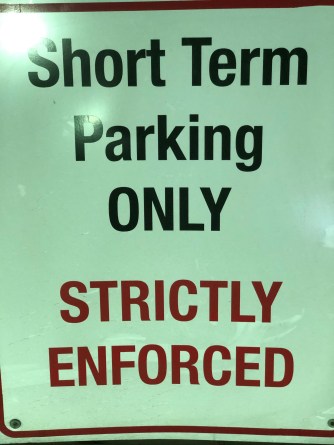
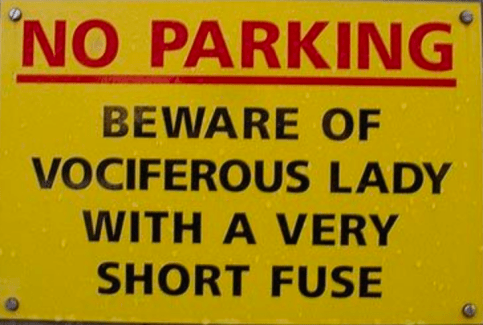
The regulation is not working when we have to increase the stakes by adding threats. When the process is broken, a quick response is to rachet up the consequences. That will teach the offenders. Or does it? Why not adress the behavior with communication that appeals to the human element? Here are some creative signs.
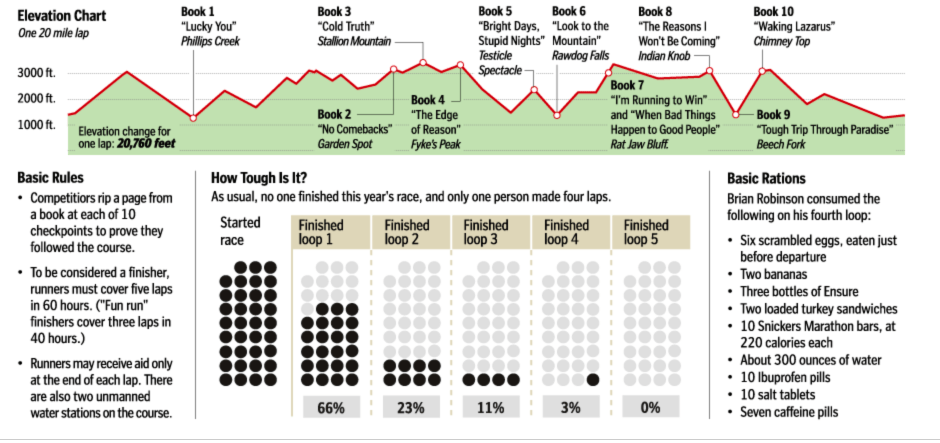 The Barkley Marathon is a backcountry ultrarunning competition consisting of 100+ miles of unmarked trails outside of Wartburg, Tennessee. The race is considered one of the most extreme events, with just 15 finishers since 1989. The course is a 20-mile loop and navigated in both directions, with a 60-hour time limit. The documentary, Where Dreams Go to Die provides a glimpse into the epic confluence of unsustainable endurance meshed with sleep deprivation. If you complete three laps, you have unofficially finished the ‘fun run,’ and that is considered a high honor in the running world.
What makes Barkley remarkable? The failure. Participants drop-out before completing the first loop. The course devours half the field before two laps. An event that embraces and celebrates defeat is considered the pinnacle of ultrarunning. The stories and legends strengthen the myth and mystery.
What experience would we offer if fans accepted failure in exchange for an extraordinary adventure? What can we learn from Barkley? Which failures have given depth to our stories?
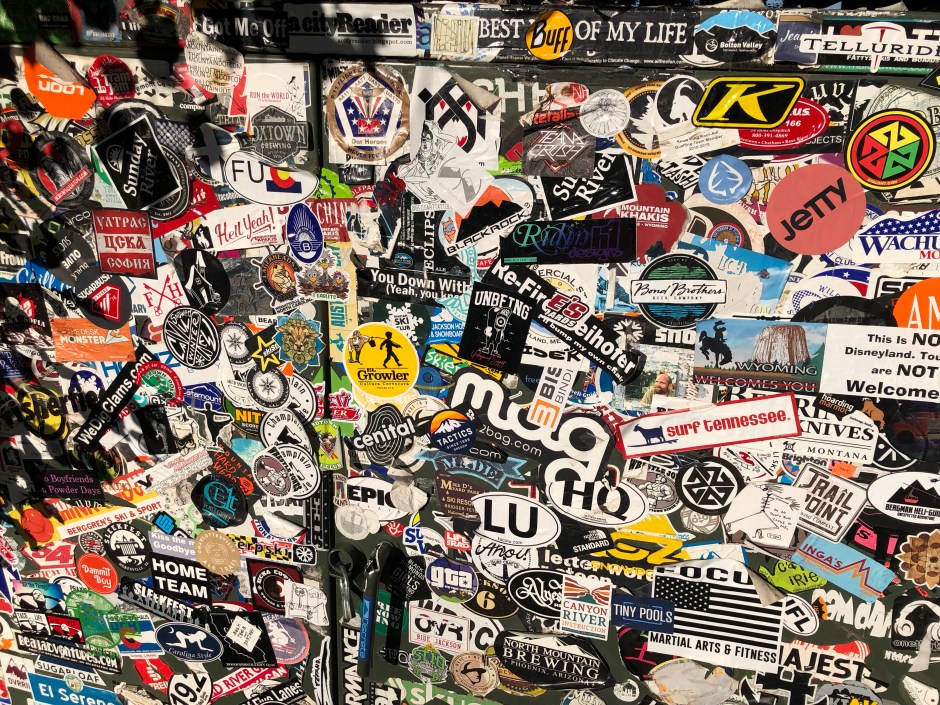
How do you leave your mark? Is it visible? Would everyone know it, if they saw it? So much of our influence is not visible.
An Episcopal priest once suggested that half his congregation showed up on Sunday mornings out of a sense obligation/inspiration. There was an older couple who passed the offering plate every Sunday, walking slowly but deliberately down the aisle of the church. He dressed as if a six-shooter on his hip would not be out of place, and she wore western dress worthy of a good square dance. The congregation knew they would be in attendance, and if the older couple could make it church the rest of us should probably find the motivation. It was an invisible mark but one that created a web of connections.
Our impact is embedded in the questions we ask, the small nod as we make eye-contact across the room, the quick wave as we pass an outdoor enthusiast on the trail, or the applause we give to a job well done. None of these acts can be carried beyond the moment, but they leave a mark. Invisible and remarkable.

Worst flight ever? It could be. Let us get curious before we write a letter of disappointment to the airline’s customer care department. It is a flight over France, in July, between two cities at the edge of the Alps. The plane is used to relay live video feeds from sporting events. The flight path indicates the event moved about 200 kilometers? It appears to be following a route over secondary roads and moving forward at an average speed of 45 kph.
Of course, you got the answer now, right? The event’s nickname is La Grande Boucle. It last three weeks and finishes in Paris…
The answer as you have discerned is the Tour de France. The plane provides ariel support for the motorcycle camera operators and the helicopters that hover just above the peloton. Without context, this flight path looks illogical. Apply generative thinking and options start coming to mind. Perhaps we should remember to ask, ‘what else could this be?’ Considering alternatives might be our greatest asset before acting.

Entering Grand Teton National Park, the park ranger at the gate told me that many people think the entrance sign states “$35 entry fee or a flimsy excuse.” How often do we have encounter people trying to avoid requirements by offering a flimsy excuse? Do we accept the excuse of hold firm?
 What-if-concepts