Uncategorized

But, I am Good at Complaining

When is it worth complaining? Is it an emotional reaction, an opportunity to point out areas for improvement, a warning of pending danger, or to address a barrier that requires removal? You can stand in a stall easily if you are a horse that throws a shoe. If your horse is competing in a week-long endurance event trip, reshoeing is required since there is much terrain to cover. Complaining might be warranted in one situation and not as urgent in the other.

Complaining has become an expected or even acceptable form of communication. How might we prepare to respond to those who rely on complaining as their primary communication technique? Roy Kent’s press conference from the Ted Lasso series is a master class in using a story to add perspective to an emotional situation.

They Know the Song. Now We Can Share the Spotlight

Near the end of Prince’s rendition of Purple Rain at the 2007 Super Bowl, he knocks over the microphone and turns his song over to the crowd. Tens of thousands sing the final rounds of the chorus. It was the summation of a phenomenal halftime show. For the majesty of the performance, the group participation at the conclusion took the experience to a legendary crescendo. 

When we share the stage, our generosity is often rewarded with a feeling of ownership and personal fulfillment that cannot be replicated by acoustic osmosis. How might we share the stage with our fans so we can produce the best version of our collective work?

Wayfinding the Letter Search

Wayfinding parallels solving the New York Times Letter Boxed game. There is no perfect solution; sometimes, we rely on patterns we encounter in other parts of our journey. We are endeavoring to stay in the game, relying on what we can achieve now, even if it is a three-letter word, to reach the next attempt. Solve the puzzle in one remarkable turn; you are a genius. Complete the game in five guesses, and you are a player. If it takes six or more turns, you are still in the game and acquired knowledge that will serve you well in the next chapter. Even when we backtrack and undo a previous guess, we still navigate toward a waypoint that moves us closer to delivering the work that matters.

How Stated Values Impact Authenticity

Reading United States’ mottos is a confluence of opinions and a group’s projection of themselves. Some of the mottos are aligned with our thoughts about a region, and others are further from our perception of reality. One of the ways we develop trust and authenticity is we state what we believe, and then we act in a manner that is compatible with the belief. If we can construct a simple equation that balances stated belief and action, we call individuals authentic.We might be willing to instill trust in them because of their authenticity.

Fragments from the Road

Unless a person joins you on the trail, it is tough to recreate all we experience en route. We cannot easily replicate the moments of doubt, the dirt and grimness pressing into our skin, the awe of an unexpected vista, the frustration of missing a trail junction, and the exuberance of a tailwind and friendly grade. Our photos, videos, and narratives might capture a snapshot but do not augment reality. The most compelling way we gain a comprehension of the terrain is if we join the expedition. Thru-hikers embed themselves and accumulate experiences that add exponential depth and dimension.

The highest likelihood of supporting somebody’s understanding of the work that matters is to join the adventure and walk a section of the trail.

Any Stick or That Stick?

Are you seeking any stick on the trail or a specific stick? Sometimes, any stick will do. Trying to start a campfire, kindling and branches of different sizes are welcome. If you need a walking stick, the optimal length and width narrow the potential inventory. Looking for something long enough to rescue a friend who has fallen through the ice, we might try anything we can grab. For an artistic door handle to serve as the finishing piece on a custom-made door, the criteria increase exponentially.

When any stick will do, there is a limited need for evaluation (snake or stick?). When higher-order decision-making is desired, consider drafting a strategy screen (a key step in David La Piana’s The Nonprofit Strategy Revolution framework). Developing filtering statements that guide future decision-making is best done in advance instead of under the pressure of a deadline. If we replace sticks for initiatives, what follows is a potential start to a strategy screen (customization of this template is encouraged):

  1. Is the initiative aligned with our Magnetic North (Purpose, Vision, Mission, and Values)?
  2. Is the opportunity consistent with the strategies outlined in our strategic plan?
  3. Does the initiative benefit our customers? Does it help us be of greater service?
  4. Does the opportunity leverage the trust we built with our supporters and community?
  5. Is our cause committed to doing the work that matters to launch the project?
  6. Does the opportunity enhance our connection to the community we serve?
  7. Are we replicating or duplicating a similar initiative curated by one of our partners?
  8. Do we have the resources to manage the opportunity (staff, fiscal, facility, expertise, etc.)?
  9. What is the evaluation of the risk management exposure?
  10. What is the length of the commitment?
  11. What is the geographic service area the initiative covers?
  12. If the initiative launches successfully, can we sustain the project?
  13. How might we unwind the endeavor if necessary?

A side benefit of the strategy screen is that if you represent an organization that is on the receiving end of frequent requests to launch and partner new programs, share the strategy screen with the individual proposing the project. Explain that these are the criteria that the decision-makers (staff, board, membership, etc.) will use to make an initial evaluation of the initiative. It makes the decision-making process more transparent, and the advocate may have insights on answering specific strategy screen questions. 

Lastly, I recommend using the strategy screen like a street light, applying green, yellow, and red coding as you answer the screening questions. All green does not mean proceed, nor does a single red light mean the initiative fails. The screen represents a guide to support your cause’s best decision-making and enrich a culture of curiosity.


Shuffle

The shuffle button is the most influential option when playing the New York Times Spelling Bee game online. Click on the shuffle button, and the letters rearrange themselves, potentially presenting patterns that lead to solutions that a player missed in the previous configuration. A few shuffles during the game and new word choices pop up.

When we engage in high-level decision-making, what is our shuffle button? How do we rearrange the inputs so we do not choose the first solution that appears viable? A few options:

Edward de Bono Six Thinking Hats

Yes, And

Golden Triangle, Balancing Triangle, Cognitive Triangle, Double Diamond, The Future Triangle

OOC/EMR

CARVER

Degrees of Seriousness

If the hazard is extreme, we might expect multiple signs, ropes, prosecution threats, and a skull and crossbones warning of death. If the potential risk is minimal, we might anticipate a yellow sign reminding us to pay attention. Placement, colors, symbols, and words escalate or minimize the level of caution we are attempting to communicate.

How does your enterprise communicate a call to action? Is there a scale that ranges from summer camp registrations starting in a week to the state legislature hearing a bill that will cut off a majority of your cause’s funding? If you do not have a readily accessible scale, the message might be lost in a time of high need.

Setting Limits

The British Cycling Time Trials group advised cycling promoters to no longer hold time trial events on roads with a speed limit of 20 MPH or lower. This decision is due to safety concerns and is intended to reduce cyclists moving at a speed greater than motorized forms of transportation.

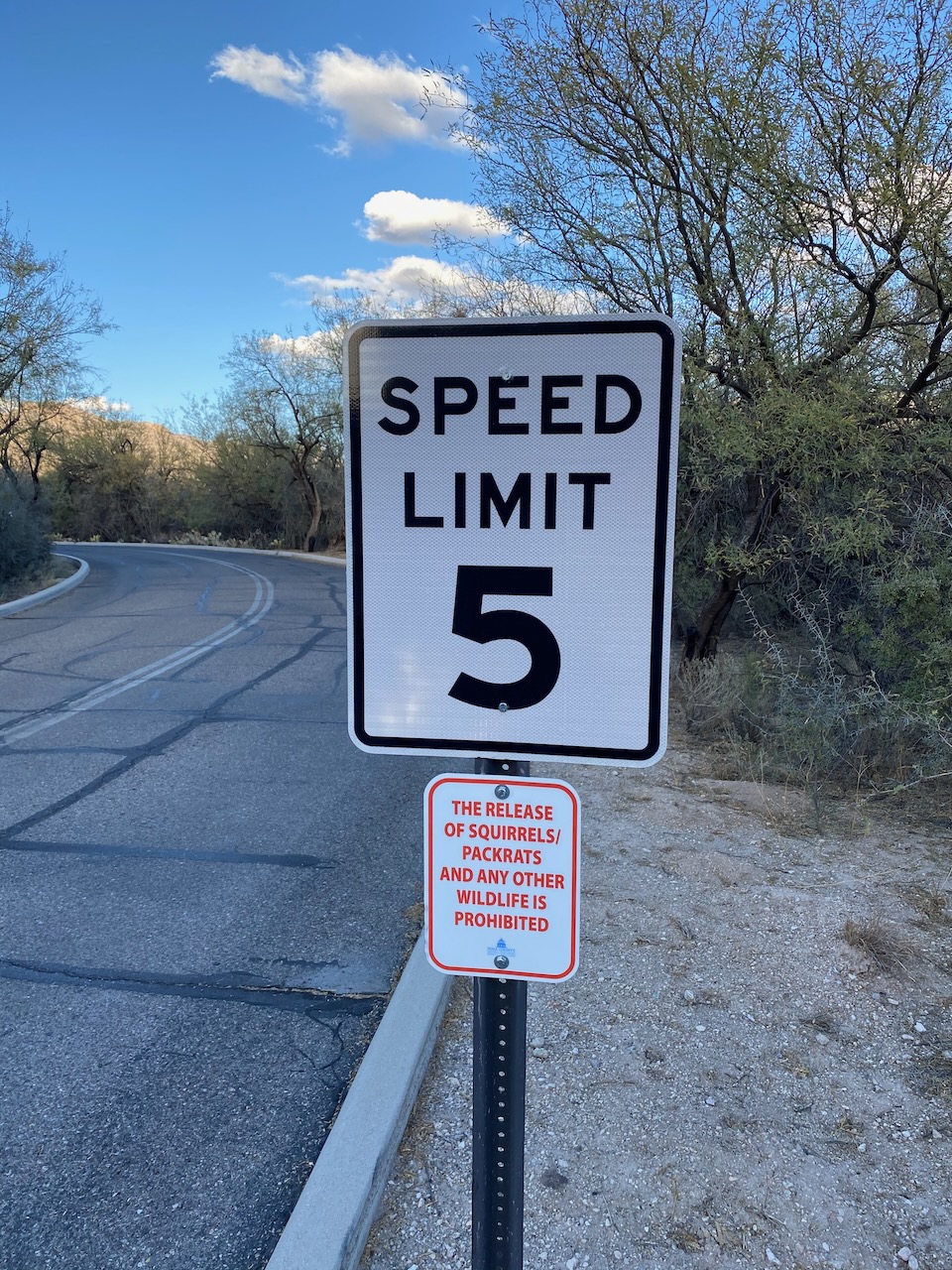
When do governors and limits make sense? Does directing a cyclist to a higher-traffic road with a 50 MPH speed limit from an infrequently traveled rural road with a 20 MPH speed limit so the offset of speed is in favor of motorized vehicles make the most sense? We might place limits to establish norms and expectations. Which of our manufactured rules make sense, and which are easier to defend in a debate so we carry on even when the consequences are misaligned?

I know of a board that had a compulsory attendance rule for meetings. Board members were marked absent even when they traveled on behalf of the organization to events such as a national conference. The rationale was that it was easier to mark the individuals absent in the minutes than to note the board members were on assignment. There were two options in the minute template, ‘present’ or ‘absent,’ but nobody dared to address the unintended consequences and redesign the template.