Generative Thinking Meets the Storm

Screen Shot 2015-02-07 at 4.50.38 PM

It is easier to ask ‘what if’ questions when they are generative.  When we have time to consider the answers without the pressures of a burning platform.  Does your enterprise think generatively?  What if our cause was asked to share our story in the New York Times   What would we say?  Who would speak?  What would we showcase?  What if our signature event was cancelled due to elements beyond our control?  How would we communicate?  Would our response reinforce our beliefs or would our values be inconsistent with our actions?  How could the unexpected enhance our reputation?

Dedicating time to engage our decision-makers in low risk generative thinking  leads to higher results when major events take place in real time.  Fire Departments train responders to avoid making an emergency worse by acting inconsistent with the training.  Putting ourselves or the organization in peril serves little benefit to those who believe in your cause.

Our best thinking is perishable if we do not use it.  If the wind is not blowing, we can still practice tying knots, navigational skills, and hoisting sails so we are more competent when the storm reaches us.
Leaning vs Bending

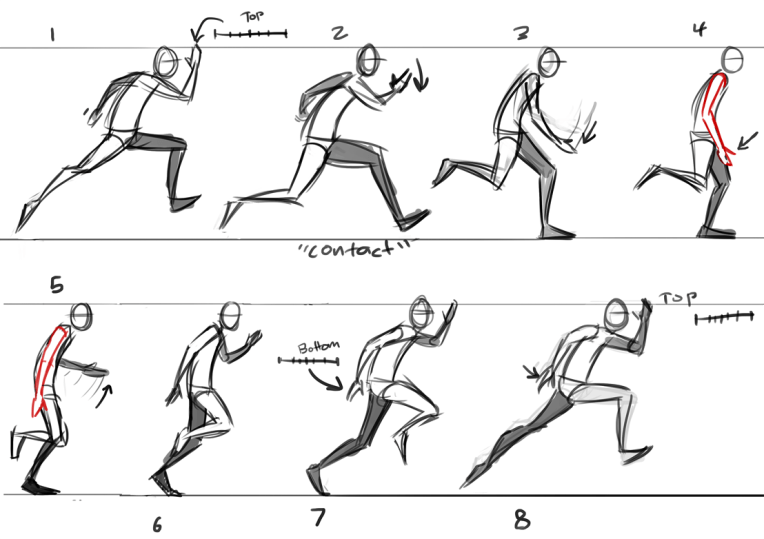
Somedays I wear the title of master (age range) athlete, participating in running, cycling, or cross-country skiing events.  In most competitions my goal is to perform my best and inspire others to reach their personal best.  In pushing the edge of performance I find myself dancing near a thin line that separates efficient movement and thrashing contortions.  A combination of physiological ability and practiced technique mesh together as long as possible until I push too far or too fast and then they uncouple and lose all synergy   The closer the pace gets to the tipping point the more I assume an athletic lean to account for momentum and power.  However when I cross the line the tendency is to bend and try to power through whatever obstacle faces me.  Bending equates to a head drop, reduced sight line, hips transferring backwards, shoulders curled over, and the compression of my cardiovascular engine.  Speed and efficiency decline and my performance regresses.

In our own enterprises we have leaning and bending moments.  Pushing the line of what is sustainable until we are forced to bend is common practice among some causes.  In the athletic arena we use intervals and long easy distance sessions to gain speed and build a broader base of fitness.  The same opportunity exists within our organizations.  Little initiatives that do not put the entire organization in peril are initiated.  Building a culture that is based on hope with leaders that check on our progress and seem to care are critical to our performance.  Embracing failure as a necessary part of our lifecycle.  Setting a strategic vision for the future so we know where to align our efforts.

Leaning is remarkable when we find the balance point.  Bending is not fatal, it slows us down and requires a little recovery before we find our stride.  Participating by neither leaning or bending rarely leads to significant results.  Discovering the fulcrum point between a lean and bend is magical.  I hope you have found yours.

Ubiquity

Ubiquity is the death knell of authenticity.  Starbucks does not exist everywhere.  Rather Starbucks selects specific places and seeks people who wish to encounter a remarkable experience.  They functionally cannot accommodate everyone so they seek to do business with those who are looking for a very specific experience.  

We cannot be everywhere so best to avoid being ubiquitous and locate ourselves where we deliver remarkable experiences. 

The Ted Radio Hour offers a tremendous podcast with insights into the role of brand and place.

Where Are You Going (Not Where Have You Been)?

Lovely Lake Louise (HDR)I want to know where you are going and how I can join your next adventure.  Stories of past quests are entertaining and insightful but limited.  To connect we must share the trail.  The team that stand on the summit possesses a unique connection, different than the one with those who wished us well but did not climb.  Providing fuel for the journey helps but carrying the expedition’s supplies is an even greater reward.  Present a remarkable vision for the future and I look forward to being part of the team.

Succeed, Do Not Just Agree

Daniel Pink presented to the Blaine County School District at their district wide strategic planning kickoff event.  He spoke on the concept of motivation.  Fans of Mr. Pink recognize common themes from his writings and podcasts.  During the question and answer period Daniel stated, ‘if we assume the positive until disproved we will create different relationships.’  Here is hoping some of these thoughts add to your journey.

  • Using ‘if-then’ rewards for creative and higher thinking work generates lower performance, not increased output.
  • ‘Expected rewards’ tend to cause people to disassociate with their passion (if they do not receive awards routinely).  Individuals who experience ‘unexpected awards’ and ‘no awards’ tend to continue with their passion regardless of receiving merit.
  • Uncommissioned work has higher level of impact that work that is commissioned.  The difference is in the amount of controls placed on the artist.
  • The three enduring motivators: 1. Autonomy 2. Mastery 3. Purpose
  • The concept of Management was invented in the 1840s and is a form of technology.  Which other 1840’s technology do we employ so consistently?
  • Ship It Days: provide teams with the opportunity to work on anything they please for a set duration with the condition that they share their work at the end of the creative period.  This unstructured period has lead to Noble Prize winning ideas, innovations, and business growth far beyond what was forecasted by business plans.
  • Mastery: What we are seeking is to know that we are progressing by doing work that matters.
  • What if we had two more ‘why’ (purpose/belief) conversations and two less ‘how’ conversations each week?
  • Every great innovation started with a conversation.  Conversations are the incubators of great ideas.
  • Start small.  Little wins are critical.  Make a declaration about the future and then reverse engineer to succeed.
  • Innovation comes from a degree of flexibility.

Inspiring to have Daniel Pink in the community for an evening.  What Mr. Pink advocated for in schools has been practiced by my good friend Sonya terBorg.  Sonya has been innovating in the classroom for years.

Dawn Wall

If you followed the successful attempt of two alpinist to free climb the Dawn Wall on Yosemite’s El Capitan you may know the route climbed has been summited numerous times.  Kevin Jorgesen and Tommy Caldwell previously practiced every pitch of the climb, using aided climbing techniques to support their dress-rehersal efforts.  The achievement of the Dawn Wall was not in reaching the summit.  The beauty was revealed by finding a new way to perform art.  They took away the scaffolding and ascended differently.  Starting from the valley floor they committed to trying an failing (falling protected by rope and harness) until they reached the summit.  The niche that they occupied was truly razor thin.  Had they succumbed to employing aided climbing techniques once, the magic in their effort would have evaporated.  Instead they stated their intentions and acted in a manner consistent with their beliefs.  And we got behind them, followed their journey, and celebrated their success.

We do not have the be the first.  We not have to be the fastest (it took Jorgesen and Caldwell 18-days).  We can occupy a micro niche and excel.  What heroic journey are you on?  What is worth boundless optimism even when few are watching and falling means progress?  What is worthy doing?

Perhaps we require a different mindset as Jorgensen tweeted, “This is not an effort to ‘conquer’. It’s about realizing a dream.”

Unfinished

Human nature tends to gravitate our thoughts to projects we have left unfinished.  Once a task is completed, a goal achieved, milestone reach we are quick to let the memory fade away.  We spend more time fretting about the peaks we abandoned during our summit attempt than the ones we actually climbed.  

Can we intentionally work against our nature?  Is it possible to schedule a moment to pause and remind ourselves of success?  Is it possible to have visual reminders of what once stood fixed in our focus?

Often the best stories come from the photos we see with those we visit.  The stories that define their lives are captured within the pictures that they have carefully curated.  Amazing achievements only spoken of when given an far to infrequent light.

Perhaps this year we can spend more time celebrating that which has been accomplished rather than filling our agendas with discussions of that which is broken, failed, or not complete.

What Do We Do Next?

What if we marked our strategic scorecard with ‘achieved’ and ‘not yet’?  How might this approach change the growth mindset of our organization?  What conversations might this language facilitate?  How might it change where we focus?  What does a ‘not yet’ say about the goals the endure?  Effort, strategy, and progress are what we seek.  The ‘right vs wrong’ paradigm tends to cutoff options when we use such definitive language. We are looking to curate a different mindset.

Thank You!

Too many times the words of appreciation I intended to share with those who inspire depart with me, never being uttered and unable to reach their intended destination.  Rather they float in a liminal space, unspoken but thought with gratitude.  They come from remarkable moments shared.  Generosity beyond comprehension.  Acts of safety performed out-of-sight but with care.  Good wishes and cheers of success.  Recognition of places to return with those who would embrace a shared perception of beauty.  Weight taken from shoulders.  Paradigm shifts.  Recommendations.  Notes of gratitude.  Clarity.  Smiles.  Inclusion.

Thank you is not the end point for the interaction.  Being present and aligned with a greater purpose is perhaps the highest act of gratitude.  We cheer not for reaching the finish line but rather the fleeting moments where our paths overlap and we share our journey together.

Thank you to all those who share their adventures and invited us to tag along.  We went further together than we might have on our own.

Aspiration to Transformation

Larry Page stated he would rather donate his estate to Elon Musk than a charity, triggering a compelling conversation.  Just ‘doing good’ is not sufficient to be a beneficiary of other people’s treasure.  Our work in the social sector is being measured against the progress of innovators and impact of entrepreneurs.  We can claim to inspire but do our aspirations result in transformation?

If you we are asked to present our work in a show-case showdown against other enterprises in our community and region would we be able to articulate our niche.  Would the investors on Shark Tank fund our project?  

I do not suggest that we turn to business metric in mass.  Permission to pause and preserve the landscape that serves as our backdrop is critical, even when its existence is hard to quantify.  We select arduous journeys and attempt to scale peaks that are compelling because it alters something inside of us.  As extreme athlete and runner Kilian Jornet said, ‘A summit is a memory.  It is an emotion stored within us.’  The summits I have occupied in my life continue to echo.  The more challenging the climb, the closer the memory (even if I laid on my stomach to look over the precipice).  

IMG_8854