Superheated air takes thirty seconds to reach the top of a hot air balloon and influence its rate of ascent or descent. Therefore, a balloon pilot must make decisions half a minute ahead of the current position. It is a good metaphor for our own expedition. We cannot have the instantaneous response of an accelerator or disc brakes in modern vehicles. Our enterprises are more of a balloon journey; we need to look far enough ahead to navigate and adjust for the wind conditions at different altitudes.
How might we recognize that deploying resources has a delayed impact on our progress?
If we get precise about what we are doing, it will clarify where we position ourselves. Companies prioritizing returning their employees to the office are reversing this conversation. They are focused on filling their offices with employees that the ‘where’ is proceeding the ‘what.’ Southwest Airlines allows customer support team members to work from home. As an airline, there are vital roles that require presence at an airport or base of operations, but there are roles that allow for a ‘work from anywhere’ approach.
If our journey has the strategic impact we planned, we need to know what road signs to look for. Otherwise, we might confuse motion for progress. If we are living our stated organizational values, it should be evident in the team’s behaviors. Otherwise, we just connect the closest dot without appreciating the whole picture.
If we believe in a cause, we invest our resources in its work. A banking institution might be credible due to the federal and state regulations it adheres to, the accreditation it receives from banking regulators, and the FDIC insurance that protects our deposited funds. A social sector enterprise might obtain credibility for the standards and practices it follows, the integrity of the board and staff members, and its history of service.
What attributes must be embedded in a cause before you feel motivated to make an investment of time, talent, treasure, or touch? What is the tipping point for you to risk your social capital on behalf of a cause? Would credibility be one of the factors?
Mid-Atlantic Ridge in Iceland: Meeting of the North American and Eurasian tectonic plates
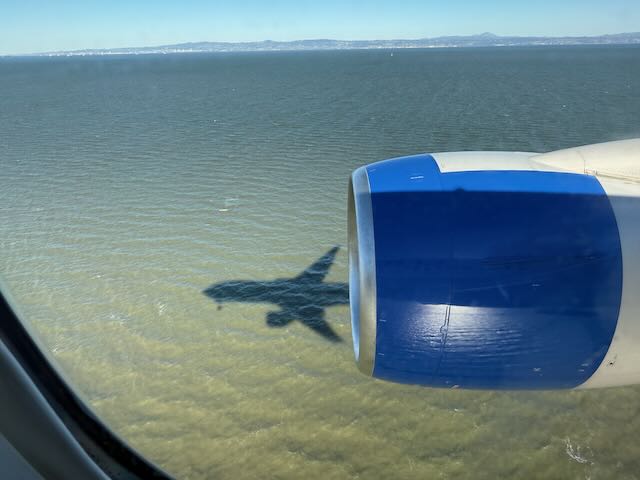
If we build on a fault line, expect dynamic experiences. If we desire stability, we may need to seek more durable ground. Flying into my city earlier this year, I spoke with my seatmate who worked as a facility manager, building served farmers (data centers). He was overseeing the construction of a new center outside the town. I asked him why his company picked this location, and he stated that it met four critical criteria: geologically stable land (i.e., limited seismic activity), a good source of inexpensive power (hydro and wind), less expensive land, and the cost to build was attractive. The exact property would not work well as a prospective site for a geothermal pool or a national park that contained geysers.
Where we work may influence our impact and ability to establish a stable foundation. A ski instructor has more prospects in the mountains than being based in the tropics. A social service organization might likely thrive in a region with an established nonprofit center and a community foundation. If your cause is a search and rescue organization, it exists on the frontier between emergency services and volunteer resources. The business model demands working in dynamic settings and functioning on fault lines.
How might we assess where our services are most needed within a community? How might we be willing to migrate if the need has relocated?
What is the castle that you occupy? Is it a structure, an idea, a way of being, access to certain rights, or a relationship?
How might we understand that we cannot govern all the terrain before us but contribute to a confluence? We can help those seeking input to navigate and succeed on their journey.
Winston Churchill was voted out of office in 1945 after serving for five years as Prime Minister during World War Two. The war’s conclusion allowed citizens to focus on other priorities, but the Conservative Party did not anticipate the growing calls for social reform and was routed at the polls. Harry S. Truman managed an unexpected victory in the United States to keep the Democratic Party in control during the first post-World War Two election.
Representative leadership exists on a delicate margin and is subject to the whim of the people. One might argue that Churchill led Britain with resounding fortitude, sufficient to claim another term, if for no other reason than gratitude that the Allies had prevailed. Truman succeeded Franklin D. Roosevelt, who died in April of 1945, making decisions that concluded the war but lacked as robust of a World War Two resume (he served in World War One and was a reservist until 1953).
Leadership is temporary, and a change always looms. How might we use our time in leadership by setting others up for success? How might we focus on our core values and execute the work that matters, regardless of our title? How might we recognize that we are leading, with or without the title of leader?
Binoculars are a liminal object to me. Most binoculars I have encountered are safely positioned in a case or sitting static on a shelf; they are more accessory than instrument. But, when required, they can transform quickly. Is that a wildfire on the ridge? Is there a vessel at sea requiring assistance? Is that an Ivory-Billed Woodpecker? Did my favorite musical artist playing in a mega stadium change into a new costume? Who walked into the building at the far end of the property?
Using them constantly makes the world myopic, and our sense of scale is unrealistic. By deploying them randomly, we spin the wheel of serendipity, hoping a worthwhile subject will appear. Treating them as a resource can enhance our culture of curiosity and provide confirmation of our interest or render the subject matter a lower priority.
What are the binoculars of your enterprise? What can your team leverage at key moments to make sense of the territory ahead?
I support ‘Save Klister Tubes From Extinction’ (a fictitious organization), the best social sector cause anywhere. The program production quality is better than the most viewed TED Talks. The staff is entrepreneurial, sophisticated, and customer-facing, continually granting my requests. The team leverages my donations using a 1 to 10 matching program, so my $100 contributions are now $1,000. Our office is donated by the city’s largest private equity company, and the enterprise received a bequest from a prominent social activist, which is being used in full to fund all operating costs for the next three years. As a board member, my time is exceptionally valued. Every meeting is professionally scripted and run, there are no lulls in conversations, all votes are unanimous, and the mesmerizingstaff reports are uploaded as video presentations to the board portal. The board meets quarterly in the nicest corporate conference room in town, with a catered lunch personally prepared by a rotation of award-winning chefs. Our volunteer program has a waiting list, with prospective volunteers placing their names on the list before moving to the region. Our impact metrics are remarkable; 100% of all individuals served achieve the highest outcomes and report their personal life satisfaction scores increasing 10-fold within one year of completing our program.
Fake reviews traditionally have two extremes: the one-star, everything went wrong template or the five-star, this thing changed my life version.
What realistic review does your organization aspire to attain? As an icebreaker exercise, ask your team to compose authentic future reviews of your organization from a stakeholder’s perspective.
How close is your enterprise to realizing that inspirational review today? What resources and priorities are required to bridge the delta between the present and the future? What would change if your cause achieved this level of engagement and satisfaction?
Has a fresh start completely changed your mindset and the outcomes surrounding your actions? Head out on a bike ride with a rear tire that shows signs of significant wear, and we get a flat tire immediately; it can feel deflating (pun intended). Returning to the starting point, we change the tire and tube to place the wheel back in functional condition. We head off with greater certainty that our ride will be free from mechanical failures. Our mindset can focus on the activity of riding instead of the fifty-fifty chance our tire will not survive the ride.
Fresh starts are magical; they do not take up a lot of energy to alter our mindset. How might we use a new calendar year to reset our patterns, assumptions, and behaviors? What might we focus on when we remove some of the most prominent distractions?
What tendencies appear when we are tired. As an endurance athlete, tripping or forgetting to take in fuel is more common later in an event than when we are fresh. As board members, we can be less precise in our deliberations when making decisions at the end of a long meeting. When is your team’s peak performance phase? If possible, schedule the hard part when there is a likelihood of higher engagement and better outcomes.