Planning

Rue Goldberg vs Planning

Rue Goldberg machines blend engineering, creativity, and autonomy. Designing and building a contraption is an art form. It requires the ability to trial scenarios and use objects in innovative ways. Watching the finished product in action can feel anticlimactic since we anticipate all the obstacles have been removed.

It occurs to me that some groups committed to strategic planning view their process as assembling a Rue Goldberg. They intend to design an elaborate apparatus, commit to a period of trial and error, and then reach a state of predictability where initiating a single event at the start will reach a desired ending. While relying on ingenuity and being flexible in deploying everyday initiatives are consistent with many planning efforts, the controlled environment is unrealistic. Obstacles are what divide planning and acting. We can always reach for tomorrow but only have today to shape the behaviors and processes that will impact our trajectory.

How might we remain flexible as we activate our plan on a daily basis? How might we recognize our plan is at best an outline, if not just some scribbled notes in the margin? How might we embrace the unanticipated instead of building elaborate set pieces to avoid disruption?

Discussing Uncertainty

When we cannot glimpse the landscape ahead from a superior vantage point, it creates feelings of uncertainty. The recent US Presidential election, which initiated a leadership change, means many social sector organizations will face an altered landscape to fulfill their mission. A complete rewrite of a strategic plan is perhaps too much work or inappropriate at this juncture. Perhaps a scenario panning session might offer a productive output. Several enterprises used scenario planning during the pandemic when the rules were unclear, and long-term viability remained obscure. One of my favorite models is the Six Thinking Hats from Edward de Bono. I appreciate that only some ‘hats’ (mindset) will resonate with our key attributes, but completing the process delivers a holistic experience. Generative conversations can replace fear and unknowing with alignment and increased clarity.

Year in Review

A year-in-review process is similar to examining scorecards from the previous 12 months of golf. There was an optimal route and score to achieve (par) versus the reality of the rounds played. Rarely did the round run as scripted. The year ahead is analogous to assessing blank scorecards of the rounds we intend to play. There is a plan and the vision of completing the track as outlined and achieving the best possible score.

How much room are we leaving in these plans for the unanticipated? How calibrated is our script to our abilities? How much will our resources and equipment add or detract from the journey?

Golf (and planning for the future) would be boring if they always followed the same articulated plan. Our best stories often prosper from encountering the unknown. Serendipity thrives!

Control

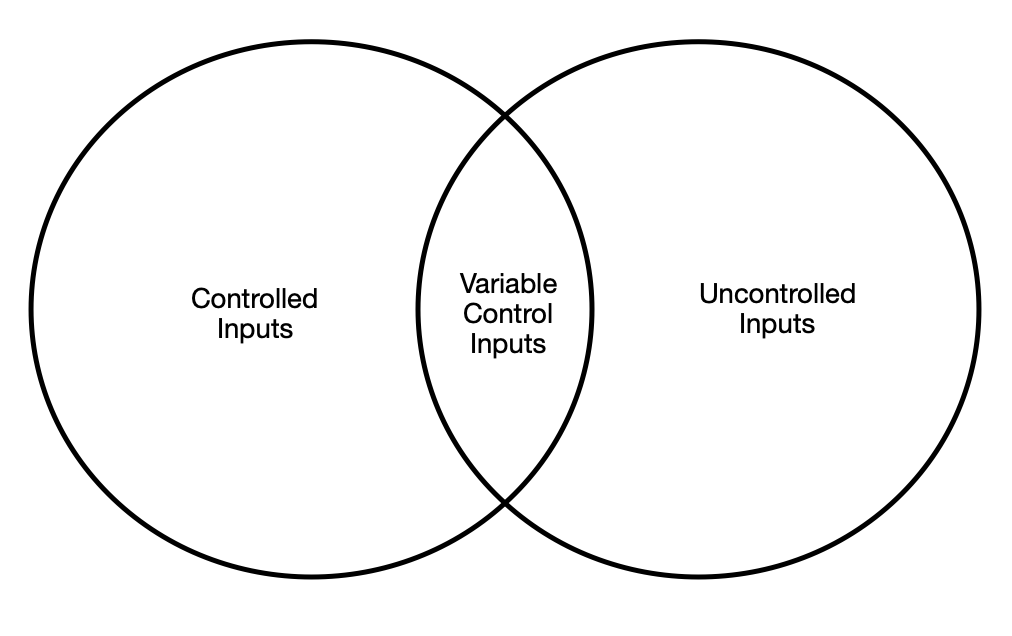
What can you control? What is beyond your control? What falls between these two categories? What if you took the time to map these quickly before your enterprise approves its next budget or decides on resource allocation? What if you started a generative conversation by adding Post-it notes to a larger template of the above graphic? How might our future discussions benefit from agreeing beforehand about what we control and what is beyond our influence?

Thru-hikers planning for one of the ultra-distance trail networks (e.g., Pacific Crest Trail, Continental Divide Trail, Appalachian Trail1, etc.) in the United States during 2025 are working on extensive details. They can control the gear they acquire, fitness level, re-ration boxes, and goals. They cannot control the snowpack, wildlife, availability of trail angels to assist them, or other trail users they will encounter. They have variable control over the distance they plan to cover, hiking partner(s), and probable scenarios encountered based on previous long-distance hikes.

A thru-hiker can spend most of their time on the controlled and variable inputs, leaving the uncontrolled inputs for evaluation as departure day approaches.

1Appalachian Trail Hurrican Damage Update

Amplifying “Can’t”

Does your mindset change if you are informed ‘you can’ versus ‘you can’t’? When we are restricted from taking action or proceeding, it may increase our desire to sample the mission we aspire to complete. I have often found more satisfaction in gaining access to an experience that started with ‘you can’t’ or a restriction and ultimately allowed access.

For example, an airport gate agent informing us that the boarding door is closed, and we are denied boarding, only to have the door re-opened to accommodate a crew member, and we are boarded. The flight feels like a reward. Reaching a closed trail which requires us to retrace our steps for miles, only to learn that a seldom-used side trail allows us to proceed. Or an endeavor that we are told we have not acquired sufficient experience to attempt, but we find a support team and complete the quest.

How might we recognize that our motivation may increase expoentially when we first encounter a barrier before we are able to proceed?

Not Just One Thing

Notice, that if you endeavor to do one thing, it typically includes several other things. Submit a proposal for a prospective consulting engagement, the client list needs an update, tentative dates require entry to the calendar, and sample work from previous engagements are potential side quests.

Rarely does one thing equal one thing. Are you prepared for the journey?

Planning Alone

If you plan alone, you create a first draft that embeds ideas influenced by your personal magnetic north. If you bring others into the conversation, you can add perspectives and concepts that you might not consider. When we expand the conversation, especially early in the process, we are afforded a plan that has been influenced by those who see opportunities and barriers differently.

Different Peaks

We are not climbing the same route. We might be mountaineering in the same range, or even ascending the same peak but from different approaches. When we compare ourselves to the progress of others, it is extraneous. Our focus and decision-making are best directed to wayfinding on the terrain in front of us. Keep climbing and once we summit, there will be another mountain to climb. Our goal is not to repeat what has already been done in the exact same order, but rather to find new combinations, unique approaches, and immerse ourselves in new experiences.

Direct to the Destination

Technically, the pilots could turn the plane in the pictured scenario and attempt to go directly to the airport. The probability of a successful landing is extremely low. It is in the best interest of the plane, passengers, and crew that the flight passes the destination to line up on a final approach that is practiced, planned, and highly predictable.

How might we avoid heading directly to our destination when we are not likely to reach it safely (or with the intended impact)? How might we plan how to arrive, not just focus on connecting the dots between two locations?