Are we trying to engage customers, or are we assisting them to navigate a journey? Can it be both? Is it often one versus the other? Should we write off the organization if the fundraising team does not align with our expectations? Or do we recalibrate and focus on the impact that the programs deliver to those who it serves? Should we call off the expedition because of the behavior of one team member? If it is dangerous and jeopardizes health and safety, perhaps we must. If the team member brings a different approach, perhaps we can find another point of convergence to bring us closer to our collective goal.
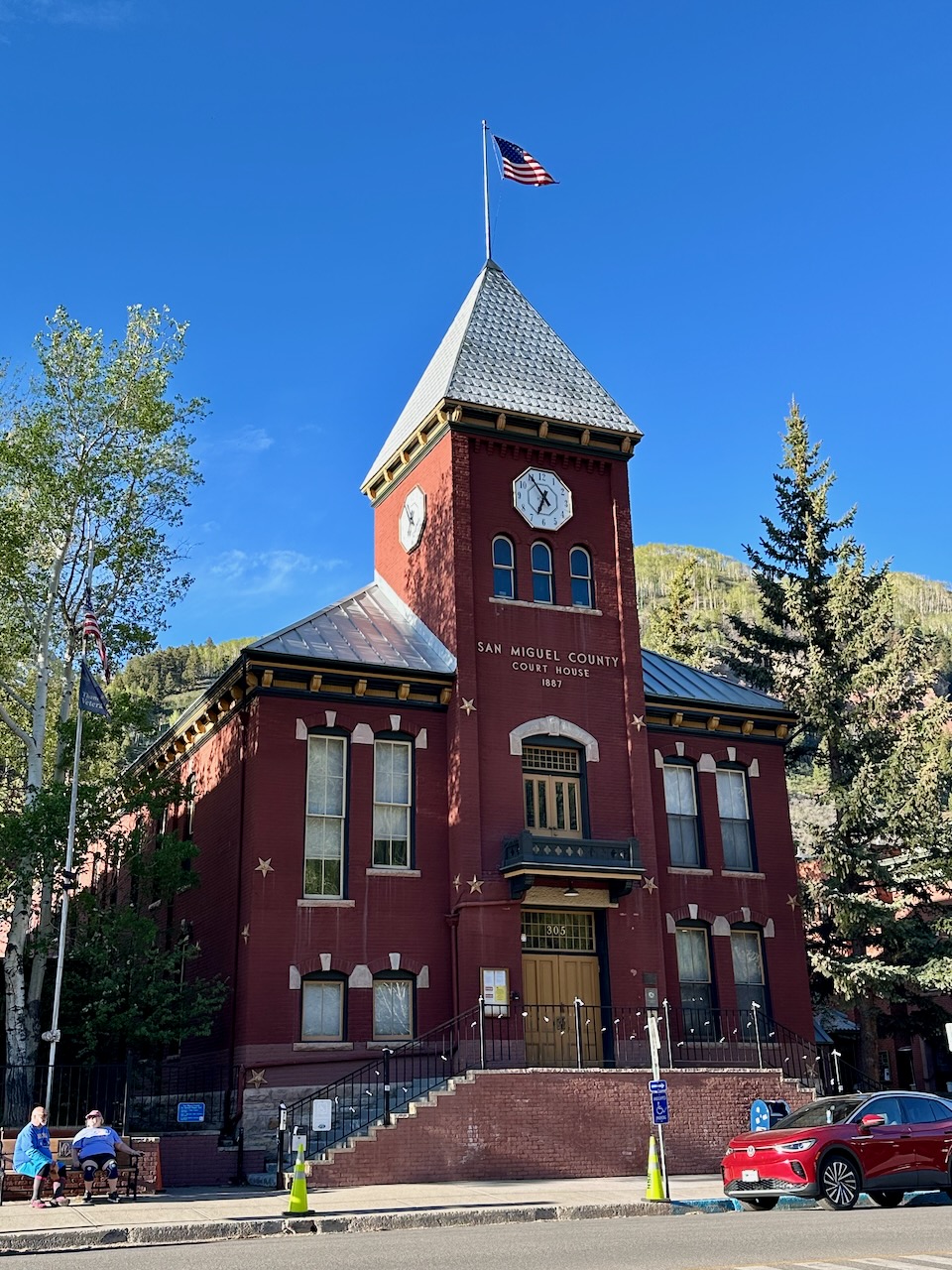
When they built the courthouse (San Miguel Courthouse, CO, pictured above), was it for the community or those who would hold power inside? What is our mindset when constructing something, holding a meeting, or starting a conversation? Seth Godin’s blog post double-clicks on the idea.
We have all been on the receiving end of a conversation that was positioned as an ask but clearly turned into a pitch. Are we able to build more trust and engagement when asked or pitched? How might we be authentic and intentional with our approach?
Have you worked on a project where the answer is known and the goal is to complete the project in the right order? Have you engaged in solving an interesting problem that has various possible answers? Seth Godin’s Akimbo podcast provides context for the interesting problem paradigm.
Some of us excel on the bubble sheet test, while others thrive with the essay option. Knowing the medium we are being asked to engage with may help us accept or decline the invitation to join the expedition.
One is offense, the other is defense. One requires the spark of curiousity, the other is associated with fear, or at least hassle.
Seth Godin
Seth Godin crafted an enduring blog post defining the difference between adopting and adapting. A strategic decisions we need to discuss is if we are a group of people looking to adopt or adapt? The two mindsets will fundamentally change how we proceed. How might we plan for our future using strategies that reflect our posture?
Why do we gather, and when should we assemble? According to a Harvard Business Review article, there is a flow chart to review before calling a meeting. Dan Martell proposes the 1-3-1 method of decision-making for a one-on-one meeting. Simon Sinek has an online course dedicated to meetings. Seth Godin breaks down different types of meetings.
I rarely get excited to schedule a meeting. However, when it has a purpose that intersects with my purpose and is facilitated to elevate our best ideas and insights, I can leave feeling better about the organization than when I arrived. Leading a meeting is a skill. Anyone can call a meeting, but few can conduct a great session.
How might we ensure the best person on our team is leading our meetings, even when they may not have the title (or seniority)?
It is leading practice to position ski patrol toboggans at the top of the ski mountain. Much better than in a base area shed. We can respond quickly to an emergency with a well placed asset.
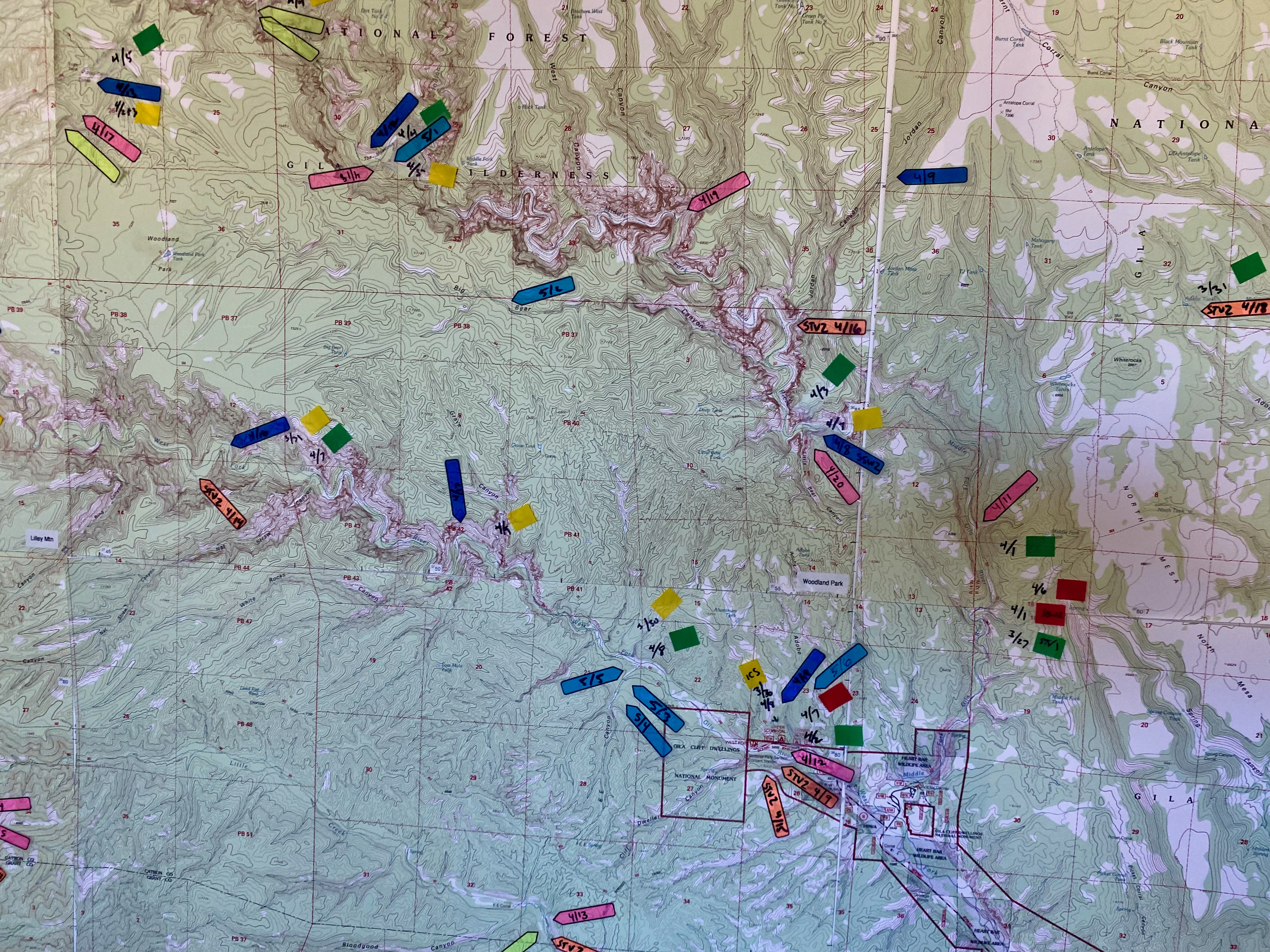
How might we consider which of resources need to be pre-positioned in an accessible location? If we run an outdoor education program with student groups in the field, it might be helpful to have a primary source map that captures scheduled routes and camping locations. If an emergency call comes to the base, we can reduce the friction just getting oriented.
Which resources have you pre-positioned? Which ones do you employ on regular basis? Which are cached for an unexpected event?
BoardSource recommends the following basic resources for most nonprofit organizations. The Nonprofit Center of Northeast Florida has links to emergency planning resources. And Seth Godin blogged about the cost of emergencies.
What discussion and opportunities have you missed because they were postponed until the next meeting or there was not time on the agenda? What might have happened if the moment of creativity and insight was allowed to take flight in real-time? If all our actions are captured on a schedule, then when does ‘be remarkable’ appear in writing on our calendar? Perhaps we have the inspiration, strength, endurance, or ideal conditions to tackle the crux move today. What if we embraced the dynamic, now?
Seth Godin refers to Edgecraft as the furthest edge we can embrace without losing a connection to our super fans as we innovate. The feature, benefit, service must be remarkable. It is challenging to know when we have entered the realm of edgecraft . A tripwire to seek is when we start asking lots of questions. If we are on a mountain ridge, closing on the summit and dangerous weather approaches, we begin to evaluate our options. Is reaching the summit responsible? Can we get to the peak back to safety in time? How fast is danger approaching? What if we misjudge the elements, is there an alternative plan?
If we present a program or product decisions that everyone agrees represents our mission without raising anxiety and curiosity, we are not close to edgecraft. There is nothing wrong with mission centered work, we want to acknowledge it is not pushing boundaries. However, if we propose an activity that makes us uncomfortable but appears aligned with our Magnetic North (purpose, vision, mission, and values), then we might enter into robust debate. Perhaps part of our deliberation centers on the right balance between making our service better versus safer. Edgecraft is personal to every enterprise. A solo violinist is not capable of producing the same depth or sounds as an symphony. However they can be remarkable for their individual style and sound.
When have you practiced edgecraft? What were the results? How did your super fans respond? Does your community still retell the story of your edgecraft work? What questions did you ask of yourself? Why did you preserver?
What mountain summits beckon in 2021? How committed we are to reaching these peaks will determine the depth of the wayfinding we deploy. As Seth Godin reminds us when working on something remarkable, why are we doing it, who is it for, and how does it work.I send best wishes to the adventures ahead.
But today, value isn’t created by filling a slot, it’s created by connection. By the combinations created by people. By the magic that comes from diversity of opinion, background and motivation. Connection leads to ideas, to solutions, to breakthroughs.
Seth Godin
It is the new points of view, the uncommon connections, the different perspective that make our collective service more remarkable. Be powered by uncertainty to ask questions. Be inspired by those generating movements in foreign lands. Be willing to share with those we have just met. Be willing willing to wayfind. Assume best intentions. Be connected by a shared vision.






 What-if-concepts