When I first encountered this sign I missed the arrow for Vaca Ranch and assumed every outfit was to the right. It seemed obvious that the main course of travel went right. Among the noise and clutter, it is hard to stand out, despite taking the road less traveled. Just because we are on different route than the rest, does not mean those seeking us will be successful in navigating to our location.
In attempt to appear frugal and lean with our resources, we quickly fill a liminal space. Our fans and interested parties cannot tell if we are open for business and functioning with remarkable impact, or if we have shuttered our services as a victims of thriving inspiration blocked by insufficient fuel for the journey. How might we balance stewardship with responsible investment in the people and tools that matter? How might we work effectively without appearing to putting our own needs before those we serve?
When we view an image, what assumptions do we make? What mindset do we assume? Does it alter our mood and influence our emotions? Is there a standard narrative that comes to mind? Do we experience FOMO (fear of missing out) or JOMO (joy of missing out)?
Do we select certain images to inspire or create fear? Are we hoping our tribe will activate, take action, become more aware, or lend their social influence?
What assumptions are we making when we curate the message? What assumptions our our fans making about the stories we share? How much is based on trust and how much is the work of creative editing?
Is there a symbol for your enterprise that captures what you stand for? Is it a logo, a person, a word, a program, an event, an image, a collage? What do you believe it represents? What do your fans believe it stands for? What is an outsider’s impression?
Not your confidence. The confidence of those who believe in you. The people who believe you are worth their loyalty and support. Those that cheer for you and risk their social capitol to recommend your services to others.
What if confidence is broken? What if it falls apart? This is not about disappointment but a break in trust. If we are designing what is essential to our work, the confidence of those we intend to serve is at the very center.
Is there a difference between working on versus working towards? Working on feels like I am engaged in the work that matters. Working towards provides a sense that there is ground between me and the work that matters.
Is it similar to a river viewed in different seasons? We are working on the river when it is flowing. We are working towards when we travel on its frozen surface.
Both journeys matter but the terrain we have to navigate is different.
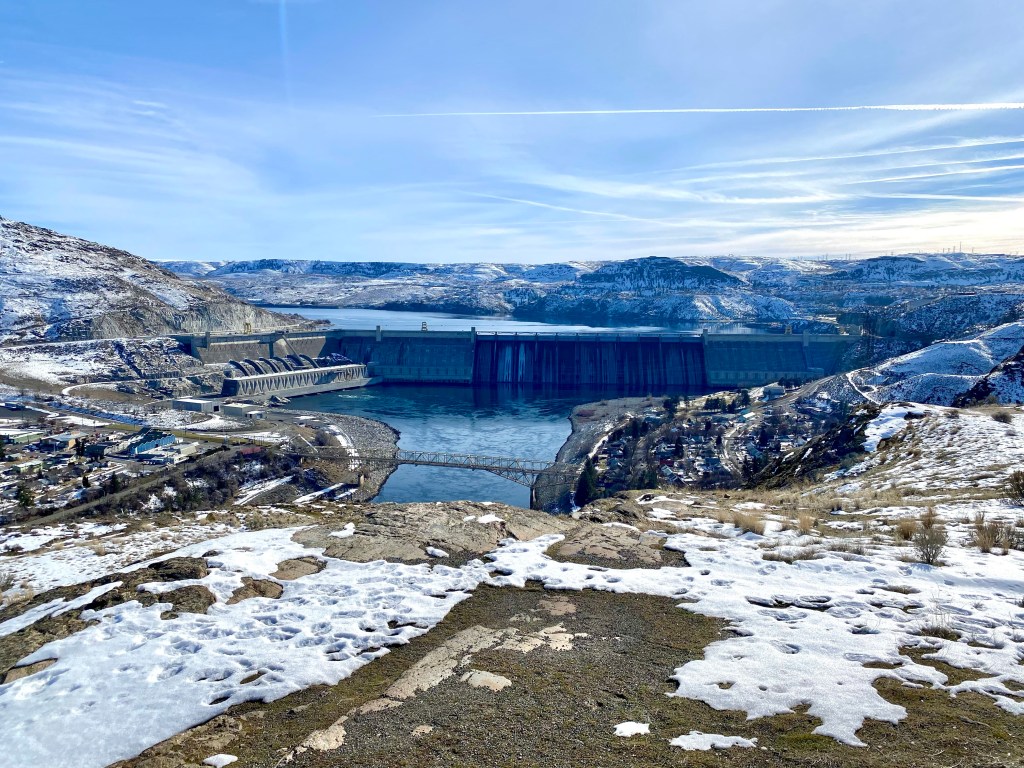
Damming the Columbia River solved a number of problems. It reduced seasonal flooding, allowed agriculture to prosper, generated hydroelectric power, and was a catalyst for local communities to prosper. It also created problems. The dams altered the ecosystem and hydrology of a major watershed, it introduced crops that might not have propsered, obstructed salmon and sturgeon from returning to their breeding grounds without human intervention, and generated inexpensive electricity which delayed investments in other forms of sustainable energy.
Some would classify the Columbia River Dams as one of the great engineering and economic successes of the Twentieth Century in the United States. Others might define the complex as one of the most significant environmental disasters created by humankind.Politicians, citizens, environmental groups, and government agencies are still debating the merits and fate of the dams.
I might be helpful to frame our problem-solving with the mindset that we are both solving and creating in the same act. We should not stop aspiring to be a force for good but we might benefit from recognizing our solution will be somebody else’s obstacle.
When racing in a mass start event, should our primary focus be to hold onto the fastest possible competitors or be a contributor to the a pack’s success? Is it more rewarding to struggle and suffer to be the final member of a group to reach the finish. Or, is it more rewarding to have raced as an active leader, contributing at the front when possible?
I have spent numerous kilometers suffering to hold the wheel, skis, shoes, and draft of far superior athletes. They have dragged me to better performances than I might have managed during a solo effort. However, I feel a bit unfulfilled at the end. If I simply hung on at the back of the pack, I contributed little our collective success.
I have spent more time actively pace-making up front. I feel more of a reward at the finish and it aligns with my personal values. Even if a ‘hold on’ member of the group out-sprints us all at the line in a sudden burst of energy, I helped set-up our group for success.
If I measure results, the hold on method probably yields higher placings. If I reflect on personal satisfaction, the active leader yields better stories and deeper connections with those I supported.
No right or wrong. Just a reminder that individual choices and talents are not always visible on the result sheet.
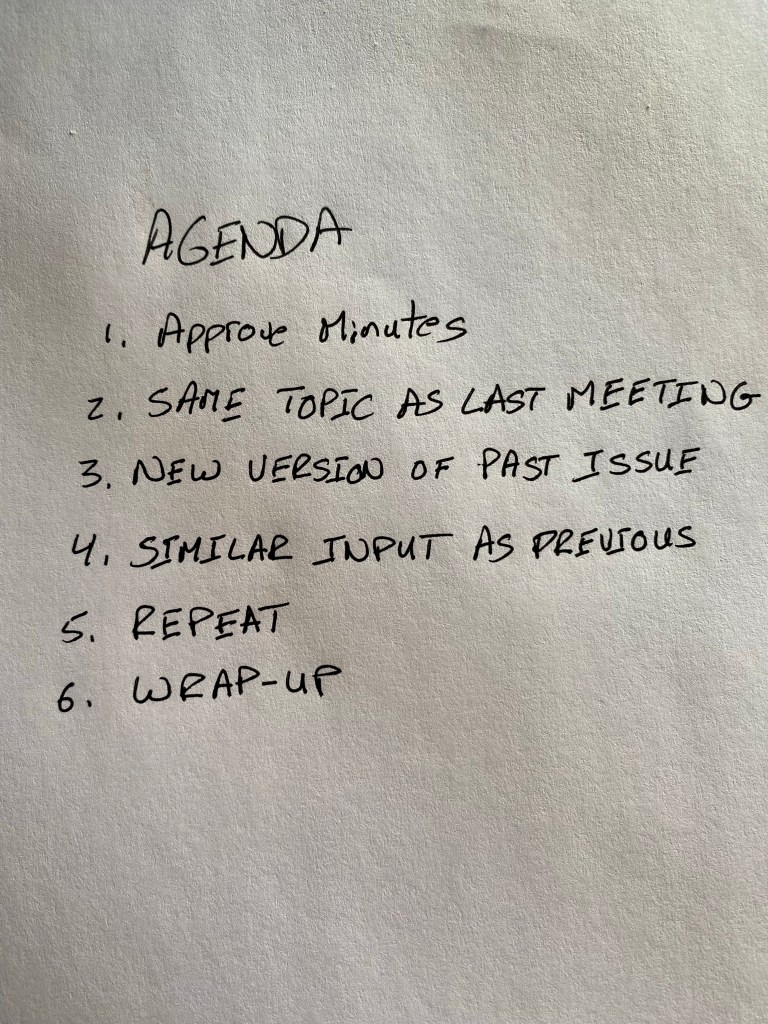
Even if the agenda looks the same, the meeting is different. Each participant has encountered new information and experiences between gatherings. The world changed. New members joined our efforts and others departed. Our services and contributions have had an impact, positive and negative. We are not looking at the same conditions.
Imagine watching a firework show. At first glance, each burst of light and corresponding boom appear to be the relative similar. Then we notice the different colors, shapes, alternating lengths of illumination, height, and pattern changes. Even the launch angle and sequencing of the shells remains variable. No two firework shows are the same.
How might we embrace that we are never looking at the same thing despite initial appearances and patterns? Even if we meet in the same location, with the usual group, on a repetitive day of the month, and rely on practiced parliamentary procedures, we are not assembling for a duplicate meeting. Our greatest fault is thinking we are convening for repetition when everything is new.