
Does your work create conversations? What do people talk to you about? That is what interests them, regardless of where you are shining the spotlight.
Does your work create conversations? What do people talk to you about? That is what interests them, regardless of where you are shining the spotlight.
Be brave. You do not need anyone to pick you in order succeed. It helps to have additional resources in order to scale. However, if you do the work that matters then it is not a question of who will benefit but rather how many.

If you have stumbled across the front page of Reddit you are likely to see an AMA (Ask Me Anything) as one of the highest rated posts. Usually an AMA is put forward by a celebrity or someone with name recognition. Occasionally the individual has a unique skill or experience. An AMA is often a shout into the wind and sometimes the conversation catches fire.
What if we allowed our respective tribes to ask us anything? It is a simple proposition, we offer our time and authentic answers in exchange for questions from those who want to know more about us. Frequently we script our message. We send out talking points in advance of big events. Email blasts backed with social media campaigns. What if we went off-script? What would be the value of a conversation driven by our fans? Would we be willing to take requests from the audience for one-night? At the end of the Q&A, how might our relationship with those that matter be transformed?

Seth Godin got it right. We do not stop doing business with everyone because there are some bad actors in the sector. Invest in those who matter today #GivingTuesday
Harvard Business Review got it right. When strategic planning makes you feel better about the future and attempts to control change, you are probably doing it wrong. A great plan should generate fear and be daunting. Why not articulate a heroic journey worth attempting?
And the Ferguson Library go it right. If you are going to live your mission and are committed to serving as a resource for your community, then what better moment to continue showing-up than when everyone else is locking their doors.

Has the recent Star Wars film trailer exponentially increased your anticipation of the coming film? A trailer is like a ‘Why‘ statement, it does not reveal everything but gives a glimpse into an unexpected world that provides remarkable experiences. The most provocative moments often leave more questions than answers.

EGOT, an acronym for those select artists who have won an Emmy, Grammy, Oscar, Tony during their career. A remarkable achievement in television, music, film, and stage. What makes it more rare is the unpredictability of the marketplace. What if our box office record breaking film runs into a Citizen Kane? Or Book of Mormon’s fanatic followers outpace our acclaimed staging of the Presidency of FDR? Perhaps our genre of music is slightly less popular the year our hit single releases.
Creating art for the awards and celebration is maddening work. We must get the content right for the marketplace but also anticipate the timing of other works that will overlap with ours. We can point to Impressionist artists (famous today) who lived anonymous lives and dabbled in poverty. Their works auction for millions of dollars and are required acquisitions for any national museum. Yet, their contributions went unheralded during the award shows of their time, if they could even get placed in the show.
An EGOT artists is part superior artistic talent and part coincidence of events. Akin to spotting a shooting star in the night sky. If we aspire to win we need a different mindset than if we aim to inspire, transform, and engage. Being clear about our intention is crucial.

Alexandra Franzen proposed a few powerful questions last week on her blog. It was shared with me and I read it hastily on the way to catch a flight. Only once I was securely captive in my window seat as I jetted across the continent did the power of her questions begin to unfold. As I peered out the window I caught sight of another aircraft piercing the sky headed in the opposite direction, a thousand feet below and moving expediently into the vacuum of airspace that we had just vacated. A three second encounter gave me pause. It forced me to try to calibrate the power of air travel. How quickly I took for granted the physics, technology, and decision-making that allowed me to sit in an abstract state contemplating something completely irrelevant to aerodynamics, engineering, and navigation. The expertise of the flying ecosystem had allowed me to have a completely different experience than say the Wright Brothers.
When I consider Alexandra’s questions it reaffirms to me the importance of purpose. If we have not considered the effect, impact, and experience we intended to impart then we miss our greatest super power. Few people join a cause to raise more money, re-word a mission statement, or attend an all-weekend retreat. We joined because of an experience that was offered to us and we wanted to share with others. We want other people to feel the way we feel.
I offer Alexandra’s questions as ones you should bring back to your tribe and ask aloud. I think this may be the most important dialogue you can have right now. Otherwise, you may be sitting in a window seat watching your enterprise’s best experiences headed the other way, a thousand feet below.
“What is the effect that I want to have on people?”
“What kind of impact do I want to have?”
“What kind of experience do I want to create?”
“How do I want people to feel?”
When we do not accept our first impression as our final impression but rather inquire through other lenses, we are rewarded with an enhanced perception. Be curious.


As members of the tribe we are acquainted with Simon Sinek’s Start With Why and Golden Circle. Simon’s approach represents one of the more transformational processes to uncover and articulate individual and organizational purpose.
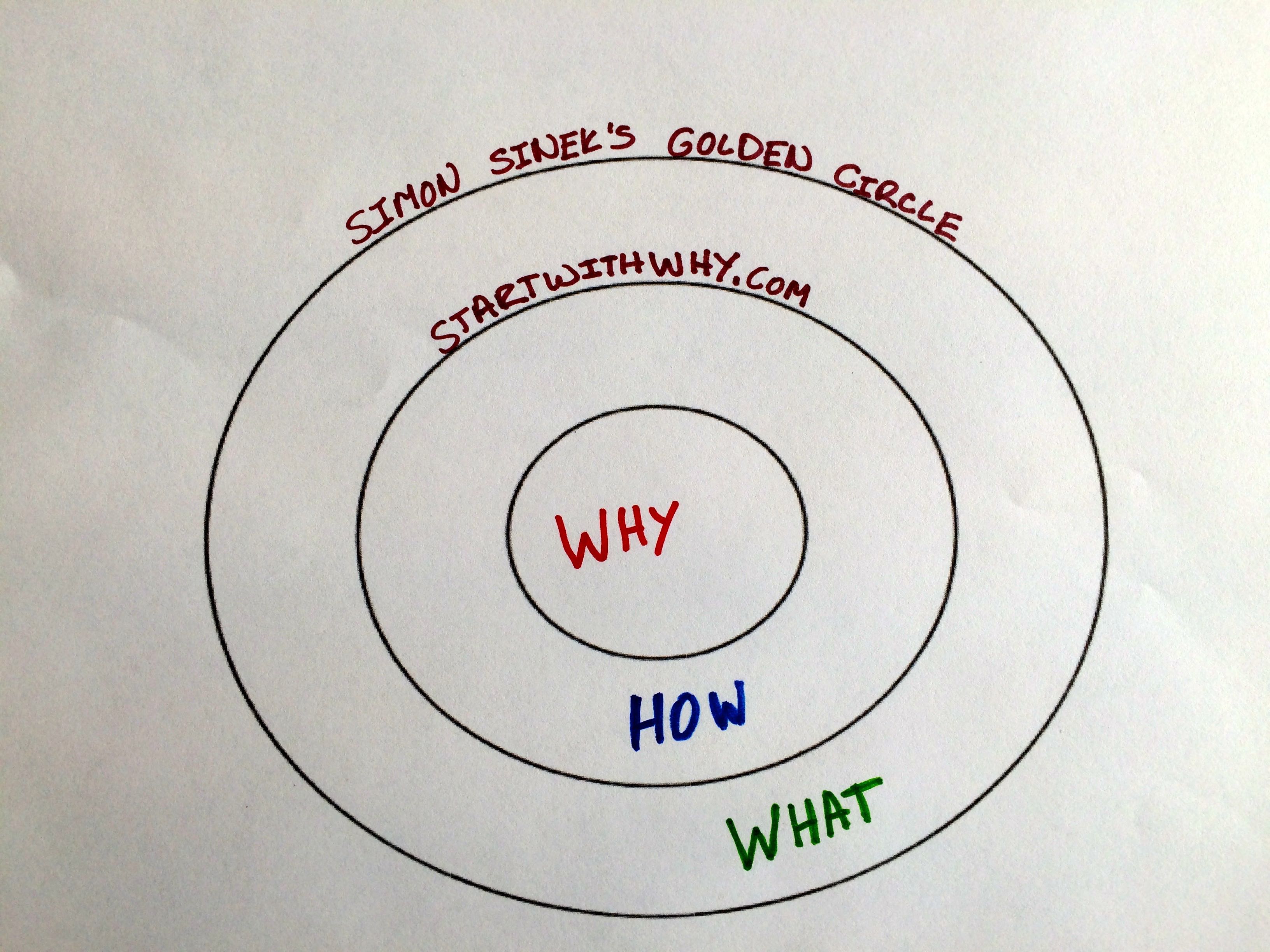
I have been grappling with ways to ensure strategic planning does not morph into operational planning. Said differently, how do we create clarity for the board and staff such that the action items do not drive the plan and the strategies are abandoned in favor of completing action steps (which feel so good to check-off)? Employing Simon’s highly complex circles illustrates a different approach to strategic thinking. The strategic goals are at the center of the plan similar to the Whys in the Golden Circle. The Objectives serve as the bridge to provide a route for the goals similar to the Hows. Finally, each action items represents a tangible and concrete step taken to move an initiative forward in alignment with the Whats.
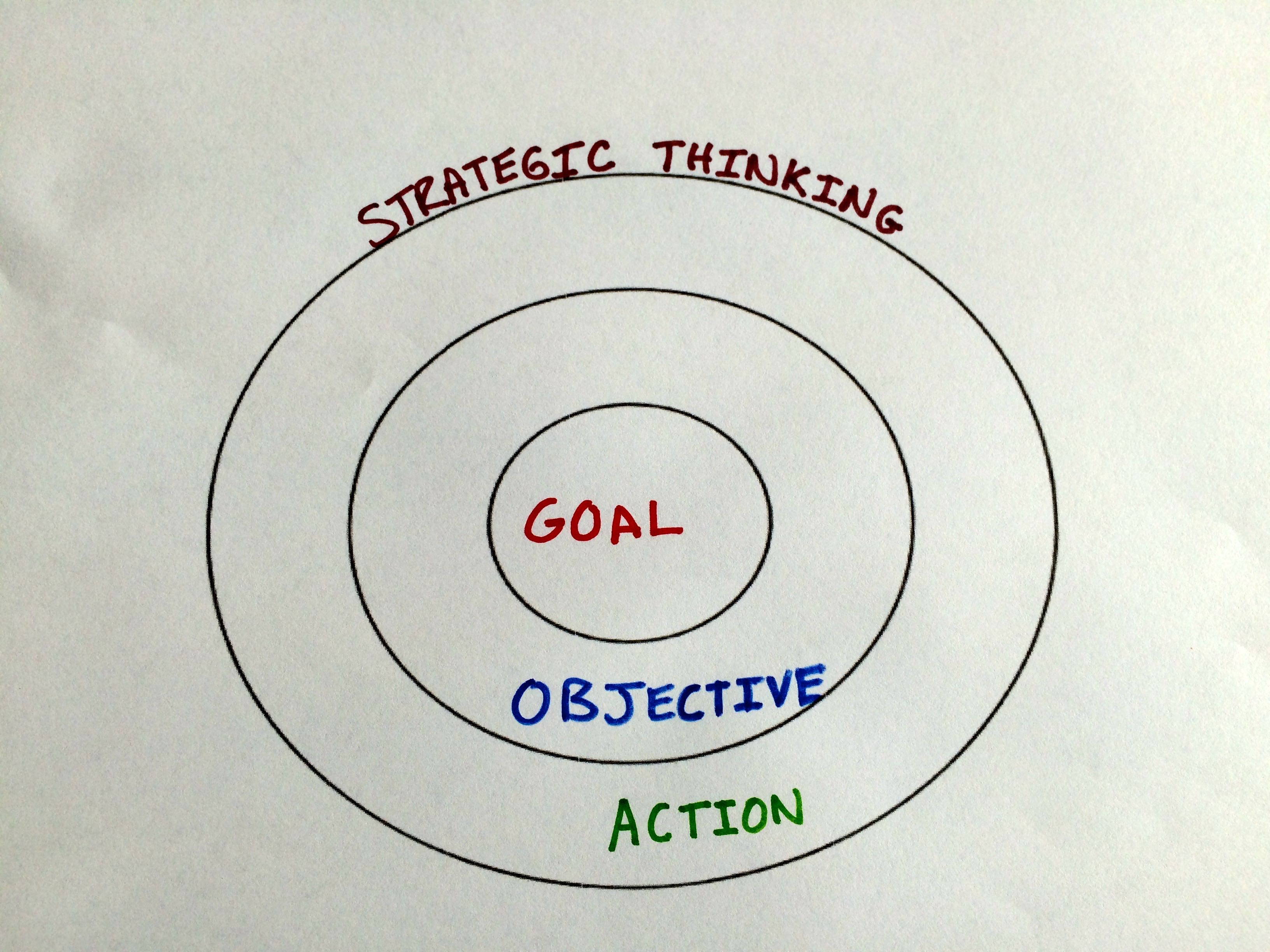
Conceptually this is a paradigm shift but it leaves the action items vulnerable to a What-centric approach (outside-in thinking). In reflecting on the roles and responsibilities of the board and staff there is an opportunity to leverage a focal point that resonates. What if the board’s culture of inquiry originates from the strategic goal and proceeded outwards and the staff drives the plan from the action items inwards towards the goal? These opposing (but unified) approaches provides for transformational strategic thinking.
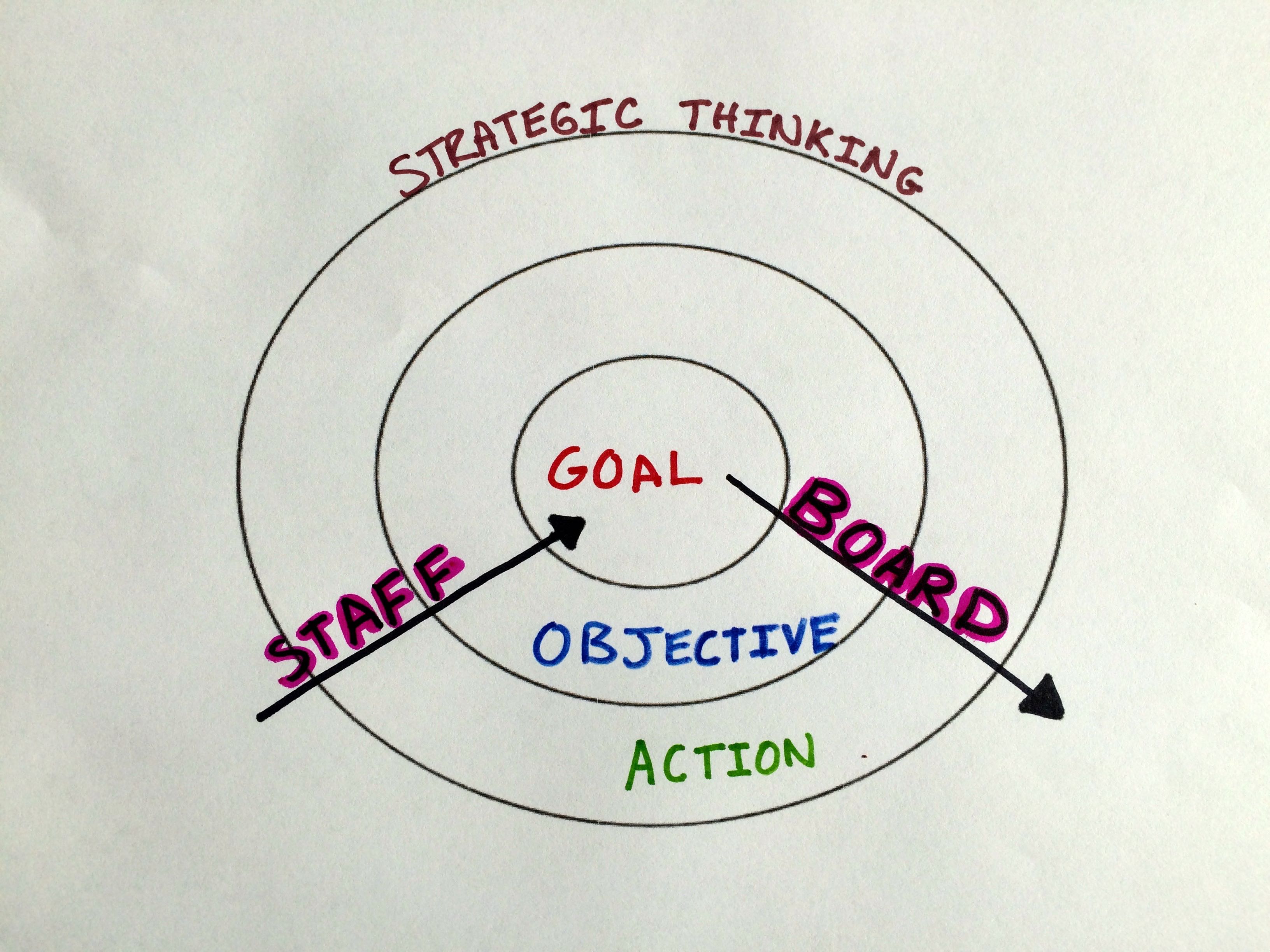
Simons Golden Circle’s simplicity provides a user-friendly approach. For me, it offers a visible way to support and amplify the power of strategic thinking. I look forward to your thoughts and refinements.

Dan and Chip Heath have written some of my favorite books. I lean heavily on their book Decisive when making significant decisions. A daily decision-making experience we encounter involves either-or decisions which confront us daily in subtle ways. Today, Election Day decision-making is far more public. When only one candidate runs for office we are left with a choice to vote or pass onto another contest on the ballot (classic either-or scenario). When two or more candidates are on the ballot we engaging in more sophisticated decision making strategies.
Michael Hyatt framed the decision-making challenges as follows:
So what is the Heath Brother’s better strategy for decision-making? The WRAP Process articulates a simple by profound approach.
 What-if-concepts

