Service

VIPs

What do your VIPs experience that eludes your general members? It is reported that Elon Musk had a small group of employees annotating data from his Tesla automobile to ensure self-driving mode worked most effectively. His data received special attention to maximize performance. This level of service was not available to the average Tesla owner. Elon’s driving experience is different than all other Tesla owners, unless they drive the same routes he uses with his Tesla.

What VIP services might conflate the experience the general member receives? How might we assess the service we provide to all our customers, not just those who have the special phone number and secret doors into our enterprise?

How might we monitor the experience of all our fans? How might we not focus solely on the VIPs who have secret phone numbers and private entrance privileges? If our organization’s stated values and actions diverge when it comes to our most important members, perhaps we need to have a generative conversation about our priorities.

The Key You Are Seeking

Just because you have a key, it may not be the right one for the vehicle you are trying to start. If you have a template/framework/idea/donor/board member/network from another cause does not mean it will work for your current enterprise. The right key and the right vehicle are essential to initiate your journey. Just as the right resource must match the culture and needs of the organization you intend to serve.

Public Domain

What happens when your proprietorial work makes it into the public domain? What is the impact of others iterating on your creation? How does it align with your values and focus? If you believe in making the world a better place, does it matter who gets the credit? If you believe in delivering for your shareholders (or donors), is it essential that you generate a metric that shows a return on investment? What if your idea is leaked to the sector, and it is the spark that generates an unexplored way of serving those that you are committed to helping? Do you need credit, or does moving closer to your vision suffice?

Glance

What did you glance at that was exceptional, but you were unable to witness (or capture) the entirety of the event? A shooting star? A retreating grizzly bear? The first moments of an unforgettable keynote? An iconic board member who is finishing their term just as you start your service? A glimpse of the impact bestowed by the first year of a transformational grant?

Glances are helpful since they furnish a picture of what is possible. They may not be sustainable or ordinary, but they set the conditions for developing a vision for the future. How might we use glances to inform our current and future efforts? How might a glance be the beacon to which we orient?

Useful

A tugboat is not useful for the majority of a transatlantic crossing. However, it is a crucial tool to pilot a large cruise ship from the departure port and upon arrival at the destination port. Tugboats are uniquely positioned to ensure successful voyages. We do not disparage the value of a tug boat when it returns to the harbor once the cruiseliner reaches the breakwater and open seas. The confined and complex waters of a busy port require a specialist, and the tugboat is the ‘offensive lineman’ of the harbor. Working in close proximity to others and rarely receiving the spotlight unless something goes wrong.

How might we maximize our usefulness without fretting about the portion of the journey we are not equipped to support?

Providing Access

How do you deliver your services to those who benefit from your superpower? Is the access point narrow and secretive, or is it broad and expansive? Are you offering urgent care level availability, or are you a specialist that requires an appointment and a long wait? Knowing where we are uniquely positioned to serve allows us to think about the platforms where our services are most effectively delivered.

How might we provide access for those in need? What is worth positioning in the public domain, and what requires safeguarding behind a robust fortress rampart?

Vision vs Visionary

When the conditions are right, I can see the horizon line from the right viewpoint, and if someone designs a functional orientation point, I can align myself. However, imagining the future we are trying to create is harder when obstacles appear.

How might we provide the proper orientation for those we serve? How might we set people up for success? How might we provide a sense of the work that matters for those seeking to fuel our journey? One requires end-user empathy. The other relies on wayfinding attributes.

Designed With Purpose

How might we design our services with the end user in mind? If we publish a “how to” app but fail to assess which language is native to most users, the app will fail to scale if language is required to navigate the app.

How might we consider the needs of the end user before we consider how well the service works for our portfolio of offerings?

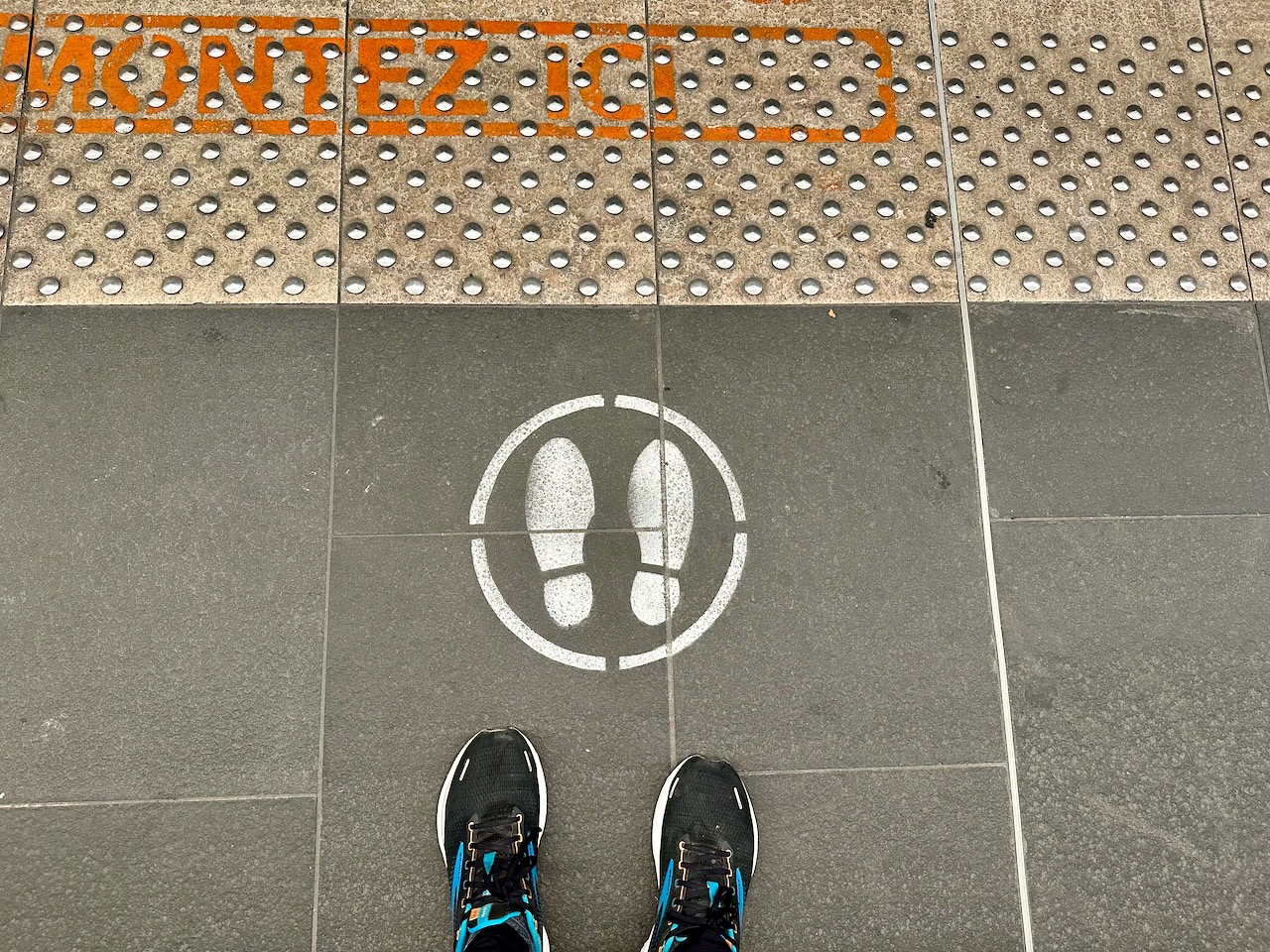
Entry Point

What is your entry point for engaging those you are seeking to serve? Opinel created “My First Opinel” knife with safety features, including a rounded taper blade. Offering an entry point allows people to feel part of the club, even if they are not ready to access all the features and benefits of the best version of your enterprise (services and products).

How might we be intentional about our entry point and not solely focus on the best-designed version of our work?