Author: whatifconcepts

Empowering those that inspire so they can excel at the work that matters.

Making our Work Visible

Screen Shot 2020-04-17 at 1.10.20 PM

A regional media outlet reported that SpaceX Starlink satellites are being reported to local officials as UFOs.  It turns out you can go to the tracking page and find out when the satellites might be visible overhead.

Our work is much more valuable when we make it visible and share with those who wish to track our journey.  How might you make your work visible to those who want to find you?  How might you make it visible to those who encounter you when they happen to glance in your direction?

What Next?

IMG_2279 (1)

What is next is uncertain. What we can manage is our mindset and the questions we ask. Asking, what next, may leave us in a reactive state. Some alternative questions. How are we uniquely positioned to lead in uncertain times? What is different, and how might I use this new information to serve more effectively? What gives me hope? If we can facilitate one interaction today, what would be most valuable? Who is making significant progress, and what might I learn from their success? Who is ready to partner? What are the needs and mindset of the individuals we are hoping to serve?

How do you Measure Success?

9q9dnyno74t41


Graphic Source

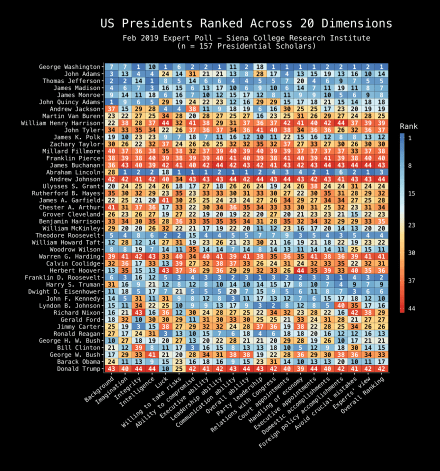
How do you measure success?  Do you employ any of the following?

  • Numerical 
  • Evaluation
  • 360-degree review
  • Opinions of experts
  • Crowd sourced
  • Anecdotal
  • Specific metric
  • Correlation to market average
  • Progress against strategic plan
  • Leader board
  • Happiness
  • Ability to achieve organizational values
  • Arriving at the selected destination

A Harvard Business Review article by Michael J. Mauboussin outlined specific business success theories.  Inc. Magazine published an article titled “7 Ways to Measure True Success.”  And, Influencive provided a synopsis of “11 Ways to Think About Measuring a Company’s Success.”  Among the options, there appears to be no one universal measurement.  So why not customize your own?  Build a success equation.  If we are going to create and nurture our organizations’ purpose, vision, mission, and values then perhaps we should invest in creating our own success formula.

Most Experienced Person on the Trail

IMG_2810

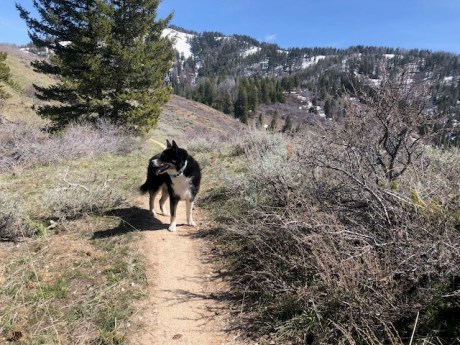
I was running a 25-kilometer loop through sagebrush lined single track, snow-covered forest service roads, and rolling descents, complete with numerous stream crossings. On the initial ascent, I stopped for a brief conversation with a hiker named Mike.  We had a short chat about the trail conditions, his hike, and my intended loop. He mentioned something about being a former runner, and I inquired about his adventures. Mike had run a couple Western States 100 Endurance Runs and the Leadville 100 in the late 1980s and early 90s. He was ‘just a hiker’ now but the most experienced ultra-athlete on the trail that I would encounter today. 

It can be convenient to use current performance as a metric to judge an individual’s total talent and experience. Occasionally, we encounter scenarios where assumptions expose falsehoods. Riding my road bike on an alpine climb, I caught a cyclist who was too fit and in sync with his bike to be caught by an amateur. The rider was a Tour de France finisher out for a recovery ride and socializing with friends. His current performance did not indicate the world-class ability that existed within his performance capabilities.

Let us not be too quick to judge the information we might learn from the individual who is traveling a little bit slower and covering less distance than us. The most experienced person on the trail, volunteering, sitting on the sidelines might be the person who is comfortable with their pace. They have already been there and done that and have vast amounts of knowledge to share.  Let us be more curious about the stories that matter.

I Recommend

Screen Shot 2020-04-09 at 8.35.05 AM

I am a big fan of Chris Guillebeau.  I encountered him virtually while he was in the middle of a quest to travel to every country in the world.  His stories were honest, energetic, adventurous, and generous.  Even when barriers appeared that put his itinerary in jeopardy, he assumed a curious mindset to provide perspective and allowed him to work on a solutions.   Chris encouraged his readers to strike out on their own ‘trip around the world,’ even when it manifested into traveling to a close-by city that one had not yet visited.

A few years later, Chris started an unconventional conference titled the World Domination Summit.  The name alone captured the audacity of thinking differently mixed with the underlying mission to be of service to others.  After missing the sign-up for the inaugural event, I attended every year.  This June was scheduled to be the tenth and final iteration, however 2021 is the recently rescheduled crescendo of the WDS experience.  Again, Chris is the ultimate host and conference visionary.  He borrowed key ingredients from other successful conferences, added a splash of Portland, Oregon and a lot of generosity to build the most remarkable events.  The attendees and speakers are extraordinary, engaged, and willing to share their unique skills with the broader community.

Each time Chris offers something new to the community, I am excited to engage.  He writes with a voice that resonates and what he offers is accessible and feels customized for me.  His latest book, The Money Tree released this week, and I encourage others who think or act unconventionally to explore these ideas and stories with Chris.

Feedback Tutorial in Four Points

  1. Micro-yes: Start with a point of agreement.
  2. Data point: highlight the specific and avoid blur words that may be misinterpreted.  Be specific about what actions we want to see increased or diminished.
  3. Impact statement: what is the purpose connecting the data points?
  4. Question: what is the essential question to create commitment instead of a monologue?
  5.  (Bonus) Ask for feedback regularly: “pulling feedback” allows for continuous learning.

Not Everything Can Be Measured (truthfully)

Comparing our effort to others may create an interesting mindsets.  If it helps us perform better and prepare for the next session, then comparison might be valuable.  If it becomes crippling and takes away motivation, it may not deliver the results we are seeking.  It is important to know what metric we are using.  In these days of virtual competitions, we may not know what is taking place on the other end.

Frameworks vs Timelines

6FDDB000-3D8E-412D-83E4-948C81267081

Rule books tell people what to do. Frameworks guide people how to act. Rule books insist on discipline. Frameworks allow for creativity.     – Simon Sinek

In uncertain moments, flexibility and wayfinding supersede fully articulated plans.  Remaining committed to what we believe and aligned with our core values provides the opportunity to standout.  Is is convenient to rely on our balance sheets as the Rosetta Stone for decision-making.  When we manage the numbers instead of people, we miss the opportunity to do the work that matters and that will endure.

Even when the building envelope is prepared and the infrastructure is ready, it does not mean we get to build on our schedule.  We must take into consideration the environment that faces those who we will work with to construct the buildings and the those who will reside within.  A framework outlasts a timeline, especially when navigating gets more challenging.

What is this about?

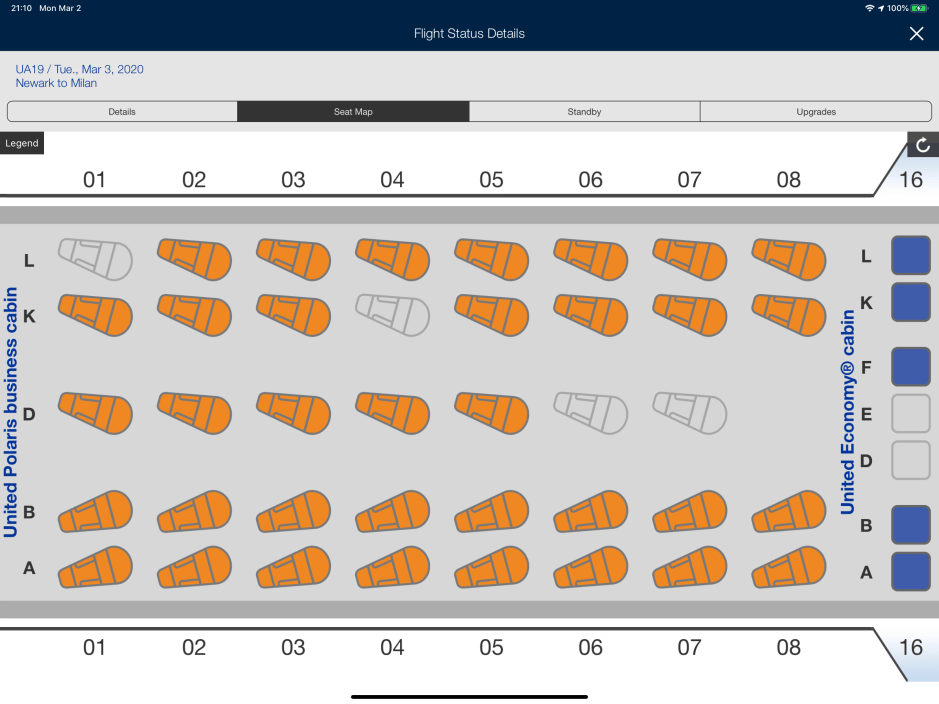
The above image is a screen gab of the seat map on a United flight from Newark, NJ to Milan, Italy in early March. I had a ticket and a season of cross-country ski racing and training in preparation for the World Master Cup in Cogne, Italy. Only a few days before the flight, the organizing committee cancelled the event in response to the COVID-19 outbreak in the Lombardy region of Italy. The United flight departed and flew the route, despite having less than fifty passengers on board.

The organizing committee made the best decision, despite the economic and emotional hit to the local community. During the planned week of racing, the restrictions of travel grew increasingly prohibitive, and eventually even leaving Italy would have been close to impossible.

For a period of time, the decision-making of the organizing committee and the representatives for the nations with participating athletes centered around the economic impact. Deposits had been made, vendors secured, hours of labor invested into the events creation. Once the tide turned and the local government began mandating closures, the human element became the highest priority.

It is easy to use numbers, timelines, financial impact, hours committed to a project as justification for proceeding. The challenge is to remember why we are doing what we are doing. The ability to frame our work around an essential question. In hindsight, the decision to cancel a week of ski races was the only decision. In real-time, the facts and figures manufactured disorientation and misalignment with the true purpose of the event.

Sometimes the flight goes on without you but the best decision is not getting on board. If we orient ourselves to the purpose of the trip, it is easier to step aside an evaluate our choices instead of being swept forward by the boarding process.