Uncategorized

Most Experienced Person on the Trail

IMG_2810

I was running a 25-kilometer loop through sagebrush lined single track, snow-covered forest service roads, and rolling descents, complete with numerous stream crossings. On the initial ascent, I stopped for a brief conversation with a hiker named Mike.  We had a short chat about the trail conditions, his hike, and my intended loop. He mentioned something about being a former runner, and I inquired about his adventures. Mike had run a couple Western States 100 Endurance Runs and the Leadville 100 in the late 1980s and early 90s. He was ‘just a hiker’ now but the most experienced ultra-athlete on the trail that I would encounter today. 

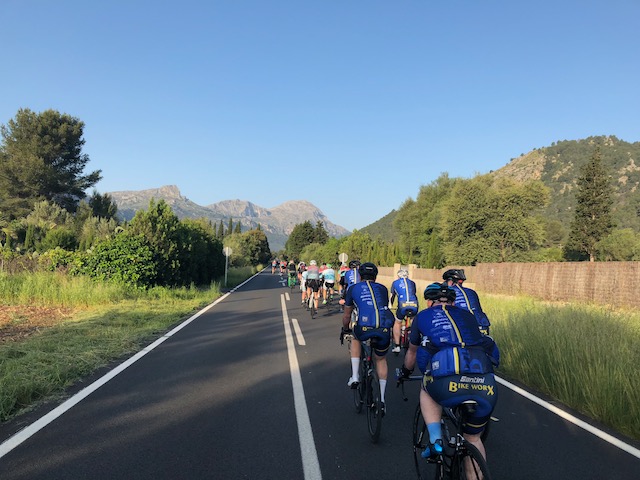
It can be convenient to use current performance as a metric to judge an individual’s total talent and experience. Occasionally, we encounter scenarios where assumptions expose falsehoods. Riding my road bike on an alpine climb, I caught a cyclist who was too fit and in sync with his bike to be caught by an amateur. The rider was a Tour de France finisher out for a recovery ride and socializing with friends. His current performance did not indicate the world-class ability that existed within his performance capabilities.

Let us not be too quick to judge the information we might learn from the individual who is traveling a little bit slower and covering less distance than us. The most experienced person on the trail, volunteering, sitting on the sidelines might be the person who is comfortable with their pace. They have already been there and done that and have vast amounts of knowledge to share.  Let us be more curious about the stories that matter.

I Recommend

Screen Shot 2020-04-09 at 8.35.05 AM

I am a big fan of Chris Guillebeau.  I encountered him virtually while he was in the middle of a quest to travel to every country in the world.  His stories were honest, energetic, adventurous, and generous.  Even when barriers appeared that put his itinerary in jeopardy, he assumed a curious mindset to provide perspective and allowed him to work on a solutions.   Chris encouraged his readers to strike out on their own ‘trip around the world,’ even when it manifested into traveling to a close-by city that one had not yet visited.

A few years later, Chris started an unconventional conference titled the World Domination Summit.  The name alone captured the audacity of thinking differently mixed with the underlying mission to be of service to others.  After missing the sign-up for the inaugural event, I attended every year.  This June was scheduled to be the tenth and final iteration, however 2021 is the recently rescheduled crescendo of the WDS experience.  Again, Chris is the ultimate host and conference visionary.  He borrowed key ingredients from other successful conferences, added a splash of Portland, Oregon and a lot of generosity to build the most remarkable events.  The attendees and speakers are extraordinary, engaged, and willing to share their unique skills with the broader community.

Each time Chris offers something new to the community, I am excited to engage.  He writes with a voice that resonates and what he offers is accessible and feels customized for me.  His latest book, The Money Tree released this week, and I encourage others who think or act unconventionally to explore these ideas and stories with Chris.

Feedback Tutorial in Four Points

  1. Micro-yes: Start with a point of agreement.
  2. Data point: highlight the specific and avoid blur words that may be misinterpreted.  Be specific about what actions we want to see increased or diminished.
  3. Impact statement: what is the purpose connecting the data points?
  4. Question: what is the essential question to create commitment instead of a monologue?
  5.  (Bonus) Ask for feedback regularly: “pulling feedback” allows for continuous learning.

Not Everything Can Be Measured (truthfully)

Comparing our effort to others may create an interesting mindsets.  If it helps us perform better and prepare for the next session, then comparison might be valuable.  If it becomes crippling and takes away motivation, it may not deliver the results we are seeking.  It is important to know what metric we are using.  In these days of virtual competitions, we may not know what is taking place on the other end.

Frameworks vs Timelines

6FDDB000-3D8E-412D-83E4-948C81267081

Rule books tell people what to do. Frameworks guide people how to act. Rule books insist on discipline. Frameworks allow for creativity.     – Simon Sinek

In uncertain moments, flexibility and wayfinding supersede fully articulated plans.  Remaining committed to what we believe and aligned with our core values provides the opportunity to standout.  Is is convenient to rely on our balance sheets as the Rosetta Stone for decision-making.  When we manage the numbers instead of people, we miss the opportunity to do the work that matters and that will endure.

Even when the building envelope is prepared and the infrastructure is ready, it does not mean we get to build on our schedule.  We must take into consideration the environment that faces those who we will work with to construct the buildings and the those who will reside within.  A framework outlasts a timeline, especially when navigating gets more challenging.

What is this about?

The above image is a screen gab of the seat map on a United flight from Newark, NJ to Milan, Italy in early March. I had a ticket and a season of cross-country ski racing and training in preparation for the World Master Cup in Cogne, Italy. Only a few days before the flight, the organizing committee cancelled the event in response to the COVID-19 outbreak in the Lombardy region of Italy. The United flight departed and flew the route, despite having less than fifty passengers on board.

The organizing committee made the best decision, despite the economic and emotional hit to the local community. During the planned week of racing, the restrictions of travel grew increasingly prohibitive, and eventually even leaving Italy would have been close to impossible.

For a period of time, the decision-making of the organizing committee and the representatives for the nations with participating athletes centered around the economic impact. Deposits had been made, vendors secured, hours of labor invested into the events creation. Once the tide turned and the local government began mandating closures, the human element became the highest priority.

It is easy to use numbers, timelines, financial impact, hours committed to a project as justification for proceeding. The challenge is to remember why we are doing what we are doing. The ability to frame our work around an essential question. In hindsight, the decision to cancel a week of ski races was the only decision. In real-time, the facts and figures manufactured disorientation and misalignment with the true purpose of the event.

Sometimes the flight goes on without you but the best decision is not getting on board. If we orient ourselves to the purpose of the trip, it is easier to step aside an evaluate our choices instead of being swept forward by the boarding process.

How do I….?

Screen Shot 2020-01-08 at 9.31.08 PM

When social media became the nonprofit sectors’ favorite broadcast medium, it was free and gaining reach daily, many conferences would hold social media breakout sessions.  They were typically titled, How To Leverage Facebook And Advance Your Mission, or something similar.  Without fail, the presenter would be interrupted by a well-meaning individual who had not signed-up for Facebook (or the social media platform the session was discussing) and ask for a tutorial on creating an account.  It was such a common occurrence that session attendees would start walking out if the presenter could not quickly refer the questioner to a resource guide.  Some conference avoided the trap by placing a disclaimers on the session, stating attendees must have an active account and be modestly proficient in navigating on the platform.  For years, I witnessed leading content experts reduced to front line tech support, everyone in the session missed the opportunity to benefit from the speaker’s knowledge and prepared remarks.

It strikes me that we often treat new board and committee members similar to the unprepared conference attendees  One of the reasons to facilitate a robust orientation process, link new board members with a mentor, communicate frequently with the new board members, and provide on-going education for the entire board, is to reduce the tech support moments.  If not everyone is operating on the same basic platform, then we cannot benefit from each others wisdom.  If our meetings are put on pause so we can allow everyone to create an account, perhaps we need to reconsider how we are setting everyone up for success in advance.  Our time is limited, how we remove obstacles in advance of assembling says a lot about our care and impact.

Sometimes

2FAD7FC9-5F0D-41B8-B6C1-CE395A9BC4B4_1_201_a

Sometimes the journey is difficult and we seek safety and certainty about the outcome of the adventure.  Sometimes the conditions turn, our assumptions prove wrong, and the final result tips towards failure.  When these moments finally pass, we are able to reflect back with sharper details and sensations than most moments.  I recall how cold my hands felt at the end of a winter training session when I under dressed and the headwind generated polar windchill factors.  I hunker down when I feel intense heat, memories of crawling into structure fires as a volunteer firefighter.   I skip a breathe thinking of my front road bike tire unable to maintain traction as I slid across the pavement, five hours into a twelve hour cycling competition.  I see traces of the cycling wound, my fingers are haunted by a phantom numbness, and the heat from a bonfire sets off a reflex to go low.

These memories from our wildest adventures add depth to our being.  They do not define us because we will find new journeys with equally perilous outcomes.  To believe we are defined is to suggest that we have finished exploring.  Seek out the difficult and challenging.  The reason we continue to plan and set goals is due to the human element and that is what adds depth to the journey.


First Choice

F4058850-351B-4254-8A2B-B8BEB01C73F8

Our first choice is not always the best choice.  The first option may be convenient and meet a need for perceived progress but the results can be less than desired.

Do you click the first link during a Google search, even when the first result has clearly paid for search engine optimization?  Did you propose to the first person you dated, on the first date?  Did the pilot of your flight land the plane the moment they saw the destination city?  Did we nominate the new Board Chair based on the first name mentioned in a passing conversation?

Taking a moment to consider options often leads to better results.  In our rush, frenzy, and scattered moments, we settle for anything that looks like a decision.  Is it better to make any ferry, even when it heads to the wrong island or is waiting for the right boat a better choice?

What if we commit to looking for at least three options when we reach a decision point?  How might three choices change our deliberations if the available answers range beyond yes or no?  What other opportunities might appear when we make room for curiosity?  How might adopting a three option mindset exponentially change the impact of your work?