
How might we embrace the adventure when the journey creates challenges that are beyond our control?
How might we embrace the adventure when the journey creates challenges that are beyond our control?
Is there a difference between working on versus working towards? Working on feels like I am engaged in the work that matters. Working towards provides a sense that there is ground between me and the work that matters.

Is it similar to a river viewed in different seasons? We are working on the river when it is flowing. We are working towards when we travel on its frozen surface.
Both journeys matter but the terrain we have to navigate is different.
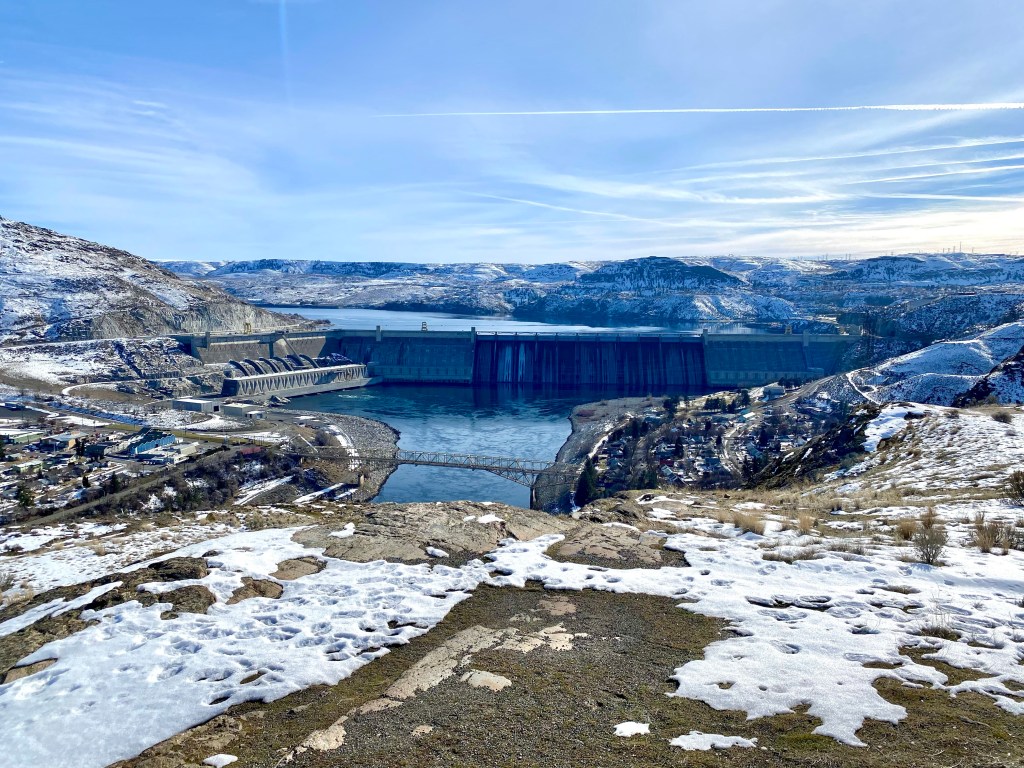
Damming the Columbia River solved a number of problems. It reduced seasonal flooding, allowed agriculture to prosper, generated hydroelectric power, and was a catalyst for local communities to prosper. It also created problems. The dams altered the ecosystem and hydrology of a major watershed, it introduced crops that might not have propsered, obstructed salmon and sturgeon from returning to their breeding grounds without human intervention, and generated inexpensive electricity which delayed investments in other forms of sustainable energy.
Some would classify the Columbia River Dams as one of the great engineering and economic successes of the Twentieth Century in the United States. Others might define the complex as one of the most significant environmental disasters created by humankind. Politicians, citizens, environmental groups, and government agencies are still debating the merits and fate of the dams.
I might be helpful to frame our problem-solving with the mindset that we are both solving and creating in the same act. We should not stop aspiring to be a force for good but we might benefit from recognizing our solution will be somebody else’s obstacle.
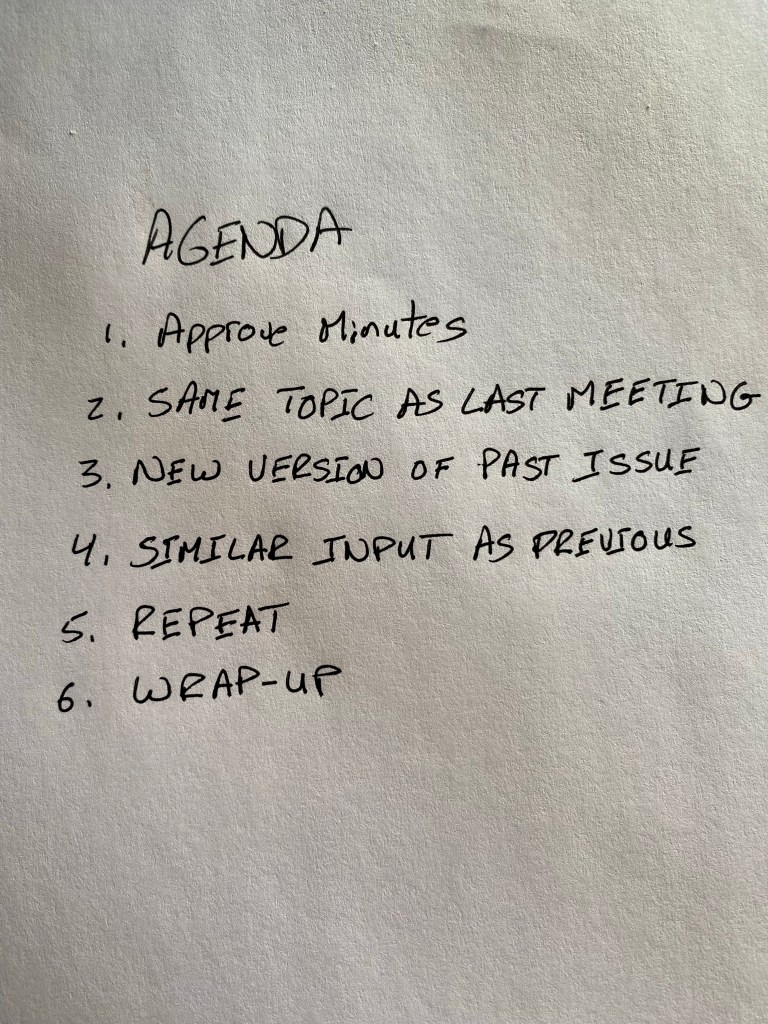
Even if the agenda looks the same, the meeting is different. Each participant has encountered new information and experiences between gatherings. The world changed. New members joined our efforts and others departed. Our services and contributions have had an impact, positive and negative. We are not looking at the same conditions.

Imagine watching a firework show. At first glance, each burst of light and corresponding boom appear to be the relative similar. Then we notice the different colors, shapes, alternating lengths of illumination, height, and pattern changes. Even the launch angle and sequencing of the shells remains variable. No two firework shows are the same.
How might we embrace that we are never looking at the same thing despite initial appearances and patterns? Even if we meet in the same location, with the usual group, on a repetitive day of the month, and rely on practiced parliamentary procedures, we are not assembling for a duplicate meeting. Our greatest fault is thinking we are convening for repetition when everything is new.

It is convenient to believe that the money our cause raises, the facilities we build, the programs we nurture, and the brand we build are the core of our cause’s work. However, none of these elements can tell our story. They are the results of our work. The people who inhabit these space, donate resources, attend the programs, and ride for the brand are the story-tellers. They represent the conduit through which our narrative transfers from one individual to the next.
The bib I wore during a nordic ski race and the medal that might come with an age-group award are just ordiments. They alone do not have much depth, possibly props in my story. I can hold them-up to talk about the fierce cold and headwinds that faced the race participants. I can point to them and describe the pack of skiers who worked together to battle the elements. I can hang them on the wall and they remind me of an adventure, but they do not tell the story.

Our travel photos capture a moment in time but are exponentially more powerful when they support the story. Was our Eiffel Tower photo taken during a romantic walk, evening run, from a train crossing the Seine, or just a screenshot? The photo might be memorable but the story provides a greater dimension.
We must get comfortable elevating our stories. Unless we can compete on scale and overwhelm our fans with endless offerings, our narratives will be our strongest point of engagement. If we agree to amplify our stories, then how might we generate human-centered strategies to support our community? How might we be remarkable for the behaviors and experiences we curate?

What if we start each day or meeting with a framing question? Something that provides insights and intention. Not a rhetorical question about how we can be more awesome but more on the generative side.
Yesterday, my question of the day was, ‘how might I find adventure while being in a mixed mindset that is trending towards adversity?’ An hour into my road bike ride and I was rolling on my rear rim at 12 mph, a victim of a second flat tire in a ten minute span. I limped towards a bike shop I found on Google Maps which was my last oasis before making the dreaded call for a ride home. Ben’s Bikes quickly outfitted me with two new tubes and air cartridges, plus the good karma of a bulldog who was clearly in-charge of all front door greeting operations.
Back on course, I was relieved to be riding and not headed home in a sag wagon. Quickly, I encountered another cyclist who was riding the same direction and we spent the next two hours sharing a great adventure. I able to guide through the less obvious sections of the bike path (my new cycling companion was on his first lap of The Loop in Tucson) and he provided great conversation and enthusiasm for being out for a ride.
Employing a framing question provided context for the day. I unexpectedly experienced both adversity and adventure. With a bit of focus, I was prepared to head a few more chapters into the journey when the plot took an unexpected turn.
How might questions created a more remarkable experiences?
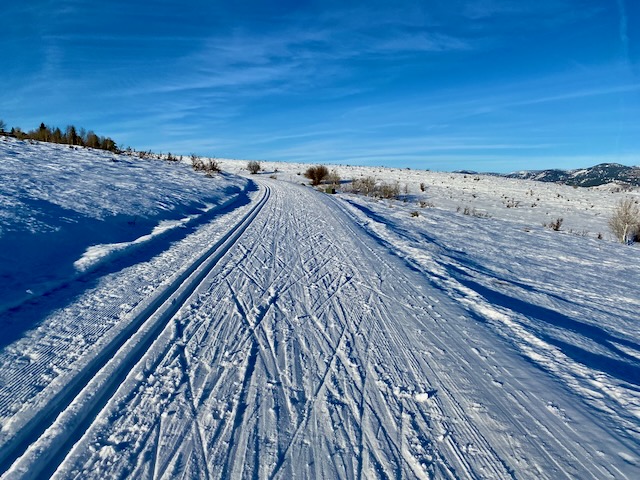
If we move in the direction that the majority have traveled, the trail might look receptive and clear. If we travel against traffic, more obstacles might be evident. Both directions are viable but our mindset and perception may create more awareness of the terrain that is ahead when we take the direction less traveled.

Some items attract and repel (not a scientific definition of magnets). Yesterday, I used aluminum foil next to the microwave while heating up oatmeal. The aluminum foil pieces sailed off the counter. I was perplexed until I realized I had created an unsustainable environment in which these two items could not co-exist.
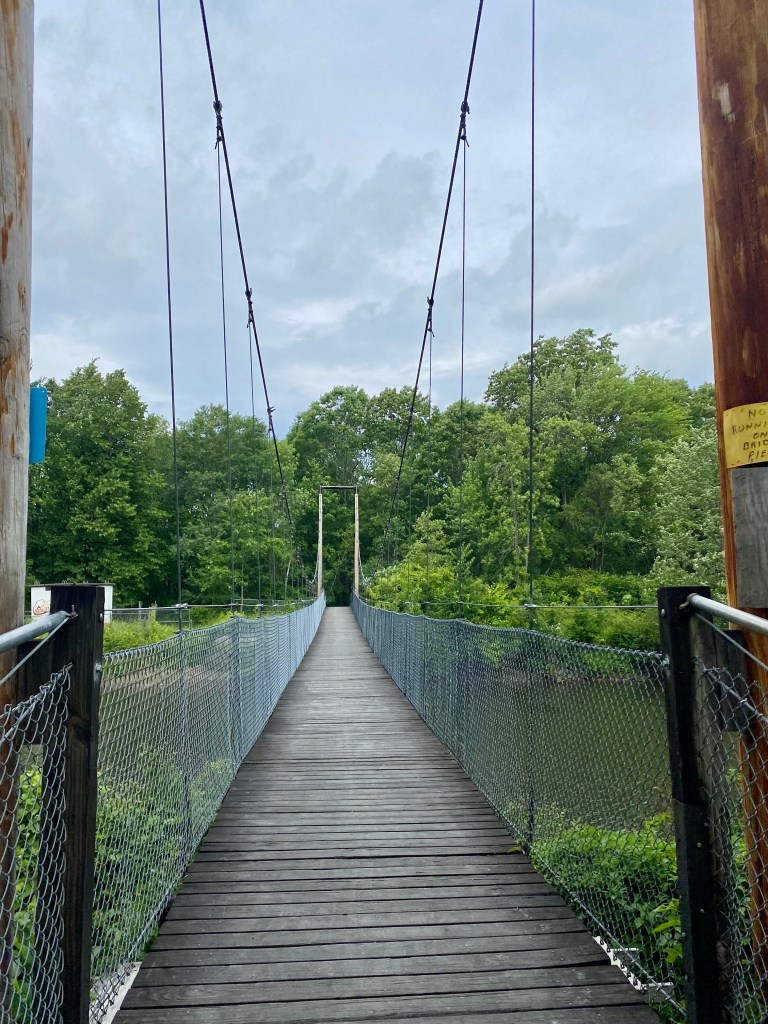
Consider the activities that are on your ‘not a chance’ list. It might be walking over a swinging bridge, teaching preschool, entering a burning structure, voting for a policy, spending money on a luxury, or eating a local delicacy. There are activities that we are not willing to try (or the condition have not forced us to attempt them).
How might we resonate with those who see our work as essential and not seek the attention of those who are not ready to engage?
Do not forget that even when the boarding door closes, we still must taxi before we takeoff. It is convenient to think our flight encompasses only the flying portion. Taxing to the runway allows us to prepare, reveals new insights, and is part of the journey.
How might we realize that a decision does not equate to immediate action? There is a series of events that require sequencing before we are en route.
If you look at a ‘to do’ list, is it a point of information or point of action? If you login to a bank statement, receive a project update, weigh yourself, plan a gym workout, how do you respond? Is action necessary or is being informed satisfactory?
How might we inquire about establishing our mindset before reacting to our environment? A budget report with variances might need a brief review and acknowledgement. However, it might require immediate interventions to address a troubling trend.
Being clear before the starter’s pistol sounds means we have a plan and intention to act upon. Otherwise, we may just be pointed in the wrong direction, with inadequate equipment, and focused on an old course map.

