Author: whatifconcepts

Empowering those that inspire so they can excel at the work that matters.

Authentic Games

John Oliver takes on the NCAA during the most recent installment of his show, Last Week Tonight. The episode is remarkable because it shines a light on the dark corners of the collegiate athletic system.  He makes visible the disparity between the stated belief of the NCAA and its actions.  The NCAA states it purposes as, a membership-driven organization dedicated to safeguarding the well-being of student-athletes and equipping them with the skills to succeed on the playing field, in the classroom and throughout life.  When the dislocation between vision and activity becomes significant it allows for the type of satire where John Oliver excels.  The fake gaming video advertisement needs no explanation.  

Who is going to start the NACC (National Athletic Co-op Conference) where athletes and universities share in the revenue?  Or, when do collegiate athletics move to an enterprise outside of the university structure?  What if the professional leagues (NFL. NBA, NHL) took over the collegiate sports and created development leagues?  Many options and they each result in a structure that is more aligned with the NCAAA’s stated purpose.

Making Mistakes in Public

IMG_7541

Read the Q&A section on Banksy’s website* and be prepared for simple responses.  

Question: Best and worst part of creating Street Art?

Answer: Make your mistakes in public.

What is worth doing, even if it contains mistakes?  What risks are we willing to take in order to connect an idea with a community that may care?  Who are we willing to disappoint in order to complete our quest?  

The opportunities that cause me the most anxiety are usually the ones that I need to explore.  I said ‘yes’ to a university experience even though I did not have all the answers and was bound to fail repeatedly in a classroom of strangers.  I agreed to work on consulting engagements that challenge my approach and yet I continue to look for ways to serve and add value.  Travel brings numerous opportunities to fail publicly and yet I continue to pursue a destination even when I make a wrong turn or plan poorly.  I participate in sports that provide moments physical pain.  My original front tooth lies somewhere on the side of the road in NH thanks to a cycling team crash in High School.  The very public mistake of inadvertently brushing my front wheel against another rider’s rear wheel left me more committed to my craft.

As Seth Godin reminds us, do work that matters.  I highly recommend Seth’s audio book, Leap First: Creating Work that Matters.  The development of the audiobook inspired the publication of Your Turn, which is equally engaging.  I have been handing out my extra copies to people who are trying to create change and are willing to succeed and fail in public.

I look forward to seeing our mistakes in public venues.  Our art matters.

* Banksy is not on Facebook or Twitter but his art continues to be discovered wherever he produces it.

Leaving the Tribe

Sherman Alexie spoke at the Cabin’s Readings and Conversations program in Boise last evening.  He is known for being a Spokane/Coeur d’Alene Native American, poet, film-maker, and author of such novels as The Absolutely True Diary of a Part-Time Indian.  He was entertaining, troubling, thoughtful, empathetic, misguided, and unstoppable (the people seated next to me wondered aloud if he would ever stop talking).  He told stories, addressed current events, taunted liberal, shamed conservatives who had attempted to ban his book, and was the punchline of his jokes.  He also took [expletive delete] liberties with his language.

A significant tipping point in Sherman’s life came at age 13 when he left to attend a high school off his reservation.  Sherman reminded the audience that his most powerful discoveries and successes came because he walked away from his reservation seeking something else in the world.  He now serves as one of the most powerful link for both the native american communities and those of anglo heritage.  He refers to himself as a modern day Sacagawea. 

The enduring image of the evening was Sherman walking across the stage, hands raised, middle fingers extended as he mockingly walked out of an imaginary cave and the warmth of its fire.  The power of slipping the bonds of safe for the possibility of better was profound.  

How often do we choose the safety of the tribe over the chance to seek new experiences?  Sometimes, walking out of the cave is the most powerful act we can take.

Sucker Hole

Sucker holes offer hope or false assurance.  Those looking for blue sky use it as confirmation of hope.  The weather forecast will suggest the patch of blue is an anomaly.  It is easy to put the next adventure on hold until better weather arrives.  If we go high enough there is always blue sky.  The question is at what level we are operating.

Being Heard

Screen Shot 2015-03-04 at 6.43.44 PMIn my opinion, experiences that are better in-person include: interviews and hiring, selecting strategy, confirming purpose, finalizing agreements, welcoming new members, reunions, first time adventures, significant milestones, and hearing first person narratives.  Experiences I defer to a virtual realm include: policy and procedures, non life altering results, recommendations, directions, registration, compliance, processing, and being managed.

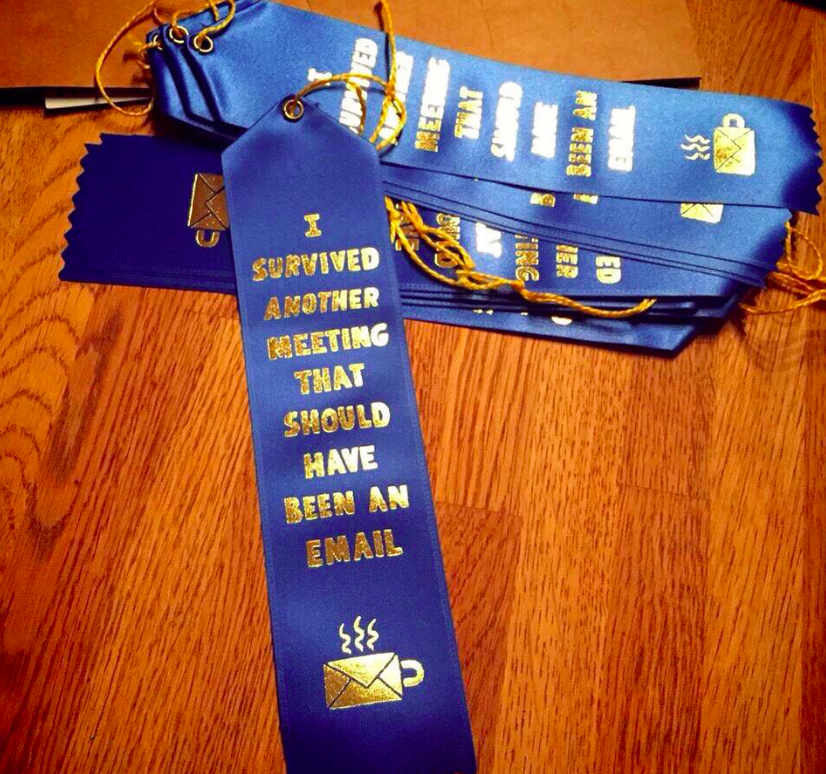
‘Is the honor in being asked or is the honor attending the meeting?’  This is a mantra I use as a guide to determine the importance of a face-to-face interactions.  We get a rush when invited to the next meeting.  We feel important and want to be heard.  How could the organization survive without our unique and wise input?  However, a balance exists between being in attendance versus perfecting our remarkable craftsmanship.  Sometimes not interrupting the tribe’s work is the wisest decision we can make.

Empowered Conversation

Promoting conversation is not our highest decision-making achievement, rather curating a remarkable process is the goal.  How do we enhance meaningful dialogue empowered by individual perspectives?  What is the result of our current conversation ritual?  Do we create a culture of inquiry and seek out the dark corners? Or do we defer to the convenience of routine?

John’s talk identifies three beliefs that hinder powerful conversation:

Dissent equals disloyalty

Criticism of an idea does equals criticism on and individual

Disagreement with consensus equals not being a team player

What if we insisted on a dynamic process and bold conversations before making remarkable decisions?

Resistance as Compass

Where and when do each of us embrace uncertainty?  If we are doing it for the applause then safety trumps innovation and we cease pushing towards the edge.  The resistance (fear) we feel offers a platform from which to lean-in instead of bending away.  What we do is not for everyone, it is for the dedicate few we picked to serve.  The resistance reminds us that our work matters.

Generative Thinking Meets the Storm

Screen Shot 2015-02-07 at 4.50.38 PM

It is easier to ask ‘what if’ questions when they are generative.  When we have time to consider the answers without the pressures of a burning platform.  Does your enterprise think generatively?  What if our cause was asked to share our story in the New York Times   What would we say?  Who would speak?  What would we showcase?  What if our signature event was cancelled due to elements beyond our control?  How would we communicate?  Would our response reinforce our beliefs or would our values be inconsistent with our actions?  How could the unexpected enhance our reputation?

Dedicating time to engage our decision-makers in low risk generative thinking  leads to higher results when major events take place in real time.  Fire Departments train responders to avoid making an emergency worse by acting inconsistent with the training.  Putting ourselves or the organization in peril serves little benefit to those who believe in your cause.

Our best thinking is perishable if we do not use it.  If the wind is not blowing, we can still practice tying knots, navigational skills, and hoisting sails so we are more competent when the storm reaches us.

Leaning vs Bending

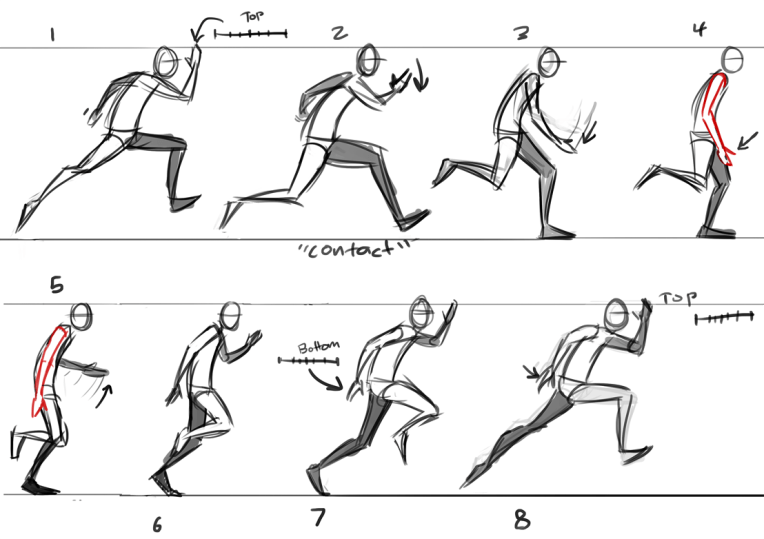
Somedays I wear the title of master (age range) athlete, participating in running, cycling, or cross-country skiing events.  In most competitions my goal is to perform my best and inspire others to reach their personal best.  In pushing the edge of performance I find myself dancing near a thin line that separates efficient movement and thrashing contortions.  A combination of physiological ability and practiced technique mesh together as long as possible until I push too far or too fast and then they uncouple and lose all synergy   The closer the pace gets to the tipping point the more I assume an athletic lean to account for momentum and power.  However when I cross the line the tendency is to bend and try to power through whatever obstacle faces me.  Bending equates to a head drop, reduced sight line, hips transferring backwards, shoulders curled over, and the compression of my cardiovascular engine.  Speed and efficiency decline and my performance regresses.

In our own enterprises we have leaning and bending moments.  Pushing the line of what is sustainable until we are forced to bend is common practice among some causes.  In the athletic arena we use intervals and long easy distance sessions to gain speed and build a broader base of fitness.  The same opportunity exists within our organizations.  Little initiatives that do not put the entire organization in peril are initiated.  Building a culture that is based on hope with leaders that check on our progress and seem to care are critical to our performance.  Embracing failure as a necessary part of our lifecycle.  Setting a strategic vision for the future so we know where to align our efforts.

Leaning is remarkable when we find the balance point.  Bending is not fatal, it slows us down and requires a little recovery before we find our stride.  Participating by neither leaning or bending rarely leads to significant results.  Discovering the fulcrum point between a lean and bend is magical.  I hope you have found yours.