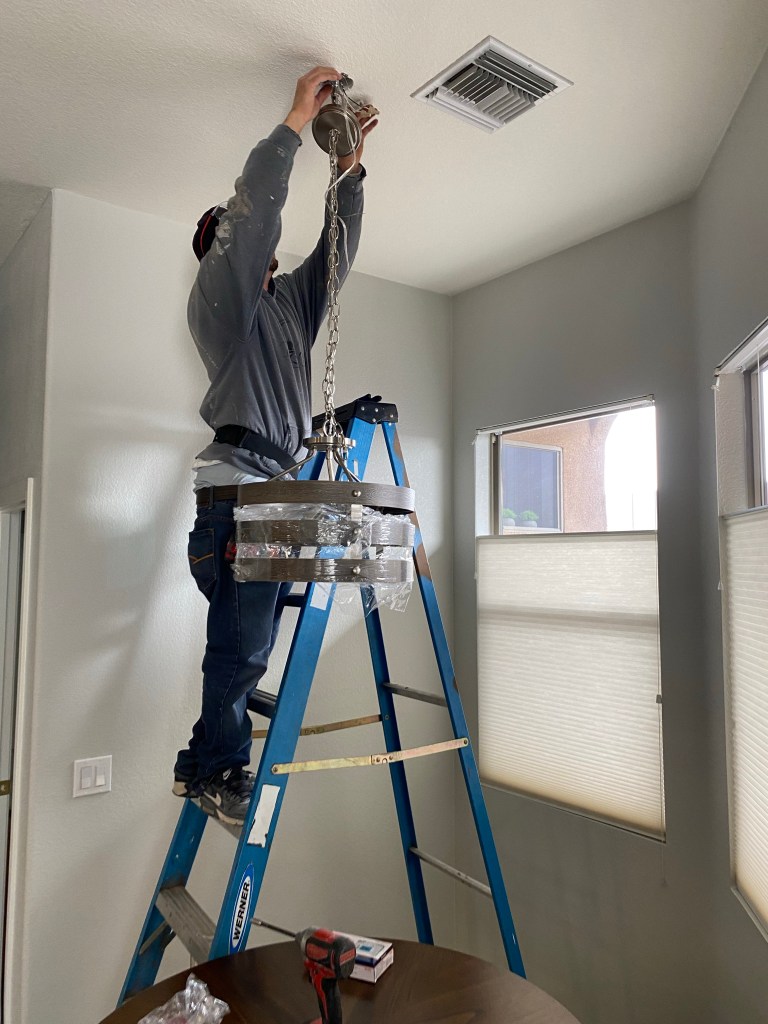
Do the installers talk to the repair technicians? Sadly, even when these individuals work for the same company, they appear to be in different divisions. A few subtle alterations during installation can make the repair process exponentially easier and better.
Do the idea people overlap with the operators in your enterprise? Do strategy and tactics appear to share the same origin story? Surprisingly, what is dreamed is often lost before it ever reaches development.
There is a limit to how many personal objects we can place in the spotlight. The question becomes, which ones are special enough to get the coveted position and which are relegated to the periphery? If we want to know who comprises our inner circle, think about our center stage location. Who occupies this space with us in our real and/or virtual world? That is our inner circle.
Is there a difference in our mindsets when we commence a journey that is an out-back route versus a loop? Do we prepare or even pace ourselves differently? When we know we are going to retrace our steps, we benefit in both the experience of the moment and the knowledge of the terrain we will face on return. When we take-on a loop, each turn in the trail reveals new information and a fresh challenge. A loop may benefit our sense of adventure and exploration.
What if we consider out-back options when we want to test new techniques or equipment? It provides us greater flexibility if our travels do not go as planned. What if we commit to the loops when we are strategically aligned?
How might our desire to innovate thrive based on our route choice?
Where you show-up matters. Selling flight insurance by the airport baggage claim, renting audio guides at the museum exit, or giving away the free gift before the timeshare pitch might not allow us to engage those seeking our services.
“This is a courtesy call to remind you that your membership is expiring.”
Is the purpose of a courtesy call for the member’s benefit or for the organization? Is the intent to maintain a financial relationship or to engage community? What would it feel like if the courtesy call was a personal call. A chance to connect and have a conversation. What if we knew our members so well that the last thing we mentioned on a call was their expiring membership?
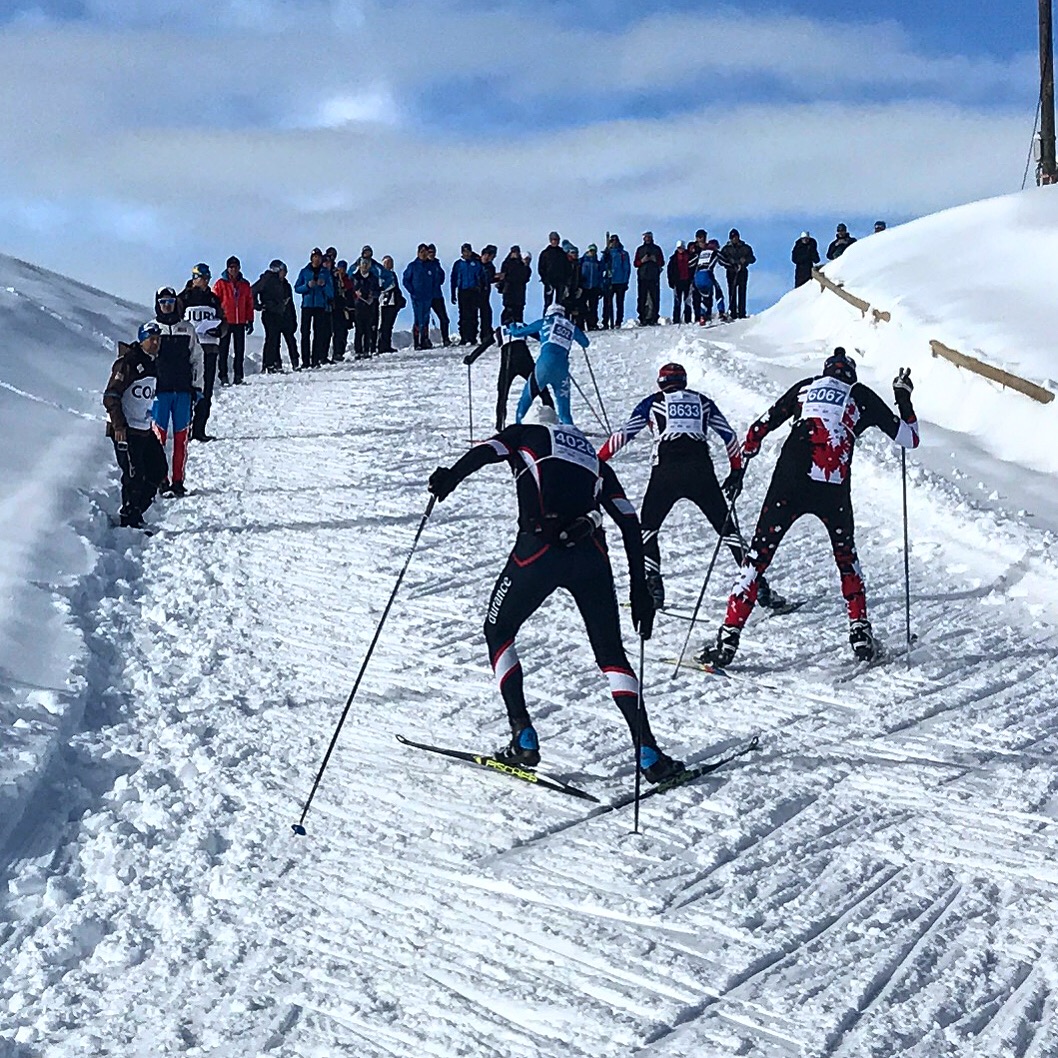
Viewed from the base, a ski area has a specific layout. Observed from above, and the terrain appears different. Ski areas are designed for skiers, however they can provide interest even for those who are not skiing.
Perhaps it is worth remembering that not everyone who benefits from our organization comes through the front door. Many a cathedral has been celebrated from the outside without engaging in the religious ecosystem that flourishes inside.
If we have more than one pair of race skis, we might wax days in advance for a ski race by preparing for a variety of weather and snow conditions. If we posses only one pair of skis, it is safest to wait until closer to the race before finalizing our wax choice. More is not better if we have the relevant information to make an informed choice. Where we make errors in preparation is thinking we have all possible outcomes covered.
How might we avoid the false sense of certainty we gain by having an abundance of resources? How might we understand that we operate in a thin band of conditions before we have to adapt and attempt new approaches and techniques? How might we remember that if we look up at earth’s atmosphere, it looks abundant and expansive. However, look at it from a cross-section and is appears razor thin? How might we embrace the miracle that is choice and opportunity?
Backcountry skied the other day. The avalanche forecast projected a green day (safe conditions) and the weather pattern has been consistent. My skiing partner and I met at the trailhead in the early morning and found ourselves facing much colder conditions than the previous days and boiler plate snow pack. The snow forming the uphill skin track was concrete and wind had blown across exposed areas leaving a surface that was hard to set a ski edge. It was tenuous to avoid slipping down the slope. We proceeded, in search of the shaded side of our summit and the temptation of soft snow and memorable turns. We eventually found favorable conditions for descending and made a few long laps in colder, softer snow.
What struck me in the moment as we crossed the most exposed gradient that would not relent and blocked a ski edge purchase, was the mindset battle between fear and focus. Fear was easy to access. Look down the 1,500 foot slope and see a perfect sliding surface. No trees to hit, no changes in grade to break an unwilling luge participant. The focus was harder and required purposeful thought: relax the ankles, stay perpendicular to the slope, grip the poles in an offset fashion with the uphill pole requiring a lower grasp than the downhill pole, look for the best line to traverse and seek micro breaks in the snow surface that accommodate a ski edge.
Both mindsets were available to me within micro-seconds. I toggled back and forth between them before settling on focus. However, the accessibility of both realities demonstrated the ease with which an adventure doubles as a panic room.
How might we realize that one individual’s expedition might be the terror that keeps another person awake at night? How might we check-in with our colleagues to confirm that we are focused on the work that matters and not the possible disaster that looms just there? How might we make room for the conversations that recognize danger but does not amplify it unnecessarily?
When we navigate using the constellations and stars in the night sky, we rely on light generated in the past. A few stars might not exist in real-time, their fate unknown to us since it may take hundreds of light years for current illuminations to reach us. So, we proceed confident the past will secure our coordinates.
When we plan, we review. We take what we know now and attempt to rationalize and transpose it onto the blank canvass that is the future. We make broad assumptions and overlay current conditions. If we want a tropical vacation in 2023, we believe that historical weather patterns will hold and we can rely on Hawaii to meet certain atmospheric parameters.
There is no fault in this approach, it has served us faithfully in many examples. Mondays have a familiar routine compared to Saturday and we can account for trends. Except when the past does not equal the future.
Where do we turn in these moments that break the blockchain? We navigate from our values and training. Our values are behaviors that are foundational and we will not sacrifice except under extreme duress and our training is what we practice (intentionally or not) on a regular basis.
Fire departments hold drills to reinforce training and values. Laddering a building is not the most complicated task. However, footing a ladder on uneven snowy ground in thick smoke, while flames roll out of a second story window, and rumors of entrapped occupants circulate; that is when the stars are obscure and we cannot easily consult the plan. We adapt, get creative, deploy our resources to maximize our talents, and rely on our training and values.
Many fire departments share a motto that is paraphrased as follows: we take reasonable risks to save property, we take a lot of risks to save a life. Values matter and they are often most visible when the conditions are extreme.
When we plan, do not forget to confirm the values of the people on the expedition. If everything goes as predicted the plan may succeed as scripted. However, when the conditions change to challenging, our values will override the plan and new options and decisions must be considered.
How might we make time during our planning to confirm our values? It might be the best planning decision we make.