Impact

Heckling Statues

Is heckling a statue worth the effort? What is gained by directing our grievances towards an inanimate object? Is the statue an iconic representation of a person or movement that is the nexus for exchanging points of view? Are there other ways to share our message with individuals who might contribute a response?

How might we amplify our message? Are you finding the best stage from which to deliver our viewpoint?

Yes or No Photo

Almost all the blog posts on the What-if-Concepts website contain a photo, and with rare exceptions, the photos are original. I often wonder if the photos add to or subtract from the content. I like to believe they add depth and dimension to the text that follows.

How might we understand the impact of our work, both the elements and the finished product? How might we engage our audience to discover what needs to be amplified and what distracts? And, how might we, as the artist, author, and curator, preserve our integrity, regardless of what the data suggests?

VIPs

What do your VIPs experience that eludes your general members? It is reported that Elon Musk had a small group of employees annotating data from his Tesla automobile to ensure self-driving mode worked most effectively. His data received special attention to maximize performance. This level of service was not available to the average Tesla owner. Elon’s driving experience is different than all other Tesla owners, unless they drive the same routes he uses with his Tesla.

What VIP services might conflate the experience the general member receives? How might we assess the service we provide to all our customers, not just those who have the special phone number and secret doors into our enterprise?

How might we monitor the experience of all our fans? How might we not focus solely on the VIPs who have secret phone numbers and private entrance privileges? If our organization’s stated values and actions diverge when it comes to our most important members, perhaps we need to have a generative conversation about our priorities.

River Speed

If we proceed at river speed, our ability to navigate is minimal. If we paddle faster or slower (against the current), our ability to make significant maneuvers is greatly increased. Go for the ride when you can, it nice to be swept along by the current. However, if we need to take action or move across the river body, then adding power may be the most effective way to navigate.

How might we toggle between the river current and paddling with power in our own work?

Preserving From the Outputs of Progress

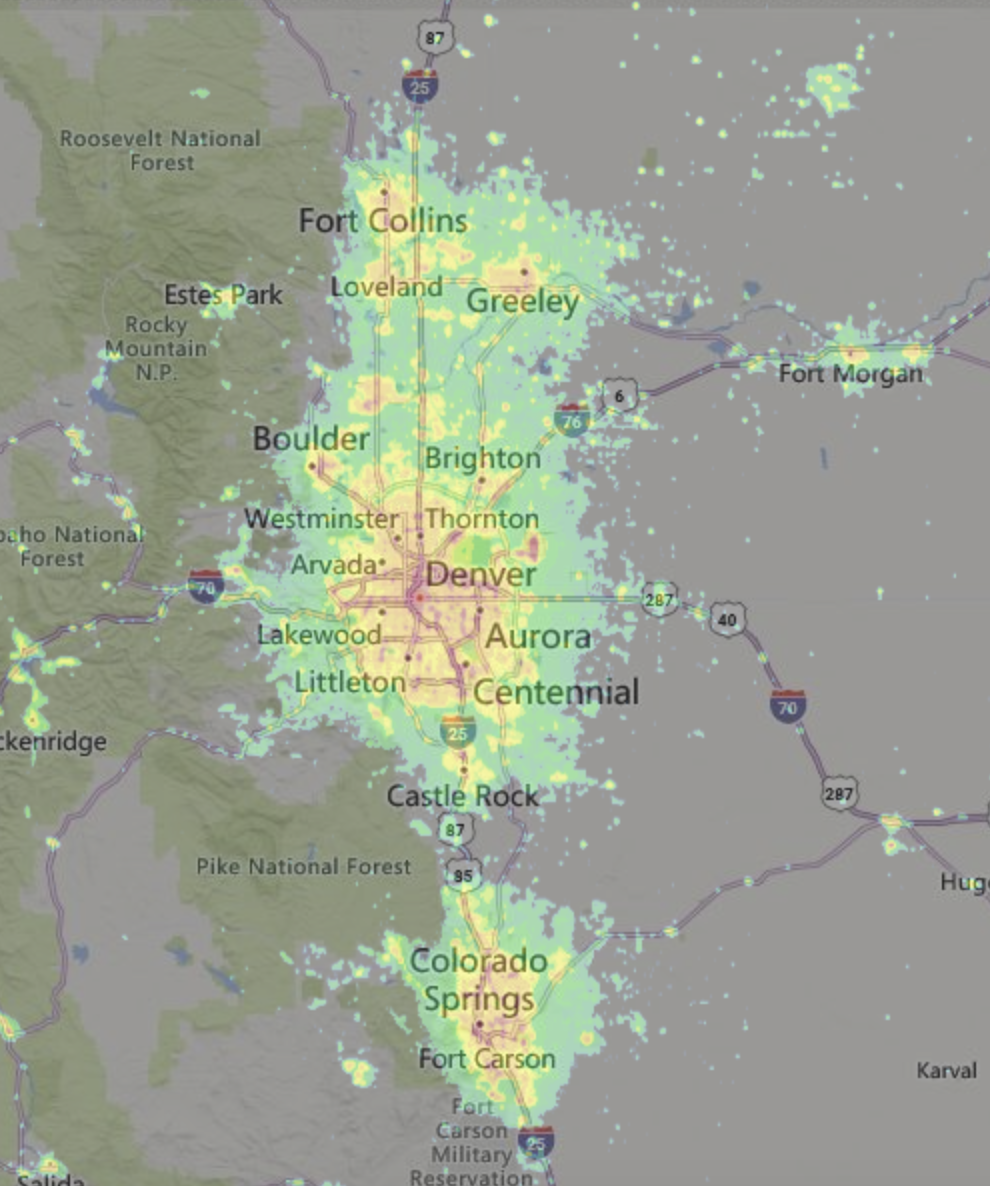
What are the benefits and residual impacts of our work output? When we look at the light pollution map, we see where the man-made illumination has the most radiance and which parts still retain dark sky characteristics. There are now Dark Sky Reserves dedicated to preserving regions from human-produced lighting.

One Job

Jetways and Airstairs located at commercial airports have one job. They are necessary to load and unload passengers and crew. They are deployed for high-use periods and then sit idle. When reviewing utilization patterns, these items might not deliver a compelling return on investment. However, when a plane filled with people arrives, they are essential.
How might we not prioritize utilization metrics but look at the resource’s impact? A ladder would cost less money, but customer satisfaction would definitely drop. Even more critical, a jetway allows us to efficiently board a $100 million commercial airplane that does benefit from monitoring utilization metrics.

Power Source

What is your power source? Does it rely on pure power, or do you benefit from additional forces such as aerodynamics and physics? How might we ensure we are not wasting power by generating massive outputs but increasing drag by forgetting to put appropriate pressure in our tires?

How might we strategically deploy our power to do the work that matters?

The Key You Are Seeking

Just because you have a key, it may not be the right one for the vehicle you are trying to start. If you have a template/framework/idea/donor/board member/network from another cause does not mean it will work for your current enterprise. The right key and the right vehicle are essential to initiate your journey. Just as the right resource must match the culture and needs of the organization you intend to serve.

Public Domain

What happens when your proprietorial work makes it into the public domain? What is the impact of others iterating on your creation? How does it align with your values and focus? If you believe in making the world a better place, does it matter who gets the credit? If you believe in delivering for your shareholders (or donors), is it essential that you generate a metric that shows a return on investment? What if your idea is leaked to the sector, and it is the spark that generates an unexplored way of serving those that you are committed to helping? Do you need credit, or does moving closer to your vision suffice?

No More Time?

We will not know there is no more time until we cross some imagined or real threshold. Until then, the anxiety and panic of these alarming pronouncements claiming we are out of time feel insufficient (and liminal). How might we raise awareness and create pathways to change, informed by a limitation of duration but not stating we passed the endpoint? If we miss the last train/plane/bus, there is little we can do but wait in place (and perhaps sulk). If there are options to rejoin our journey, we should make those opportunities visible. Distracting the team by activating the alarm system creates distraction; we focus on evacuation when alarms sound instead of addressing the problem.