Trust

Recommended

What is the difference between receiving a cold call versus a referral? When a potential client calls stating that I was recommended by another organization (or individual), suddenly, we develop a triangle. There is the cause seeking professional services, my work as a consultant, and the third party who has encountered my talents somewhere prior. By having three fixed points, it is easier to develop and nurture a connection. When I receive a cold call and a request for a proposal, the decision on who to engage for the work is often based on price or other lesser considerations.

What is the third fixed point that elevates your work/engagement with others? As a social sector organization seeking contributions, a known donor asking another potential donor to engage is often far more successful than a random solicitation. When seeking a new board member, even a previous board member with connections to a candidate may be the best initiator of a conversation. Triangles allow us more flexibility and provide more latitude, even if we stumble during our first encounter.

Who is it For? You or Them?

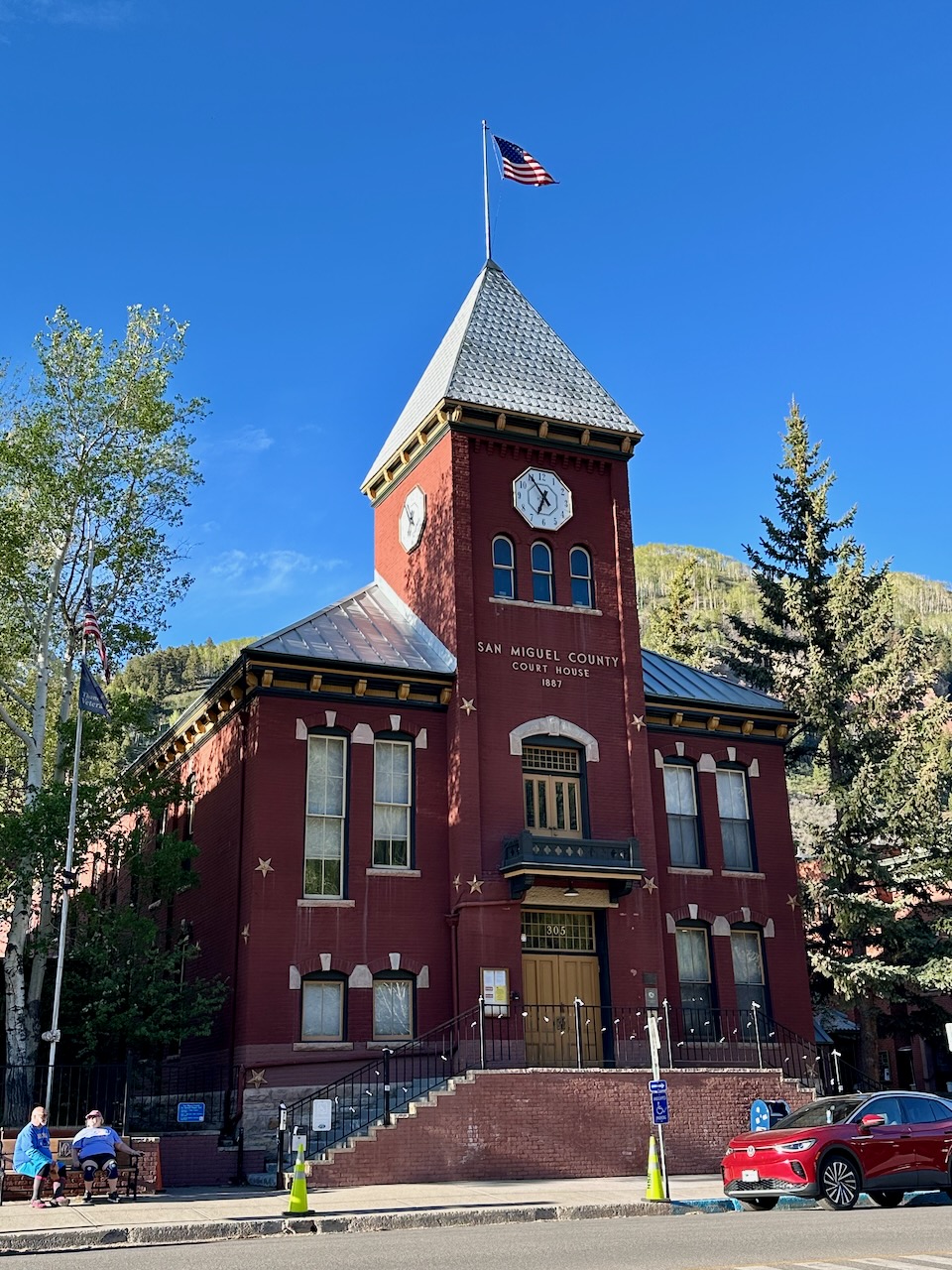
When they built the courthouse (San Miguel Courthouse, CO, pictured above), was it for the community or those who would hold power inside? What is our mindset when constructing something, holding a meeting, or starting a conversation? Seth Godin’s blog post double-clicks on the idea.

We have all been on the receiving end of a conversation that was positioned as an ask but clearly turned into a pitch. Are we able to build more trust and engagement when asked or pitched? How might we be authentic and intentional with our approach?

Acting Over Predicting

One of my favorite nonprofit organizations is the Cabin in Boise, Idaho. The Cabin’s staff, programs, board, and literary community are remarkable. Most importantly, their advocacy actions reinforce my trust in the Cabin, amplifying their Magnetic North (purpose, vision, mission, and values). When the Idaho State Legislature proposed bills to ban books, criminalize librarians, and create citizen review panels, the Cabin, in partnership with other critical literary partners, launched an advocacy effort, No Book Bans. I would argue that this commitment was their most influential strategic action. This course of action was unlikely to be predicted during the drafting of the strategic plan, but the clarity around organizational values made this decision more certain. The Cabin’s strategic plan left room for wayfinding, and the community gathered in force to do the work that mattered.

How might we show up for those on the periphery when their safety is jeopardized? What if this is our most remarkable and essential work? How might we act instead of worrying about predicting?

Cabin Mission: The Cabin is a literary arts nonprofit organization in Boise, Idaho. We forge community through the voices of all readers, writers, and learners. Our workshops, readings, lectures, camps, and other literary programs provoke creativity and experimentation, foster literary excellence, and inspire a love of reading and writing in children and adults alike across the Treasure Valley and beyond. 

Unsolicited vs. Customized

When we receive unsolicited communications, we expect errors, inaccuracies, and uninteresting proposals. It is similar to driving past billboards on the interstate; only occasionally does it apply to our needs. When we receive customized communication, our expectations increase. We expect our names to be spelled accurately, that personalized details will be embedded, and the pitch for a service will aligned with our general areas of focus. A customized piece can reinforce our relationship with the sender, or it can disrupt that trust. 

How might our communications add value and depth to our relationships?

Trusted Intermediary

To be of service, we must embrace the role of a trusted intermediary. We position ourselves to optimize the journey for those who travel a segment of the route we specialize in navigating. When done authentically and with generosity, the shared journey is remarkable. When our intentions are transactional, the journey goes off track or leads to a dead end. None of us like to experience inferior services for the benefit of those presenting themselves as competent guides. 

How might we consistently remain curious and develop a culture of improvement so we do not stagnate and calibrate to the lowest common denominator?

Exhibiting Responsibility

The other day, I sent the above photo to Rebecca’s Private Idaho (RPI) Race Leadership Team. RPI is an Idaho-based gravel cycling event consisting of three major races. The photo captured a snapshot of trash I encountered on a popular trail the day after RPI’s first day of competition. As I stuffed used gels and discarded wrappers into my jersey pocket, I realized race participants had adopted a mindset that littering was acceptable (despite being asked to keep the trails pristine at the pre-race briefings). I sent off a quick email with three suggestions in hopes it might curtail racers from depositing trash on the course during the events.

What followed was a master class in responsibility. Rebecca (of local and national cycling fame) responded quickly, despite being in total demand as leader of the weekend, acknowledged there had been a volunteer breakdown. The trail was not swept (ridden afterward) with a crew specifically assigned to collecting trash. Further, she was sending out a team that day to take another pass and collect remaining items. Most importantly, she was committed to making an emphatic announcement about rider expectations at the next rider briefing before the largest part of the event. Lastly, I received an email with a photo showing a few additional pieces of trash collected by the follow-up team who had checked the trail by that evening.

I share this story because at no time did anyone try to dismiss the issue as unimportant. There was no way to confirm all the trail litter was from the race. The RPI event used the trail system and took responsibility for returning it for public use in good shape.

How might we take responsibility like RPI, even when the actions that cause friction are outside our control? If our name is on the banner, how do we live our organizational values to provide uninterrupted accountability? When we seek to create trust and authenticity, we say what we believe and then act in a manner that reinforces our beliefs. There are no shortcuts to integrity (or hosting a large cycling event).

Open or Closed?

In attempt to appear frugal and lean with our resources, we quickly fill a liminal space. Our fans and interested parties cannot tell if we are open for business and functioning with remarkable impact, or if we have shuttered our services as a victims of thriving inspiration blocked by insufficient fuel for the journey. How might we balance stewardship with responsible investment in the people and tools that matter? How might we work effectively without appearing to putting our own needs before those we serve?

Confidence

Not your confidence. The confidence of those who believe in you. The people who believe you are worth their loyalty and support. Those that cheer for you and risk their social capitol to recommend your services to others.

What if confidence is broken? What if it falls apart? This is not about disappointment but a break in trust. If we are designing what is essential to our work, the confidence of those we intend to serve is at the very center.

Having a Moment

IMG_2917

We know not when we are going to ‘have a moment.’ An unexpected encounter. A surge in demand for our services. Being in the spotlight, facing an exponentially larger audience. The tailwind of a lifetime to push us towards a personal record.

If we are uncertain of where we stand and our desired destination, we will not adapt quickly enough to meet the moment. The forces will outrun us, and we will be swept by the current of the audiences’ intention.

However, if we state what we believe, remain authentic, then we are assured of developing connections built on trust and a shared vision. The moment of first contact starts with a sustainable foundation.